As war with Russia drags on, ultrarealistic AI videos attempt to portray Ukrainian soldiers in peril


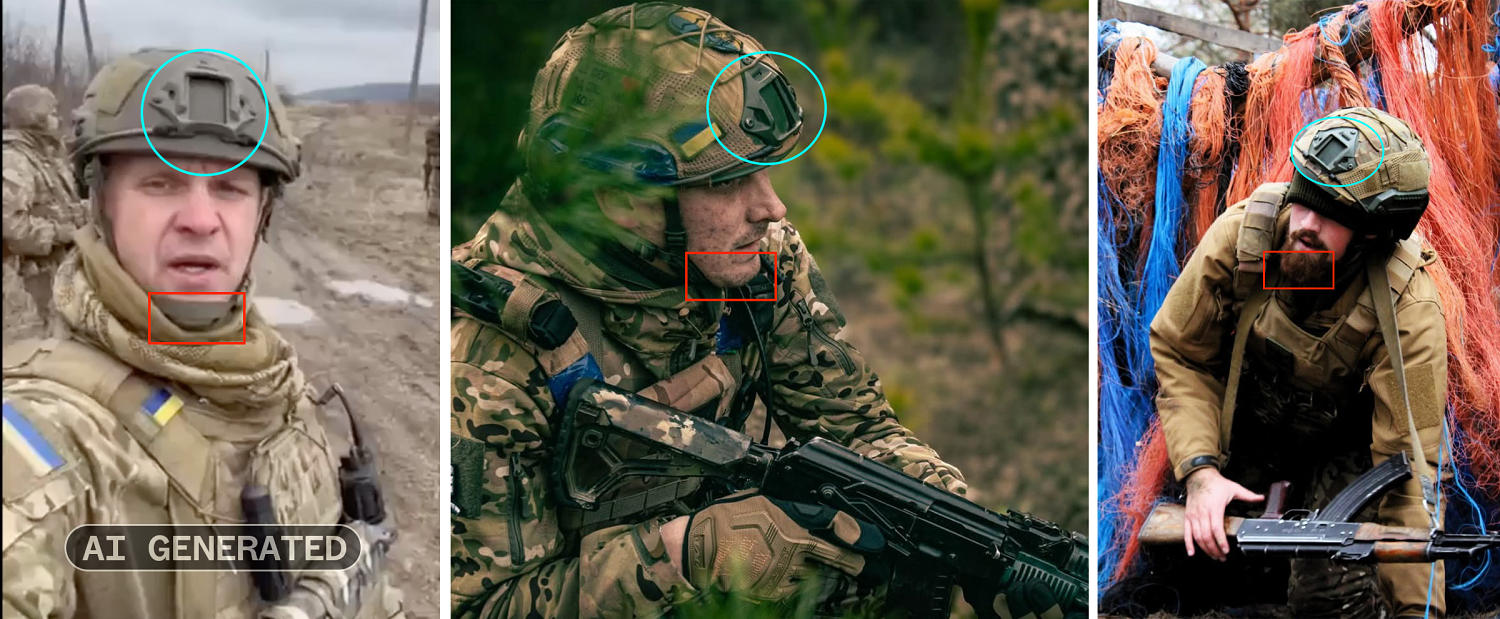
The videos spread across YouTube, TikTok, Facebook and X. All sought to portray Ukrainian soldiers as reluctant to fight and ready to give up.
This is apparently the latest salvo of disinformation intended to distort public perception of the war between Russia and Ukraine. And while it’s unclear who created or posted these videos, they add to a growing body of fake news that has become increasingly sophisticated and harder to spot.
“False claims created using Sora are much harder to detect and debunk. Even the best AI detectors sometimes struggle,” said Alice Lee, Russian influence analyst at NewsGuard, a nonpartisan data, analytics and journalism platform that identifies trustworthy and misleading information online. “The fact that many videos have no visual inconsistencies means that members of the public can watch and scroll through these videos on platforms like TikTok, without knowing that the video they just saw is doctored.”
OpenAI did not respond to a request for comment regarding Sora’s role in creating deceptive videos specifically depicting conflict zones, but said in an email: “Sora 2’s ability to generate hyper-realistic video and audio raises significant concerns regarding likeness, misuse, and deception.” »
“While cinematic action is permitted, we do not permit graphic violence, extremist material or deception,” the company told NBC News. “Our systems detect and block infringing content before it reaches the Sora feed, and our investigative team actively dismantles influence operations. »
AI-generated video has evolved rapidly in recent years, going from basic and crude to near-perfect, with many experts increasingly warning that there may soon be few ways to easily tell real from fake. OpenAI’s Sora 2, released in October, is among the most impressive video generators, with Sora-generated clips now regularly fooling viewers.
Meanwhile, Russia’s current invasion of Ukraine has – since its inception – been the subject of manipulation efforts using everything from realistic video game footage to fake live broadcasts of war zones. Many of these disinformation efforts have been attributed to Russian state actors.
These Sora videos come as U.S.-backed peace talks remain inconclusive, with about 75 percent of Ukrainians outright rejecting Russian proposals to end the war, according to a study by the kyiv-based International Institute of Sociology. The same study found that 62 percent of Ukrainians are willing to endure the war for as long as it takes, even if deadly Russian strikes on the Ukrainian capital continue.
The Center for Combating Disinformation, part of Ukraine’s National Security and Defense Council, told NBC News that over the past year there has been a “significant increase in the volume of content created or manipulated using AI” intended to undermine public trust and international support for the Ukrainian government.
“This includes fabricated statements allegedly made on behalf of Ukrainian military personnel or command, as well as fake videos containing ‘confessions,’ ‘scandals,’ or fictitious events,” the center said in an email, noting that such videos get hundreds of thousands of views due to their emotional and sensational nature.
Although OpenAI has put guardrails in place around what can be achieved with Sora, it’s unclear how effective they will be. The company itself states that even though “multi-layered safeguards are in place, some harmful behavior or policy violations may still circumvent the mitigations.”
A NewsGuard study found that Sora 2 “produced realistic videos featuring provably false claims 80 percent of the time (16 out of 20) when prompted.” Of the 20 false claims transmitted to Sora 2, five were popularized by Russian disinformation operations.
The NewsGuard study found that even when Sora 2 initially pushed back against false claims, saying a prompt “violated its content policies,” researchers were still able to generate images using different wording of those prompts. NBC News was able to produce similar videos on Sora showing Ukrainian soldiers crying, saying they were forced to enlist in the military or surrendering with arms raised and white flags in the background.
Many AI video generators attempt to label or watermark their creations to signal that they are computer-generated. OpenAI said its misinformation security guardrails for Sora include metadata indicating the origins of the video and a moving watermark present on every uploaded video.
But there are ways to eliminate or minimize these efforts. Some of Sora’s videos appeared to have their moving watermarks obscured, which is noticeable upon close inspection. Many apps and websites now offer users a way to hide AI watermarks. Other videos seen by NBC News included watermarks overlaid with text superimposed on the video.
Despite the company’s policy that Sora AI will not generate content showing “graphic violence,” NBC News found a video with Sora’s watermark appearing to show a Ukrainian soldier being shot in the head on the front line.
Of the videos analyzed by NBC News, all were posted on TikTok or YouTube Shorts – two platforms banned in Russia but easily accessible in Europe and the United States. Some included emotional subtitles in different languages so that users who don’t speak Ukrainian or Russian could understand.
TikTok and YouTube prohibit the posting of misleading AI-generated content and deepfakes on their platforms, with both providing “AI-generated” description tags to educate viewers about realistic images.
A YouTube spokesperson said the company removed one of the channels that posted the videos after it was flagged by NBC News, but that two other videos did not violate its policies and therefore remained on the platform with a label describing them as AI-generated.
Of the AI videos found by NBC News with a TikTok username attached, all have been removed from the platform. A TikTok spokesperson said that as of June 2025, “more than 99% of the non-compliant content we removed was removed before anyone reported it to us, and more than 90% was removed before it was viewed even once.”
Despite the rapid removal of these posts and TikTok accounts, the videos are distributed as reposts on X and Facebook. X and Facebook did not respond to NBC News’ requests for comment.
This latest disinformation campaign comes at a time when users are relying more on social media videos to stay informed about the latest news around the world.
“Anyone who consumes content online needs to understand that much of what we see today in the form of videos, photos and text is actually generated by AI,” said Nina Jankowicz, co-founder and CEO of the American Sunlight Project, an organization fighting online misinformation. “Even if Sora presents [safety] guardrails, in this space there will be other companies, other applications and other technologies that our adversaries will build to try to infect our information space.