Astronaut’s Sudden Loss of Speech Prompted NASA’s First ISS Medical Evacuation


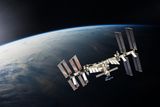
We can probably all imagine how a trip to space might leave you speechless, but this literally happened to American astronaut Mike Fincke while aboard the International Space Station (ISS) in January 2026.
This incident triggered NASA’s first medical evacuation on January 7, 2026, and the four-person crew crashed on January 15, 2026, in the Pacific Ocean off the coast of Southern California. To protect the privacy of the astronaut involved, NASA initially withheld his identity.
However, on February 25, 2026, 58-year-old spaceflight veteran Fincke identified himself as the affected crew member. Last week, he talked about what happened during his last dinner in space. “Out of the blue,” he suddenly couldn’t speak. “It was incredibly fast,” Fincke said in a statement from Associated Press (AP).
Fortunately, Fincke felt fine after the 20-minute episode and he quickly underwent various tests back on Earth. However, doctors are still unable to explain the cause of his medical incident.
Medical emergency on board the ISS
After spending 5 1/2 months on the mission, Fincke was eating dinner after preparations for the next day’s spacewalk when he suddenly lost the ability to speak. Although he felt no pain, his six teammates immediately noticed something was wrong.
“My crewmates clearly saw that I was in distress,” he said, with the crew immediately contacting medical professionals on Earth, in the statement. “Everyone was on deck in just a few seconds. »
After returning to Earth, Fincke was rushed to the hospital and underwent several medical examinations. Although doctors can rule out a heart attack, the cause of his speech loss remains a mystery, although it could be linked to prolonged exposure to weightlessness during his multiple space missions.
NASA is currently analyzing the medical records of other astronauts for clues related to the incident. Protecting the medical privacy of crew members remains a priority for the agency, and the retired Air Force colonel declined to release further details. He only shared that he is fine now and has never experienced anything like this before or since.
Learn more: CPR in Space – How can we save a life without gravity?
NASA’s first medical evacuation from the ISS
The crew of four – Americans Zena Cardman and Mike Fincke, Japanese Kimiya Yui and Russian Oleg Platonov – began their mission to the ISS in August 2025.
Fincke’s medical episode, however, ended their six-month mission more than a month early and marked NASA’s first medical evacuation from the ISS. P.A. reports that despite Fincke’s rapid recovery from the space incident, NASA decided to evacuate the entire crew, leaving only three astronauts on board.
Following the incident, the SpaceX Crew-12 mission, launched on February 13, 2026, replaced the evacuated crew members with NASA astronauts Jessica Meir and Jack Hathaway, French astronaut Sophie Adenot (of the European Space Agency), and Russian cosmonaut Andrei Fedyaev.
Fincke hopes to return to space in the future
Before we even knew which astronaut needed medical attention, P.A. reported in January that Fincke had highlighted the usefulness of the onboard ultrasound device, suggesting that such equipment should be included in every future spaceflight.
Fincke also expressed regret that his episode brought an abrupt end to the entire crew’s mission, particularly the next day’s planned spacewalk, which would have been Zena Cardman’s first. “I was very fortunate to be in very good health, so it was very surprising for everyone,” he said in the release.
According to the P.A.NASA Administrator Jared Isaacman told him to stop apologizing, and his colleagues reassured him that he hadn’t let anyone down. Fincke also said he hopes to return to space one day.
Learn more: Stranded astronauts Suni and Butch expected to leave the ISS and return to Earth
Article sources
Our Discovermagazine.com editors use peer-reviewed research and high-quality sources for our articles, and our editors review the articles for scientific accuracy and editorial standards. See the sources used below for this article:


:max_bytes(150000):strip_icc()/Health-GettyImages-2191227594-9e7636a6bad54942bd2e5ad26bac0bf4.jpg?w=390&resize=390,220&ssl=1 "9 Drinks High in Potassium That Can Help Support Healthy Blood Pressure")
