At-home microbiome tests reveal dramatically different results


February 26, 2026
3 min reading
 Add us on GoogleAdd SciAm
The scientists subjected the same sample to seven microbiological tests at home. The results were radically different
The science and regulations behind these tests “are simply not there yet,” researchers say.
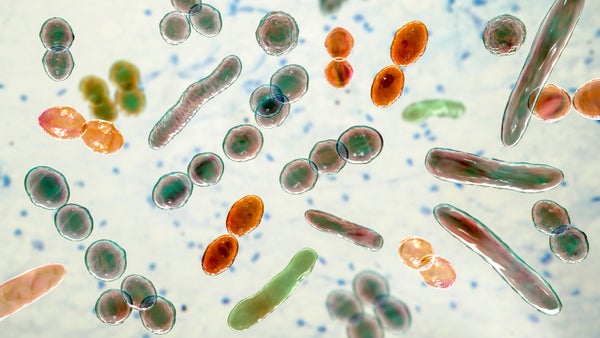
Trillions of microbes affect the functioning of our digestive system, but testing them can be a challenge.
Kateryna Kon/Scientific Photo Library/Getty Images
Whether it’s drinking celery juice, taking supplements, or eating handfuls of probiotic-rich foods like kimchi, gut health is high on the wellness agenda. And while you’re trying to help your own good bacteria flourish, at-home testing companies that claim to open the black box of digestive health are also thriving.
It’s easy to understand why we have become so captivated by our instincts. Scientists have long known that vast colonies of bacteria, viruses, and other microorganisms – a population collectively called the microbiome – live on and inside the human body. But how they influence our health has long remained a mystery. Over the past few years, we’ve learned that myriad factors, from the food we eat to the amount of time we spend sleeping, to our genes and our home, all affect our microbiome. And in turn, this can influence our immunity, our digestion, our aging and even our emotions.
And that’s why at-home microbiology testing has become a billion-dollar-plus market. But a study published today in Communication biology suggests that some of the information in these tests may not be as accurate as they claim.
On supporting science journalism
If you enjoy this article, please consider supporting our award-winning journalism by subscription. By purchasing a subscription, you are helping to ensure the future of impactful stories about the discoveries and ideas shaping our world today.
“The gut microbiome has been linked, at least in the public imagination, to the idea that a range of conditions can be improved through diet and lifestyle change,” says Diane Hoffman, study co-author and professor of health law at the University of Maryland in Baltimore. “There’s been a lot of hype about this, but the hype doesn’t really match the evidence.”
According to Hoffman and his co-authors, at-home microbiological tests “straddle the line” between medical and wellness products, placing them in a legal gray area. Currently, there are no microbiome diagnostic tests approved by the Food and Drug Administration for clinical use in the United States, although the market for at-home versions continues to grow.
These direct-to-consumer microbiome tests require the user to collect their own stool samples at home, essentially putting their own feces in a vial and sending it to a lab for analysis. Stool samples are an effective way to determine which microbes are present in the digestive tract. But different parts of the sample and different ways of storing or processing it can yield dramatically different results. To get a clear idea of the effectiveness of at-home testing, Hoffman and his team created a test stool sample by mixing healthy feces until the mixture of organisms was homogeneous.
The research team then randomly selected seven different companies, none of which are named in the study, and collected samples from the same initial fecal source, following the companies’ collection methodology. The team completed and returned three separate tests to each of the companies. This allowed the researchers to compare the results of the different companies and check whether each company’s analysis was precise enough to show similar results across the three versions of the sample.
The results were even more disparate than the team had expected. Of more than 1,200 taxonomic groups of microbes identified by all tests combined, only three microbial genera were present in the results from all seven companies. Even tests done by the same company didn’t always match.
In one case, a company returned results from its three separate tests, two designating that version of the sample as “healthy” and one designating it as “unhealthy.” Such aberrant results make the uncertainties of the tests unmistakable, says Scott Jackson, co-author of the study and former employee of the National Institute of Standards and Technology. “You can see it sticks out like a sore thumb. »
Researchers caution that people who use these direct-to-consumer tests should not use the results to inform lifestyle changes or medical decisions, particularly until the tests are potentially supported by more research and regulation.
“It’s still a relatively new area of science,” Jackson says. “I think we’ll find out, but we’re not there yet.”
It’s time to defend science
If you enjoyed this article, I would like to ask for your support. Scientific American has been defending science and industry for 180 years, and we are currently experiencing perhaps the most critical moment in these two centuries of history.
I was a Scientific American subscriber since the age of 12, and it helped shape the way I see the world. SciAm always educates and delights me, and inspires a sense of respect for our vast and beautiful universe. I hope this is the case for you too.
If you subscribe to Scientific Americanyou help ensure our coverage centers on meaningful research and discoveries; that we have the resources to account for decisions that threaten laboratories across the United States; and that we support budding and working scientists at a time when the value of science itself too often goes unrecognized.
In exchange, you receive essential information, captivating podcasts, brilliant infographics, newsletters not to be missed, unmissable videos, stimulating games and the best writings and reports from the scientific world. You can even offer a subscription to someone.
There has never been a more important time for us to stand up and show why science matters. I hope you will support us in this mission.


