Baby food firms told to cut sugar and stop promoting snacks for under-ones


BBC News

 Getty images
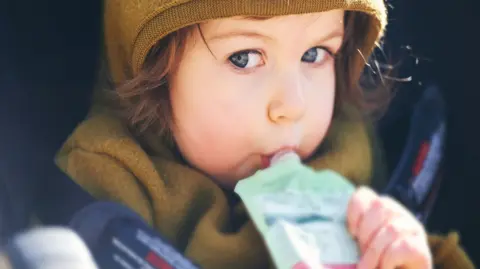
Baby food manufacturers should reduce salt and sugar levels in their products and stop promoting snacks for babies less than one age, the government said.
The new guidelines would also limit the use of marketing allegations that suggest health benefits without scientific evidence.
Companies that do not make their products healthier within 18 months can face the action.
It occurs four months after a Panorama survey of the BBC found that the brand’s baby food pockets lacked key nutrients and parents were often misleading by marketing.
The manufacturers have told the BBC that they are committed to providing high -quality and nutritious foods, and to market them and label them responsible.
There has been significant growth in the food and baby drinks market in recent years.
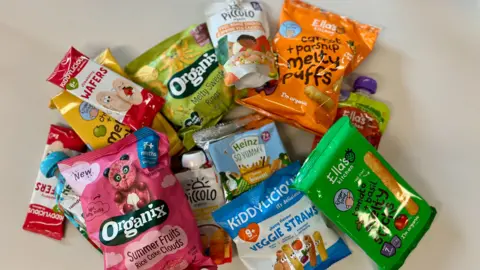
Food in sachets constitutes more than a third of this market and there has been an increase in sales of snacks such as fruits and straws, bursts and waffles based on fruits and vegetables.
“Companies dress these products as being healthy, while they are actually like a crisp or darling. They put profits before health,” said the former chief nutritionist of the government, Dr. Alison Testone.
“I hope an ethical business will step back and think about the health of our children.”
In June, the advice of the NHS have been updated to tell parents that they should not count on baby food pockets as everyday meal, experts thinking that they can cause health problems to children if they are used as the main source of nutrition.
These new government directives are now turning to manufacturers – telling them to improve their products and their ranges.
This was a key demand from health activists who say that it is the companies that must improve, so all the pressure is not on the parents.
 Family photo
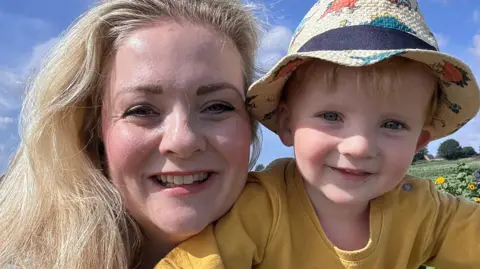
Kristal, a mother of two from Leeds, used commercial baby food to feed her son Austin, who is now two years old.
“Like most parents, I take the health and nutrition of my children very seriously,” she told the BBC.
“”[But] For too long, there have been misleading marketing messages on the nutritional value of baby foods and a “health” involved of some of the infants’ snacks. “
Companies have already been able to market products for babies as young as four months, even if government guidelines stipulate that solid foods should not be given to babies under six months.
Companies have also marketed snacks to infants under 12 months of age when the NHS advice for parents say that children in one do not need snacks.
The new guidelines indicate that these two practices should now be deleted, which could have significant ramifications for manufacturers.
According to directives, sugar levels will be limited in appetizers, snacks, desserts and non-refrigerated yogurts, but there is no maximum level of sugar authorized in fruit sachets. This despite many products containing more sugar in a single pocket than one year should have in one day.
Companies have also been invited to restrict the use of marketing complaints on their products that are not based on scientific evidence.
Experts argue that these claims often make products healthier than they really are, and sometimes even seem to be a better choice than homemade food.
Certain primer bags of food for babies contain labels such as “Just Good Stuff” or “Packed with kindness”, despite the BBC panorama, certain products are low in key nutrients and very rich in sugar.
But it is to be feared that the guidelines will not be clear about what is and is not authorized.
Dr. Vicky Sibson, nutritionist of public health and director of the Charity First Steps Nutrition Trust, describes them as “open to exploitation” by companies.
A version of these guidelines was written for the first time five years ago by Public Health England for the then conservative government.
However, directives have never been published while the Prime Ministers have changed and new priorities occurred during the COVVI-19 pandemic.
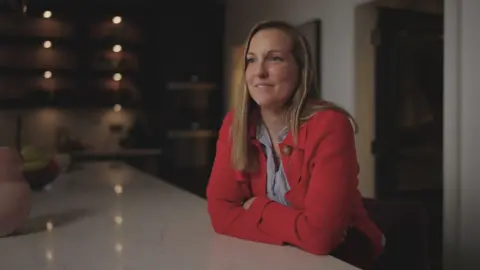
Dr. Alison TEDSTONE managed the team that wrote these guidelines and told the BBC that she hoped “it was the line in the sand”.
The directives are volunteers and the government hopes that they will be followed.
But none of the companies approached by the BBC responded when asked if they adhere entirely to the directives.
A public relations company representing Ella’s Kitchen, a market leader, challenged if some of its products were directive relating to the advertising of snacks.
He said to the BBC their carrot and their fundamental backgrounds and basil – clearly announced like snacks on supermarket websites, and in “snacks and clusters” section on their own website – were in fact intended to be used as part of a meal or “pointed plate”.
Dr. Vicky Sibson described the response of Ella’s “fashionable” cuisine, adding that parents regularly use products such as snacks. She said puffs and mixture sticks were completely inappropriate for use in the main meals because infants need food rich in nutrients.
Dr. Testone said that he had heard such arguments over and over again for baby food companies and that it was “inevitable” that some companies do not adhere to the directives.
The government says that “additional or alternative measures” will be taken into account if companies do not implement these directives by February 2027.
Activists hope that it would take the form of improved compulsory legislation. The government refused to specify whether it was an option.
The guidelines only apply in England, but the manufacturers will be expected to sell all the ranges or products updated across the United Kingdom.
The British Specialist Nutrition Association (BSNA), an industry organization that represents the largest baby food companies, including Ella’s Kitchen, Organix, Kiddicious and Hipp Organic, told BBC that members “have made significant improvements to receipts in recent years, including the reduction of sugar and the increase in plant content, and are continuously case”.
“We will continue to work towards published directives,” he added. “Baby foods can play an important role alongside meals prepared at home and offer options to parents on the go.”
Heinz and Kiddicious did not respond to the BBC. Organix and Ella’s Kitchen did not provide their own declarations, referring to the BSNA.
Piccolo said they “remain determined to evolve with advice to serve families best”.
Charlotte Stirling-Reed, an expert baby and weaning author, told the BBC that she hoped that the brands had adhered “to the future health of children”.
She added that families should not feel guilty of having used the products.
“It’s about changing the food products available for young children, not to be ashamed as parents.”
Do you have more information on this story?
You can reach Catrin Nye by e-mail at catrin.nye@bbc.co.uk, or she Instagram account.


