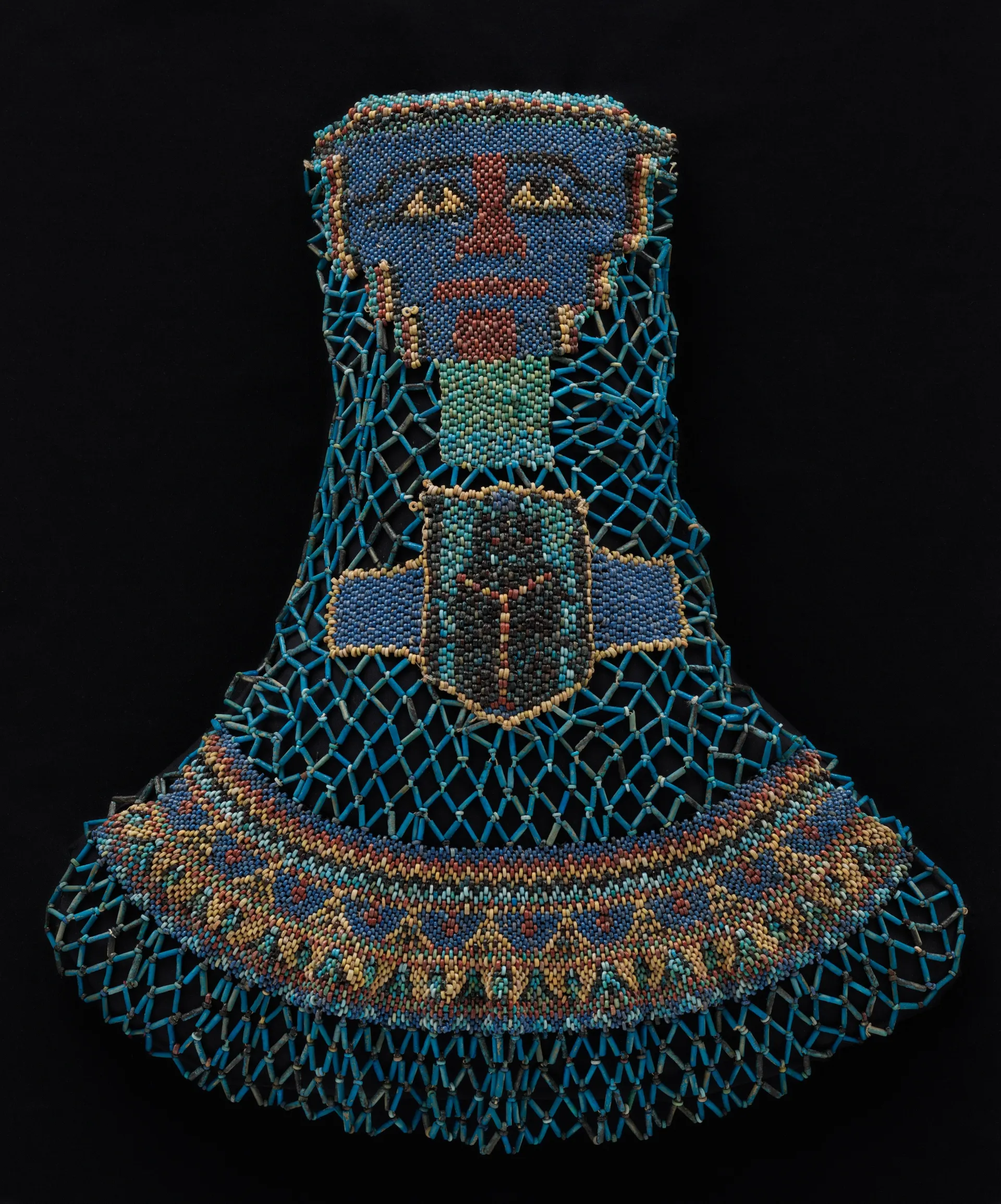
The shroud was made of a network of thousands of colored beads.
(Image credit: Art Institute of Chicago, gift of Henry H. Getty and Charles L. Hutchinson (CC0, public domain))
QUICK FACTS
Name: Beaded Net Burial Shroud
What is this : A veil of multicolored pearls
Where does it come from: Luxor, Egypt
When it was made: Around 664 to 525 BC
Ancient Egyptians Around 2,500 years ago, they wove networks of colorful beads with impressive detail to create burial shrouds. The popular strings of pearls were placed on mummies wrapped in linen and symbolized the transformation of the deceased into Osiris, the god of fertility and ruler of the dead.
This beaded burial shroud is part of the collection of Art Institute of Chicago (AIC), which bought it at the end of the 19th century from Rev. Chauncey Murchdirector of the American Presbyterian Mission in Luxor, who was an avid collector of ancient Egyptian art. The shroud measures 18 inches long and 15.8 inches wide (45.7 by 40 centimeters), meaning it can easily cover a person’s head and upper chest.
The beaded net shroud has three main elements: a human face, a winged scarab and a large necklace, according to the Egyptologist. Emily Teeterwho published a in-depth analysis of the artifact for the museum.
The person’s face was made primarily from dark blue beads, while their facial features and eye makeup are depicted abstractly with black, red, and yellow beads. A false beard similar to the famous example of Tutankhamun mask was added in teal beads. The use of many blue beads could be a nod to the sky goddess Nut, whose body was sometimes depicted as a series of stars in a blue field, Teeter wrote.
Just under the face is a winged beetle rendered in multi-colored beads. It probably evokes Khepri, a scarab-faced sun god who represented creation and renewal, according to the AIC. While scarab amulets were often added to mummies during the wrapping process, this work of art depicts the beaded scarab on the shroud itself.
Below the scarab is a necklace made of dark blue, red, yellow, black and light blue beads that create a series of yellow lotus flowers and red floral pendants.
MORE AMAZING ARTIFACTS
According to Teeter, beaded net shrouds were usually placed over red linen covering the wrapped mummy. The shroud would have been held in place with ties wrapped around the back.
“Together, the shroud and net imitate the shrouds of Osiris, thus symbolizing the assimilation of the deceased to the god,” writes Teeter. The goddess Nut also frequently appeared on the chests of mummies. “Just as Nut’s arms encircled the deceased, the net of pearls enveloped the mummy,” she writes.
For more stunning archaeological discoveries, check out our Amazing artifacts archives.