BenQ MA270S review: Studio Display specs for a whole lot less


At a glance
Expert rating
Benefits
- Excellent image and text quality
- Height adjustable stand is standard
- Multiple connectivity options
Disadvantages
- No integrated webcam
- 70Hz max refresh rate may not be high enough for gamers
Our Verdict
If you’ve been waiting for a 27-inch 5K display, take a look at the BenQ MA270S. It is a good alternative to the Apple Studio Display with excellent image quality and more diverse connection options.
Price when reviewed
This value will display geotagged pricing text for the undefined product
Best price today
Best prices today: MA270S

BenQ has done a great job with its displays aimed at Mac users. I have reviewed the MA270U and MA270UP and recommend them. But these 27-inch screens have a specific feature that may be prohibited for some customers: they are 4K screens, not 5K like the Apple Studio Display. Most people will accept 4K, but for others it’s a deal breaker.
Good news: BenQ now offers a 5K offering, the new MA270S. It’s basically like the others, except it’s now a direct competitor to the high-resolution Studio Display. More good news: the MA270S lives up to the standards set by its two predecessors, with an excellent combination of image quality, features and price.
Features
| Size | 27 inches |
| Glass facade | Nano Glossy Panel |
| Aspect ratio | 16:9 |
| Native resolution | 5120 by 2880 |
| Panel/Backlight Type | IPS/LED backlight |
| Response time | 5ms |
| Contrast ratio | 2000:1 |
| Refresh rate | 70Hz |
| Color depth | 10 bits |
| Brightness | 450 nits |
| Dimensions with support (horizontal) | Highest height: 22.1 x 24.2 x 8.7 inches (560.1 x 613.8 x 220.2 mm) Lowest height: 17 x 24.2 x 8.7 inches (430 x 613.8 x 220.2 mm) |
| Weight with support | 19.05 pounds (8.64 kg) |
BenQ MA270S: design and construction
The MA270S takes inspiration from its 4K brothers. It’s almost exactly like those two displays, with a plastic body and less than 1mm bezels. The only major difference is that BenQ has moved the Visual Optimizer sensor to the bottom left of the front of the screen. Although it disrupts the previously clean line, it doesn’t stand out. You see it, but it’s not distracting.
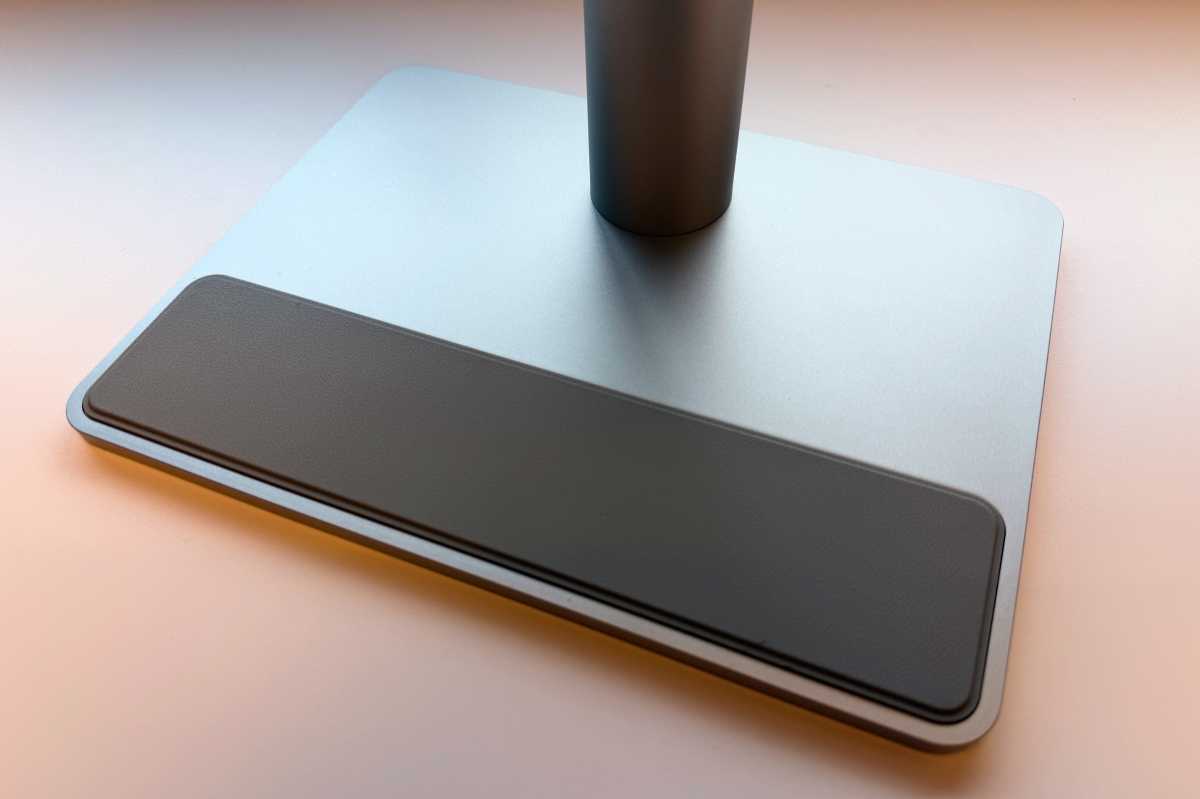
The base of the MA270S has a protective pad for resting an iPhone, AirPods, etc.
.
Foundry
The Visual Optimizer sensor automatically adjusts screen brightness based on room lighting. Placing it on the front brings the brightness closer to what the user perceives. It’s a thoughtful change.
A few months ago, BenQ launched the MA270UP, which implements the company’s Nano Gloss panel. The MA270S also uses the same panel, so it is a glossy screen and not available in matte. Apple’s Studio Display is also glossy, but it has a nano-textured (matte) glass option that increases the price by $300.
I didn’t experience any glare or eye strain while using the MA270S, issues that can arise when using a glossy display. Glossy is preferred by users who want vibrant colors and deep black reproduction – some might say that a matte screen, in comparison, looks washed out.
BenQ MA270S: ports
The MA270S has the following ports:
- Two HDMI 2.0 ports
- A 35W USB-C PowerDelivery port
- One 96W PowerDelivery Thunderbolt 4 port
- One 15W PowerDelivery Thunderbolt 4 port
- Two USB-A ports (USB 3.2 Gen 2, 10 Gbps, 7.5 W)
- A USB-C downstream (USB 3.2 Gen 2, 10 Gbps, 15 W)
- 3.5mm headphone jack
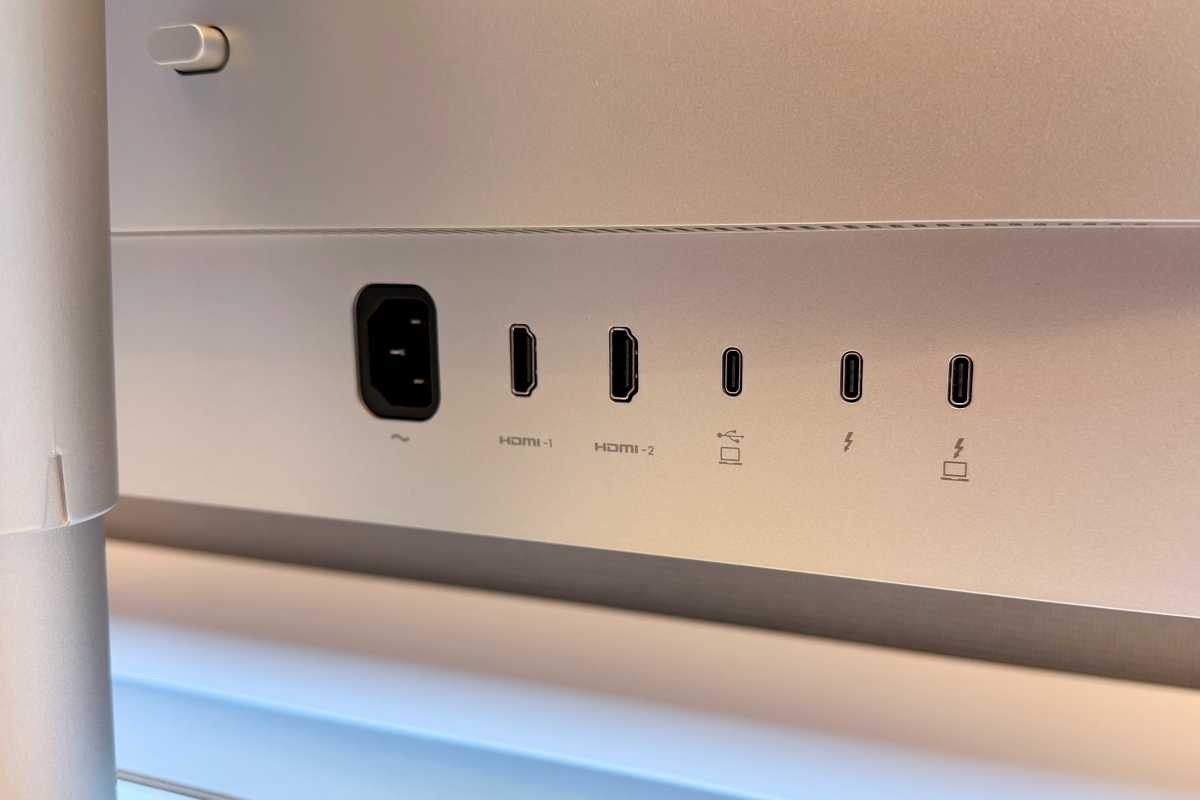
Macs can connect via HDMI, USC-C, or Thunderbolt.
Foundry
MacBooks can connect to the display via HDMI, USB-C, or Thunderbolt, and I’ve used all three types without any problems. However, if you connect via HDMI, your MacBook does not charge when connected: HDMI connections do not provide power. If you want to use the display as a hub, you need to connect the MacBook to USB-C or Thunderbolt.
BenQ MA270S: Image quality
The MA270S produces pleasing, high-quality images and text is sharp. At the Macworld office, I usually use a 4.5K iMac to produce the Macworld podcast in the studio, and when I switched to a MacBook Pro connected to the BenQ display, I could easily see the improvement in quality. Blacks are richer, colors are rich, and text is sharp. This screen, like the other MA270 screens, is impressive.
One small upgrade the MA270S offers over other BenQ displays is a 70Hz refresh rate, slightly higher than the standard 60Hz (used by Studio Display). I didn’t notice a difference in general daily use, but those with a more discerning eye might notice the difference compared to other monitors when scrolling or watching videos. The MA270S’s refresh rate is set at 70Hz, so if you want a faster rate (90Hz or 120Hz) you’ll have to look elsewhere.
BenQ MA270S: Price
The MA270S is priced at $999 and the company is offering a special deal where if you buy two displays, the second display is 20% off. This offer is valid during the March pre-order period. At $999, it’s significantly cheaper than the Apple Studio Display. Keep in mind that if you want a height-adjustable stand with Apple’s display, you have to pay $400 more — a standard feature on BenQ’s display — which doubles the price. The MA270S tilts, swivels, and swivels 90 degrees, but you won’t get a webcam or Spatial Audio speakers.
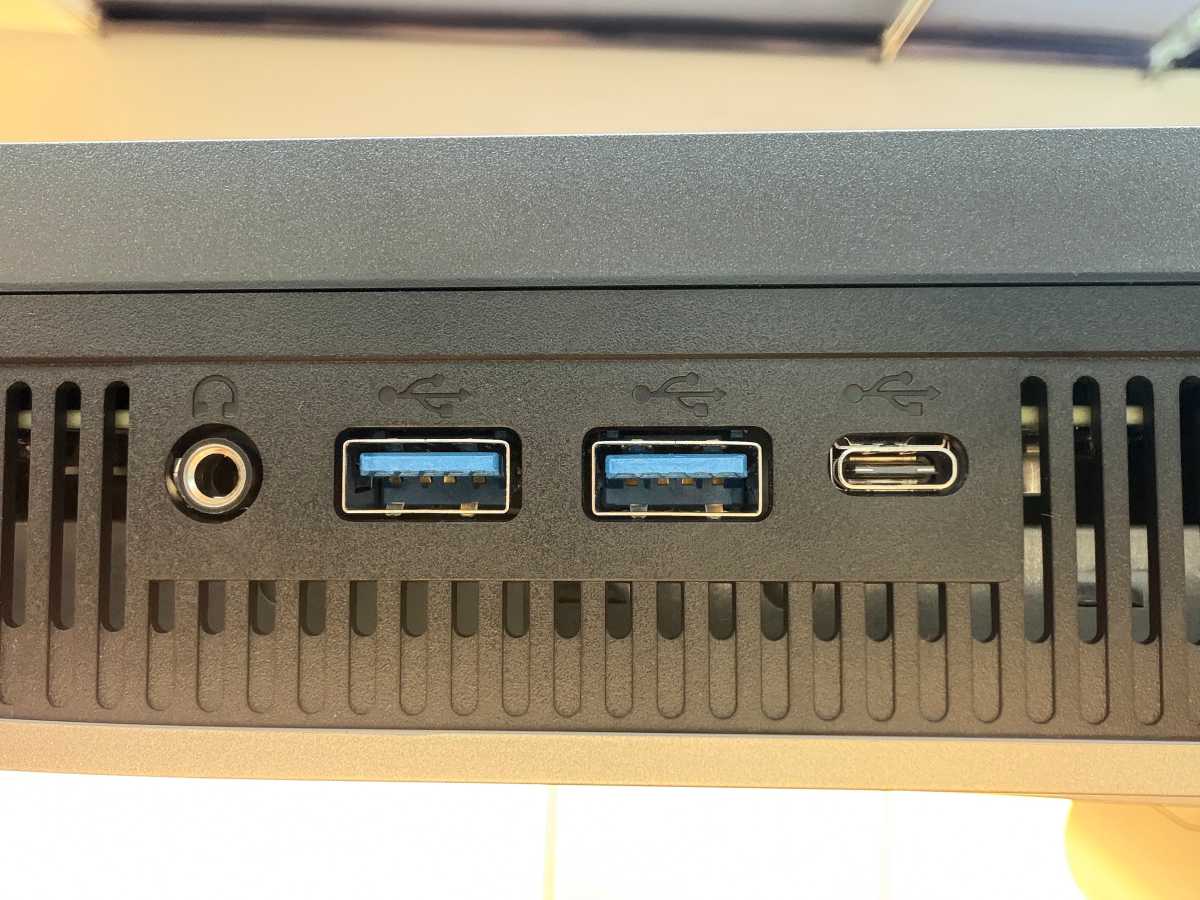
A USB port and headphone jack are located at the bottom of the screen for easy access.
Foundry
Should you buy the BenQ MA270S?
If you’ve been waiting for a 27-inch 5K display, take a look at the BenQ MA270S. It’s a good alternative to the Apple Studio Display; the MA270S lives up to its image quality, while offering more options as a connection hub. An obvious advantage of the Studio Display is a built-in webcam, which is missing in the MA270S, but the Studio Display is prohibitively more expensive if you need a height-adjustable stand.
Apple launched the 2nd generation Studio Display in March 2026, and it’s not that different from the previous model. It still costs $1,599 and the improvements are minor: Thunderbolt 5 and a better camera. It uses the same 5K, 60Hz panel as before, so unless you want a built-in webcam or Thunderbolt 5, there’s no reason to choose it over the MA270S.
Now Read: Best Mac Monitors: The Mac Compatible Displays We Recommend


