Beware, beachgoers: New spider discovered in California’s sand dunes


Just in time for Halloween, researchers have identified a new species of trapdoor spider. The newly discovered Aptostichus ramirezae is about the size of a quarter, brown and quite large. This is the fourth known species of trapdoor spider in California whose habitat is restricted to sandy coastal dunes.
Female trapdoor spiders are essentially vampires. They spend their entire lives in silky underground burrows behind a camouflaged hinged door. They only leave their den for lunch, when they feel vibrations indicating that they are passing over an unfortunate prey. Fortunately, these related tarantulas are small.
In a study recently published in Ecology and evolutiona team from the University of California, Davis (UC Davis) discovered that this new trapdoor species is closely related to Aptostichus simus.
“Although there are more than 50,000 species of spiders worldwide, there are likely hundreds of thousands more yet to be discovered,” said Jason Bond, lead author of the study and a biologist at UC Davis, “even along the coast, where new species of spiders may be hiding just under the feet of California beachgoers.”
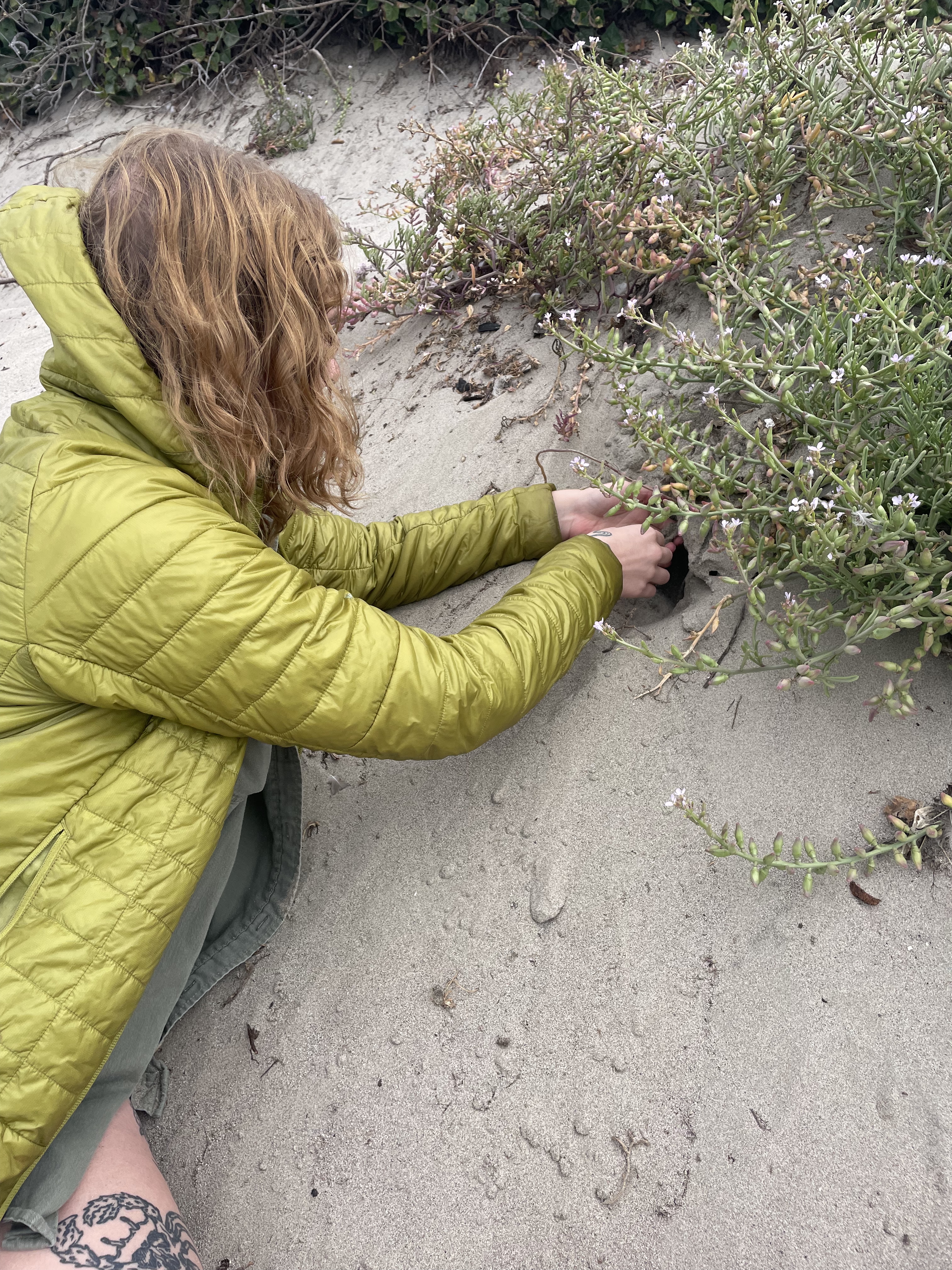
Suspecting that Aptostichus simus hid some cryptic species – visually similar but genetically distinct species – the team analyzed the genomic DNA of different specimens from its range, as well as their distribution.
“Based on what we know about their natural history and lifestyle, they will not be able to disperse to different coastal dunes to breed and ‘mix’ with each other,” said Emma Jochim, a doctoral student at UC Davis and co-author of the study.
Bond named the new species Aptostichus ramirezae in honor of Martina Giselle Ramirez, noted arachnologist known for her work on trapdoor spider population genetics and dean of the College of Science at California State University, Stanislaus. Previously, Bond had found inspiration for new species names among celebrities and musicians, among others, with examples including Aptostichus stephencolberti, Myrmekiaphila neilyoungiAnd Aptostichus barackobamai.
Unfortunately, Aptostichus simus And Aptostichus ramirezae are vulnerable species. They live in limited and diminishing habitats: coastal dunes from central California to northern Baja California, Mexico, and some Channel Islands. According to Jochim, the Aptostichus simus the lineage is particularly threatened. Researchers realized that today the species is primarily found only in San Diego, where estimates of sea level rise don’t paint a pretty picture. Additionally, spiders do not adapt quickly to new environments.
Studying their genetic differences helps scientists recognize the most vulnerable populations. More broadly, monitoring spider species highlights the diversity of our planet.
“If we don’t know how many species live in an area or understand patterns of genetic diversity among populations, we don’t really know which areas would be most important for conservation efforts.”

House of the Future Prize 2025


