Bipartisan bill seeks to block China, Qatar funding to US universities


NEWYou can now listen to Fox News articles!
EXCLUSIVE: A bipartisan group of lawmakers is moving to crack down on foreign influence in American education by targeting universities’ financial ties to adversary countries.
The package would bar federal funding to colleges that operate “branch” campuses in adversarial countries or accept research funding in sensitive areas like artificial intelligence, biotechnology and quantum computing.
China, for example, has been a major source of foreign influence in American education through its Confucius classes, which states like Oklahoma have cracked down on.
At the federal level, Rep. Elise Stefanik, R-N.Y., took on the responsibility of defending education against issues ranging from foreign influence to anti-Semitism on campus, famously headlining a hearing after which the UPenn president resigned under pressure over her responses to it.
HOUSE GOP LAUNCHES BLITZ OF BILLS TO SHUT DOWN CCP INFILTRATION IN AMERICAN SCHOOLS: “COMMON SENSE”
Stefanik is running again in front of an education protection initiative, telling Fox News Digital that she is part of a bicameral, bipartisan group that aims to keep foreign influence away from America’s young and growing minds.
“I introduced the No Hostile Branches Act with Senator Rick Scott, and it is part of the broader higher education reform effort I have led in Congress,” Stefanik said in an exclusive interview.
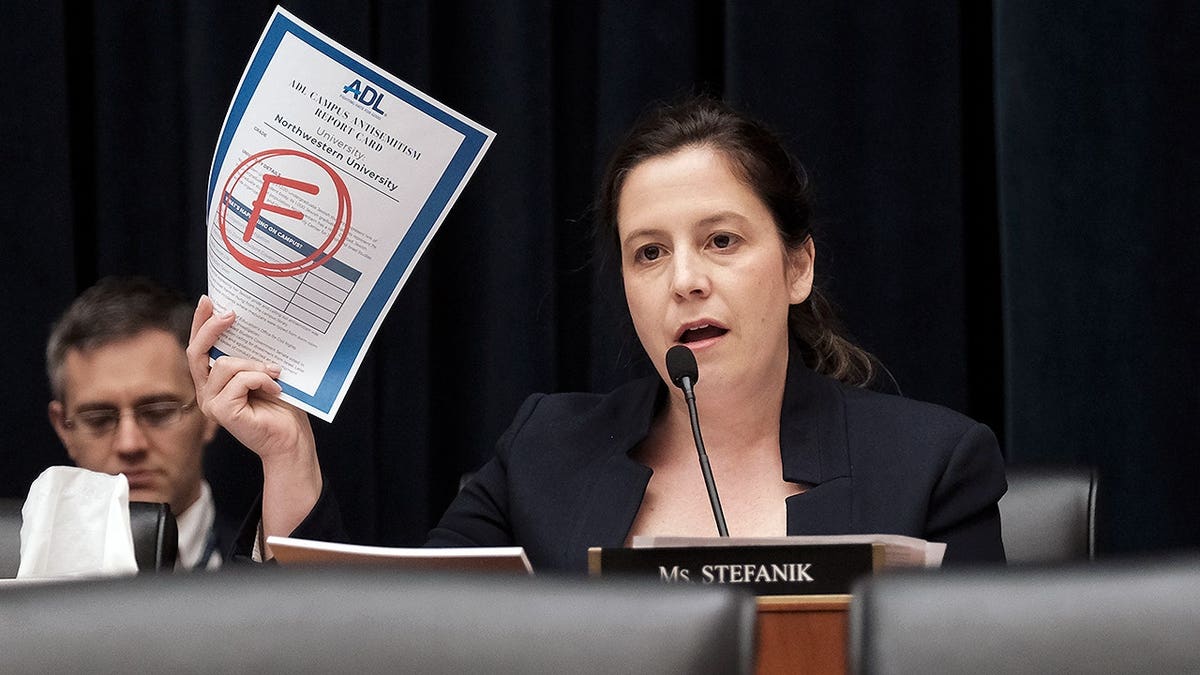
Rep. Elise Stefanik, R-NY, creates a viral moment during a hearing on education. (Michael McCoy/Getty Images)
“One of the challenges I’ve seen is the influence of foreign adversaries who sow discord on our higher education campuses. Part of that comes from the influx of foreign dollars, but also the existence of branches in these adversarial foreign countries.”
She pointed out that her home state of New York has major universities that operate branch campuses in Chin, but said the problem extends beyond the Empire State to other major schools in Chicago, Washington and elsewhere.
Stefanik added that Confucius Institutes and classrooms were recently banned by the national defense bill, and just as that effort was bipartisan, so is his second education security bill this week.
The Defending American Research Act prevents any institution of higher education from receiving federal research funding for five years if it receives funds from certain foreign countries, including Qatar, Venezuela, Turkey and North Korea.
In Stefanik’s book, “Poisoned Ivies,” she noted that she delved into the subject of dangerous aspects of current campus life, from foreign influence to anti-Semitism.
“[Ours] was the most-watched hearing in congressional history. This led to the resignation of several university presidents, but, more importantly, it triggered an earthquake in higher education reform. There have been seismic shifts in higher education, both in the marketplace, as you see parents and students voting with their wallets and their feet, as this changes,” Stefanik said.
She added that many young Americans seek a college education in schools in the South, where liberal influence from the Northeast and West Coast is more muted.
STEFANIK TO RELEASE NEW BOOK ON ANTI-SEMITISM IN COLLEGES AS SHE VISITES BID FOR NY GOVERNOR

A Chinese flag flies near the Capitol dome in Washington, DC, amid new legislation targeting lobbying by former government officials in support of China. (Douglas Rissing/Getty Images)
Sen. Rick Scott, R-Fla., and Rep. Josh Gottheimer, D-N.J., are joining Stefanik in the effort, and Scott told Fox News Digital that America “has enemies” and should “start acting like them” when it comes to their influence on higher education.
“Countries like communist China and terrorism-supporting Qatar should not be able to use American colleges and universities as outposts to spy on us, steal sensitive research and spread anti-American propaganda, but we have let them do so for years,” Scott said.
MORE THAN 160 HOUSE DEMS VOTE AGAINST Crackdown on FOREIGN INFLUENCE IN U.S. SCHOOLS
“This legislation is critical to America’s national security and the future of our higher education system, and neither should be for sale.”
Although the list includes more obvious entries like North Korea, Cuba, and China, Qatar is also included, although it remains a somewhat neutral or cooperative partner on national security issues such as evacuations from Afghanistan and the Iranian conflict.
However, Stefanik said that when it came to her influence on American education, her research led her to “billions of dollars” coming from Doha, appearing to support anti-Semitic interests and “pro-terrorist professors” at some universities, including in her home state.
“I think this is one of the key ways that we need to combat this foreign influence that really moves away from the founding missions of these institutions of higher education,” she said.
CLICK HERE TO DOWNLOAD THE FOX NEWS APP
Other countries listed in both bills include the Bolivarian Republic of Venezuela, the Islamic Republic of Iran and the Russian Federation.
The collective hope of the bill’s sponsors is that their measures will provide the leverage needed to force American universities to sever ties with adversary governments or jeopardize their bottom lines.


