Boston Public Library aims to increase access to a vast historic archive using AI : NPR

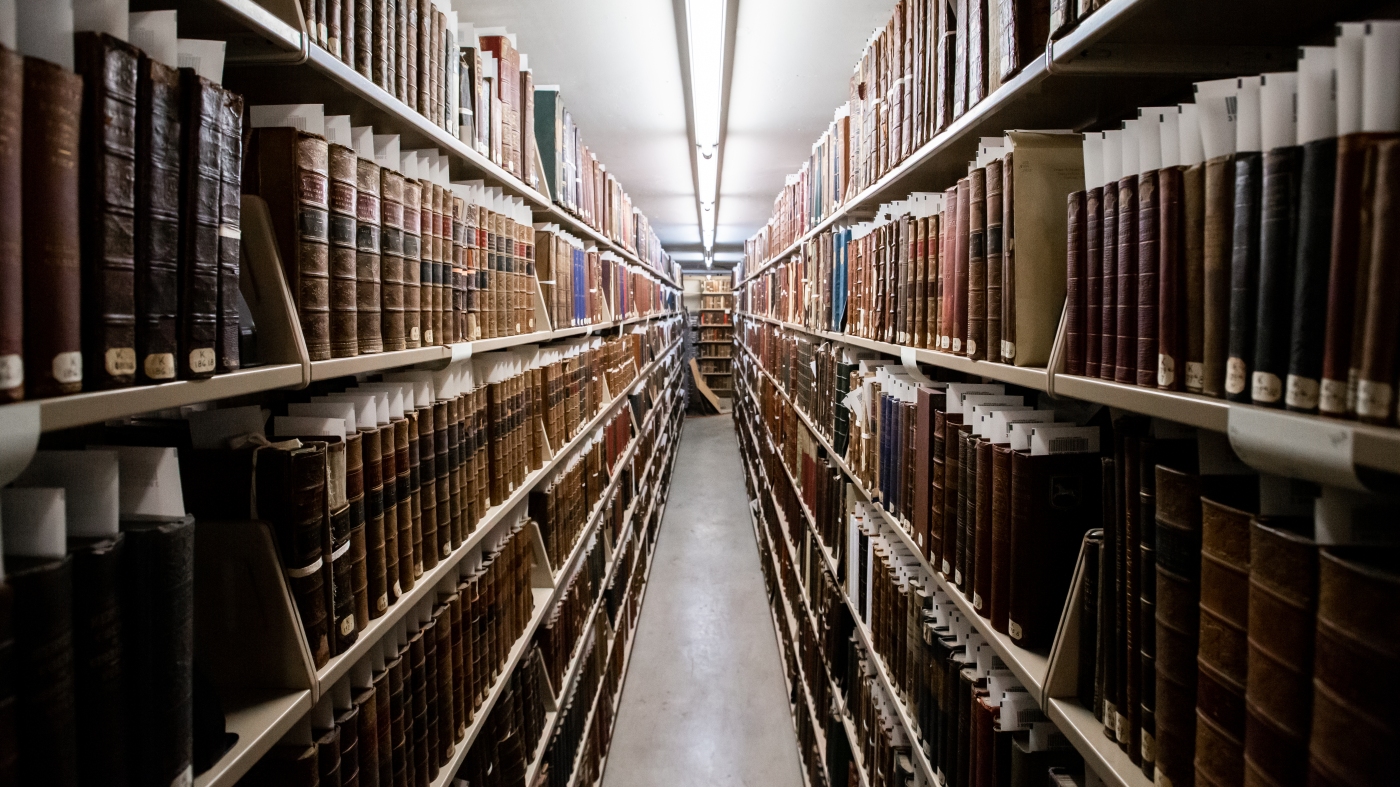

The batteries of the Boston Public Library, one of the oldest and the largest public library systems in the country.
Aram Boghosian for the Boston public library
hide
tilting legend
Aram Boghosian for the Boston public library
The Boston Public Library, one of the oldest and the largest public library systems in the country, is launching a project this summer with Openai and Harvard Law School to make its mine of historically important government documents more accessible to the public.
The documents date back to the early 1800s and include oral history, congress reports and surveys on different industries and communities.
“It is really an incredible benchmark for primary source equipment covering the whole history of the United States because it was expressed by government publications,” said Jessica Chapel, head of digital services and online from the Boston Public Library.
Currently, public members who wish to access these documents must appear in person. The project will improve the metadata of each document and allow users to search and reference whole texts from anywhere in the world.
Chapel said that the Boston public library planned to scan 5,000 documents by the end of the year, and if everything is going well, develop the project from there.
Have a good deal with AI
Due to the massive size and fragility of this historic collection, achieving this goal is an intimidating process. Each element must be executed by a scanner by hand. It takes about an hour to make 300 to 400 pages.

A book undergoing the digitization process in a Boston Public Library scanner.
Boston public library
hide
tilting legend
Boston public library
Harvard University said it could help. Researchers of the Institutional Data Initiative of the Harvard Law School Library work with libraries, museums and archives on a number of fronts, including the formation of new AI models to help libraries to improve the search for their collections.
The companies of AI help to finance these efforts and, in exchange, can train their large language models on high -quality materials which are not copyright and therefore less likely to lead to prosecution. (Microsoft and Openai are among the many players of the AI targeted by recent proceedings against the violation of copyright, in which complainants such as the authors claim that companies have stolen their works without authorization.)
“Having information institutions such as the libraries involved in the construction of a lasting data ecosystem for AI is essential, because it does not only improve the amount of data we have, it improves the quality of the data and our understanding of what contains,” said Burton Davis, vice-president of the intellectual property group of Microsoft.
Access for all
Greg Leppert, the executive director of the Institutional Data Initiative of the Harvard Lad School Library, said that it was not the objective of the initiative to grant privileged access to IA companies to the rich trves of information outside the Dupyright held in libraries and archives. Anyone can have access to data after scanning.
“It is a double -meaning street, where we improve data in a way that will help AI, but these improvements go to the library,” said Leppert. “It therefore also improves the owner’s experience.”

OPENAI helps the Boston public library to cover costs such as digitization and project management. The technological company has no exclusive rights to digitized data.
“We benefit, like others, from their efforts to digitize the public domain, expanding high quality data and public knowledge on which AI systems, including ours, can rely,” the company said in a press release at NPR.
Public-private partnerships
Library professionals say that working with AI companies will provide broader access to information.
“I think this is a really useful partnership of which we are going to obtain more accessible collections,” said the Boston Public Library chapel.
And, because librarians are involved in the conservation and categorization of this information, the integrity of the materials used by AI companies can be more easily protected.

“Having professionals trained with deep knowledge on subjects is crucial at that time while we are starting to develop what the future will bring,” said the president of the American Library Association Sam Helmick.
But library experts have also expressed their caution about these partnerships due to cultural differences between public institutions and companies.
“The kind of ethics of” Silicon Valley “Move Fast and Break Things” is contrary to the values of the library, which concern access and transparency, “said Michael Hanegan, co-author of the new book AI and generative libraries.
“All of this is changing so quickly: technology is playing quickly. Companies are moving quickly,” said Chapel. “And the libraries work on a very different time scale. So there is a small cultural confrontation.”
Jennifer Vanasco has published this story for broadcasting and digital.


