California just aligned its carbon market with Washington’s: Why that matters


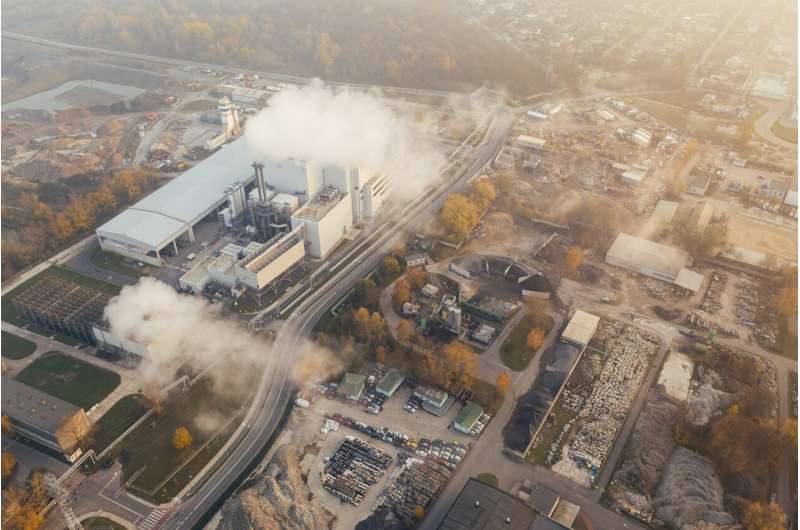
Credit: UNSPLASH / CC0 public domain
California legislators during the weekend, extended the state carbon market for years – and renamed it to reflect Washington’s historic climate policy.
The two states of the west coast stop at the head of the national pack in their efforts to reduce greenhouse gas emissions warming the planet while the federal government stimulates the coal, gas and oil industries.
Originally to be expired in 2030, the California carbon market will now extend until 2045, decided the legislative assembly. This decision injects a feeling of stability in the rocky political landscape of climate policy, an encouraging development while the two states consider whether it is necessary to unite its forces, said Joel Creswell, who manages the program to reduce climate pollution for the Washington Ecology Department.
“We do not wait for the federal government to give us permission,” said Creswell. “This is how we can progress, and we don’t waste time.”
Development comes as good news for climate defenders within States after President Donald Trump took his influence on Washington DC, showing a surprising ability to block a large list of renewable energy projects and even the capacities of states cancellation states to eliminate gas vehicles.
But these carbon markets, which grant monetary value on greenhouse gas emissions and cap the quantity that top pollutors are allowed to pump in the atmosphere, are firmly rooted in the own authority of Washington and California, said Creswell. Trump cannot stop them; Although it has targeted the Californian market and other climatic policies in a decree.
California launched its market, initially called “Cap and Trade” in 2013, connecting that of the Canadian province of Quebec the following year. Washington launched its market in 2023 after the adoption of the climate engagement law. The three governments plan to merge their markets, in a process called linkage, for years now.
The California market had to expire in 2030, but now, with an additional decade and a half of the track, Creswell said that the path to the link is clearer.
In these markets, the best polluters pay emissions by buying auction. This increases billions for climate and environmental justice initiatives through the United States, while over time, governments decrease the number of benefits sold, thus reducing pollution. In Washington, the auctions have collected more than $ 3 billion.
Now, these best polluters understand that they will be required to participate in the market for the coming years, said Creswell, which allows them to plan decades in the future and injects the stability of the carbon economy.
Investors love stability, noted Creswell.
California has even adopted the name “Cap and Invest”, corresponding to its brand with the name of the Washington market since its launch.
Civil servants and defenders of climate action celebrated this decision.
“There has never been a more important moment for the States to lead on this issue, and we are impatient to continue working with California to connect our carbon markets,” said Ecology Director Casey Sixkiller on social networks. “A combined market will help companies make long -term investments in reducing carbon pollution and building clean energy saving.”
The idea is that these combined markets can better put a breach in greenhouse gas emissions warming our planet and taking a momentum intended to encourage other states and provinces to follow suit.
“Despite the federal attacks on environmental and clean energy programs, Washington and California continue to lead the nation to reduce air pollution while generating income to invest in their local communities,” said Michael Mann, executive director of non -profit climate Clean & Prosperous Washington.
Ten other American states have commercial programs intended to reduce greenhouse gas emissions. Among them, New York and Oregon, which both envisage their own carbon markets on a state scale.
Washington has a key role to play in the encouragement of other states to join, said Creswell. This is one thing for California – with its money, resources and population – to adopt this type of climate policy. But Washington’s participation shows other smaller states that is a feasible company.
Although the concept of link has years at this stage, it is also part of the broader model of the states that come together to adopt their own policies in the absence of a cohesive federal strategy. Washington, Oregon and California also recently formed the West Coast Health Alliance to issue their own recommendations around COVVI-19 vaccinations after federal regulators have reduced access to shooting for large expanses of the population.
For the possibility of a combined carbon, California, Quebec and Washington market must continue to write its own sets of rules on the operation of the process, said Creswell. The markets could be joined at the beginning of next year or in 2027.
2025 The Seattle Times. Distributed by Tribune Content Agency, LLC.
Quote: California has just aligned its carbon market with Washington’s: Why that matters (2025, September 19) recovered on September 19, 2025 from https://phys.org/News/2025-09-california-alted-carbon-washington.html
This document is subject to copyright. In addition to any fair program for private or research purposes, no part can be reproduced without written authorization. The content is provided only for information purposes.


