
February 12, 2026
2 min read
 Add Us On GoogleAdd SciAm
EPA set to scrap the ‘endangerment finding’ that climate change harms human health
The Trump administration is expected to rescind the 2009 “endangerment finding,” ending regulation of greenhouse gases from cars and trucks
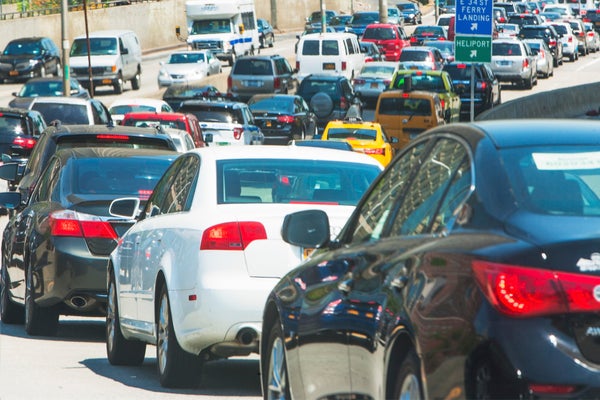
On Thursday the Environmental Protection Agency is expected to scrap the agency’s landmark 2009 global warming “endangerment finding,” breaking with the long-standing scientific consensus that global warming poses a risk to human health. The finding has played a critical role in regulating greenhouse gas emissions from cars and trucks. The transportation sector accounted for 28 percent of all U.S. emissions in 2022.
“If finalized, rescinding the Endangerment Finding and resulting regulations would end $1 trillion or more in hidden taxes on American businesses and families,” said Lee Zeldin, head of the EPA, when he first released the proposed move in July. The decision is expected to be announced on Thursday at a White House event with Zeldin and U.S. president Donald Trump.
The move would go far beyond rolling back Biden-era laws to boost fuel efficiency and limit emissions for gasoline-burning cars and trucks, experts have said.
On supporting science journalism
If you’re enjoying this article, consider supporting our award-winning journalism by subscribing. By purchasing a subscription you are helping to ensure the future of impactful stories about the discoveries and ideas shaping our world today.
Rescinding the finding will almost certainly raise “insurance, transportation, and energy costs” for people, said former EPA scientist Matthew Davis, now vice president of federal policy at the League of Conservation Voters, in a statement on Tuesday. It will also lead to “to more air pollution from vehicle exhaust, worsening the risks of lung and heart disease, cancer, and premature death.”
The EPA established the endangerment finding in 2009, following a Supreme Court decision two years before, Massachusetts v. EPA, that allowed the EPA to set limits on greenhouse gases as air pollution under the Clean Air Act. At the time, the EPA held that greenhouse gas emissions threatened human health through increased drought, famine, extreme weather, damage to crops and sea-level rise, along with the other myriad ill effects of climate warming reported by scientists.
“There is no scientific argument that the evidence that CO2 emissions cause damages has lessened since the 2009 finding. Trends and attributions have only become clearer,” wrote climate scientist Gavin Schmidt in a social media post on Tuesday.
The Trump administration began steps to end the endangerment finding in 2025 as part of a broad rollback of government action on climate change. A July 2025 Department of Energy report, written by a team of longtime climate change critics, helped bolster the effort despite a lengthy review by more than 85 climate scientists that argued the report had largely botched the climate science. Later public record releases from the agency showed that internal DOE reviewers had found parts of the report “misleading” and “not factual” in their own review.
The decision to rescind the endangerment finding could face challenges in court, and may eventually wind up in front of the Supreme Court. The current Court has appeared amenable to arguments in favor of the oil and gas industry, as seen in the 2022 West Virginia v. EPA decision, which limited the agency’s ability to regulate greenhouse gas emissions from power plants.
Editor’s Note (2/12/26): This story is a developing story and may be updated.
It’s Time to Stand Up for Science
If you enjoyed this article, I’d like to ask for your support. Scientific American has served as an advocate for science and industry for 180 years, and right now may be the most critical moment in that two-century history.
I’ve been a Scientific American subscriber since I was 12 years old, and it helped shape the way I look at the world. SciAm always educates and delights me, and inspires a sense of awe for our vast, beautiful universe. I hope it does that for you, too.
If you subscribe to Scientific American, you help ensure that our coverage is centered on meaningful research and discovery; that we have the resources to report on the decisions that threaten labs across the U.S.; and that we support both budding and working scientists at a time when the value of science itself too often goes unrecognized.
In return, you get essential news, captivating podcasts, brilliant infographics, can’t-miss newsletters, must-watch videos, challenging games, and the science world’s best writing and reporting. You can even gift someone a subscription.
There has never been a more important time for us to stand up and show why science matters. I hope you’ll support us in that mission.


