Can NASA and SpaceX really build a moon base in the next 10 years?


Mars is out; the moon is there. And this time, maybe we’re going there to stay.
On March 24, NASA Administrator Jared Isaacman announced new plans to build a “sustained human presence” on the Moon, with a permanent lunar base. Construction of humanity’s new home away from Earth could begin as early as 2027, Isaacman said.
It’s an exciting prospect, but scientists say lunar colonization won’t be as simple as packing up and taking off. The Moon’s environment is harsh: think electrified, razor-sharp dust and constant radiation. flow of radioactive particles travel at the speed of light. Scientists still don’t know exactly how this increased dose of cosmic radiation, combined with the Moon’s weaker gravitational pull compared to Earth, will affect the human body in the medium to long term.
And then there is technological feasibility: where will the astronauts live and with what resources? Right now, these big questions still await answers that may not arrive in time for the plans proposed by NASA and Musk.
“I don’t think we’re quite ready.” Caitlin Ahrensresearcher at the University of Maryland and NASA’s Goddard Space Flight Center who studies the lunar environment, told Live Science. “A decade may seem like a long time ago to some people. To a scientist, it’s the blink of an eye.”
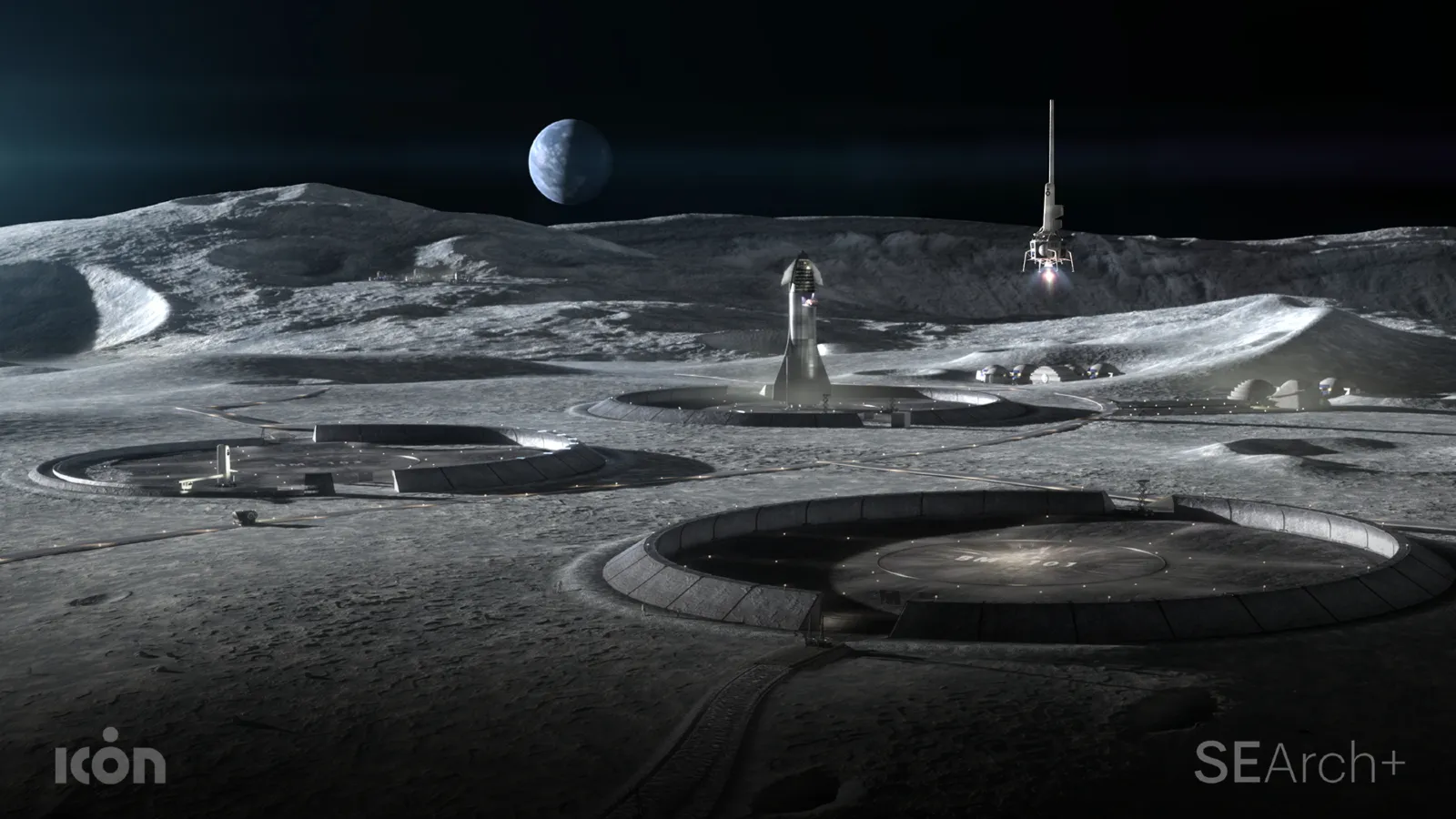
3D-printed launch pads and living quarters, as shown in this concept art, could be a possibility for long-term lunar colonization, according to NASA.
(Image credit: SEArch+)
Satellite of Horrors
Moon dust is quite different from what we call dust on Earth. Without wind or liquid water, moon dust does not soften over time. “We’re talking about very, very sharp little pollens[-size] shards here,” Ahrens said.
It is also easily electrified. Just walking on the Moon kicks up clouds of dust, and rovers traversing the lunar landscape throw up “rooster tails” of levitating, electrically charged dust, which sticks to anything in its path, Ahrens said. Energized dust can block air vents in potential living quarters, scratch spacesuits, and coat solar panels, potentially overheating and breaking them. (The dust caps have already sounded the death knell for several March rovers).
Without the soft blankets of the earth’s atmosphere and magnetic shieldthe inhabitants of the moon would also be constantly bombarded by radiation. Cosmic radiation is “virtually omnipresent everywhere we go in space”, including on the Moon, explains Dr. Emmanuel Urquietaaerospace medicine researcher at the University of Central Florida, told Live Science. “It’s incredibly difficult to protect.”
Cancer is a potential risk, but because the health effects of radiation take time to develop, we won’t know for sure whether it is a major risk factor until potentially decades after human colonists land on the Moon. “Everyone who goes into space … will absolutely be test subjects,” Urquieta said.
We are not ready for self-defense
Humans on the Moon would need bulky construction materials to protect lunar habitats from these dangers. Metal or glass domesunderground habitats and dwellings 3D printed lunar soil are all potential options under consideration.
But Ahrens, who also works on lunar risk assessment, doesn’t think we’re ready to plan construction. For example, if NASA decides to invest in an underground habitat — perhaps the safest way to avoid radiation — scientists still don’t know how to dig on the Moon, she said.
We must be very careful not to sell something that [we] I don’t have
Giuseppe Reibaldi, president of the Moon Village Association
Even with adequately protected living quarters, the Moon’s weaker gravitational pull – only one-sixth that of Earth – can pose health risks. From previous space trip We know that without the gravitational force with which humans evolved, our bones and muscles need a significant amount of exercise to keep them from wasting away. But it wouldn’t be practical to transport heavy treadmills, like those used on the International Space Station, to the Moon, Urquieta said.
A lack of gravity can also redistribute the body’s natural fluid balance, with potentially disastrous effects. Normally, because of the downward force of gravity, up to 80 percent of our blood is in our legs at any given time, Urquieta said. But on the Moon, more fluid would flow to the upper half of the body, causing blood loss as the body tries to rebalance, as well as potential blood loss. swelling at the back of the eye And jugular vein thrombosisa condition that causes potentially fatal blood clots to form in the neck. Compared to weightlessness, lunar partial gravity may or may not pose similar health risks. Urquieta said researchers won’t know until people spend time there.
The future of lunar colonization
Ultimately, Ahrens said, these challenges come down to the need for more data, which scientists hope to gather through missions like NASA’s. Artemis campaign to return humans to the lunar surface as early as 2028. But it envisions a much slower timetable than Musk and Isaacman’s plans; scientists have yet to even take a sample of lunar ice – a resource that lunar colonization planners are counting on.
Depending on its depth and composition, lunar ice could provide water, rocket fuel and rare earth metals. But until scientists obtain a physical sample of the ice, they can’t have confidence in its usefulness or economic prospects. For now, scientific knowledge about the ice’s actual chemical composition is very limited: “We know it’s cold and we kind of know where it is,” Ahrens said.
When it comes to the moon and its offerings, “we must be very careful not to sell something that [we] I don’t have one,” said Giuseppe Reibaldipresident of the Moon Village Association, a nonprofit group focused on international collaboration in lunar activities.
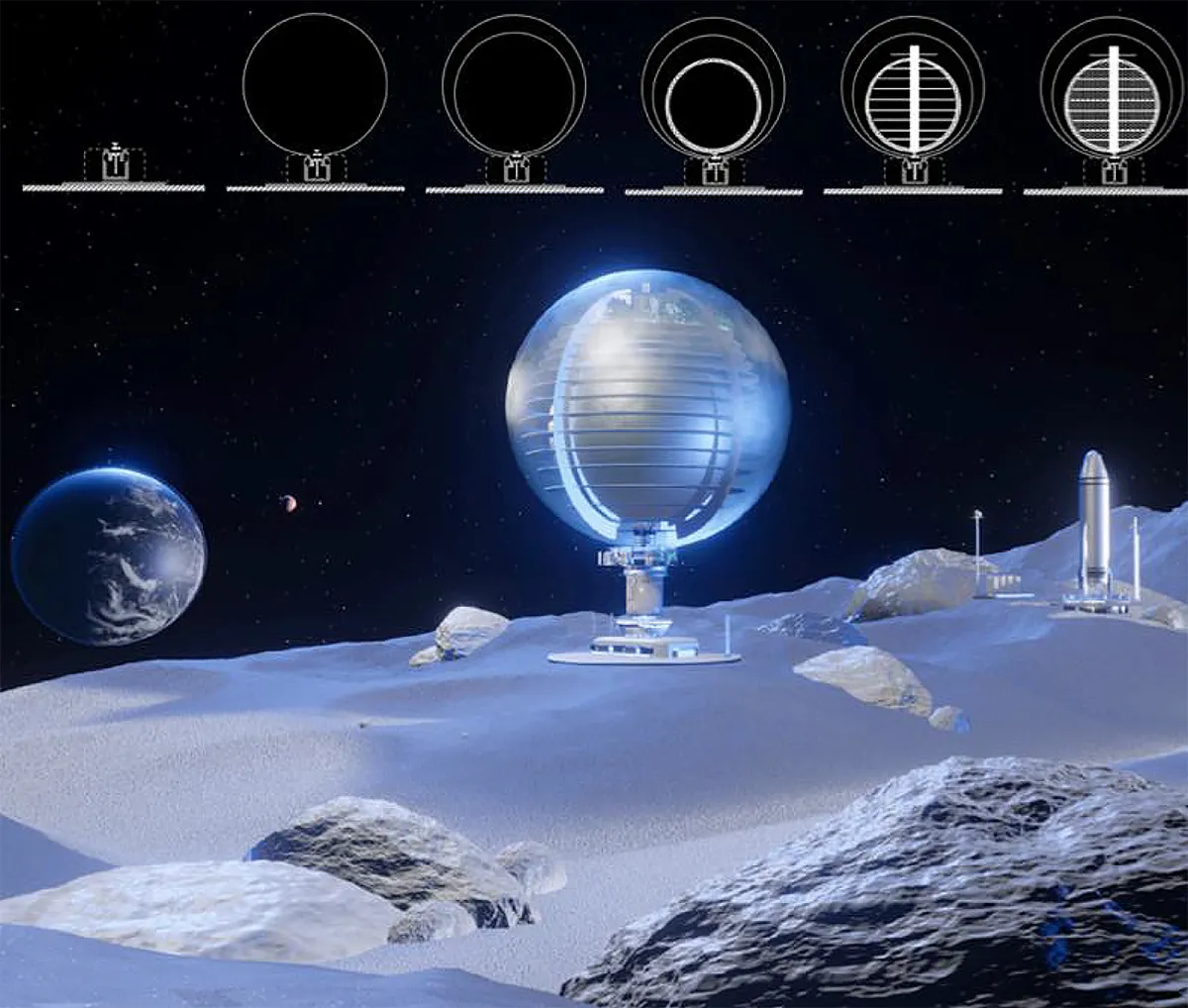
NASA concept art showing a possible glass lunar living structure. The logistics of large-scale construction on the Moon remains one of many open questions.
(Image credit: NASA/Martin Bermudez)
Reibaldi told Live Science that what we find in the moon’s ice could mean the difference between the lunar equivalent of California’s gold rush boomtowns — where settlements sprung up in response to mining opportunities — and Antarctica, where small numbers of scientists come and go purely for research purposes.
But even if permanent colonization doesn’t happen as quickly as hoped, Ahrens says he’s optimistic about the predictions for the Moon’s development. “I think it’s not all sunshine and rainbows, but it’s not all dark and rainy clouds either,” she said.
Editor’s note: The title and main illustration of this story were changed on April 29, 2026.
Moon landing quiz: How quickly can you name the 12 Apollo astronauts who walked on the Moon?


:max_bytes(150000):strip_icc()/Health-GettyImages-1415598175-9043de4f87984046bbded1e722f5d097.jpg?w=390&resize=390,220&ssl=1 "Why Does My Period Smell So Bad? 5 Possible Causes")
