CDC Vaccine Website Promotes Antiscience Claims of Autism Ties


November 20, 2025
2 min reading
CDC Vaccine Website Promotes Anti-Scientific Claims About Autism Links
This week, the CDC quietly changed its official language to suggest that vaccines could cause autism, a claim that scientists say has no evidentiary basis.
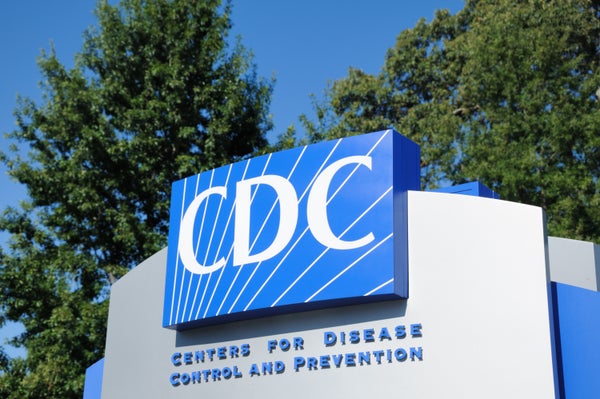
The U.S. Centers for Disease Control and Prevention quietly revised a page on vaccine safety on its website to introduce language suggesting uncertainty about whether vaccines cause autism, echoing ideas promoted by Health Secretary Robert F. Kennedy, Jr., a longtime vaccine skeptic.
Experts who spoke with Scientific American denounced the changes as unscientific and potentially harmful. “It’s a tragedy,” says Michael Osterholm, an epidemiologist at the University of Minnesota.
The administration’s decision rejects decades of evidence showing there is no link between vaccines and autism, he said, adding that the new guidelines pose a public health risk because they could discourage vaccination.
On supporting science journalism
If you enjoy this article, please consider supporting our award-winning journalism by subscription. By purchasing a subscription, you are helping to ensure the future of impactful stories about the discoveries and ideas shaping our world today.
The website change “signals that the truth has no weight in current and future discussions about vaccines” and, because of that, Osterholm says, “children will die.”
Previously, the CDC webpage cited decades of research showing that vaccines do not cause autism. The new version, which was apparently updated on Wednesday, states that the claim that “vaccines do not cause autism” is not based on evidence and that “studies supporting a link have been ignored by health authorities.”
Since 1998, researchers in seven countries have conducted more than 40 high-quality studies involving more than 5.6 million people that investigated such claims and found no link between autism and vaccines, Susan J. Kressly, president of the American Academy of Pediatrics, said in a statement. A 2019 study, for example, found no evidence of a link between autism and the measles, mumps, and rubella vaccine in a group of more than 657,000 children.
“There is no link between vaccines and autism,” Kressly said. “Anyone who repeats this harmful myth is either misinformed or intentionally trying to mislead parents. »
The CDC update also says officials will begin investigating early childhood vaccinations and autism.
“It will be difficult for the public to trust anything the CDC has to say after this,” says Brian Lee, an epidemiologist at the Drexel Dornsife School of Public Health.
The CDC did not immediately respond to Scientific Americanrequest for comment.
It’s time to defend science
If you enjoyed this article, I would like to ask for your support. Scientific American has been defending science and industry for 180 years, and we are currently experiencing perhaps the most critical moment in these two centuries of history.
I was a Scientific American subscriber since the age of 12, and it helped shape the way I see the world. SciAm always educates and delights me, and inspires a sense of respect for our vast and beautiful universe. I hope this is the case for you too.
If you subscribe to Scientific Americanyou help ensure our coverage centers on meaningful research and discoveries; that we have the resources to account for decisions that threaten laboratories across the United States; and that we support budding and working scientists at a time when the value of science itself too often goes unrecognized.
In exchange, you receive essential information, captivating podcasts, brilliant infographics, newsletters not to be missed, unmissable videos, stimulating games and the best writings and reports from the scientific world. You can even offer a subscription to someone.
There has never been a more important time for us to stand up and show why science matters. I hope you will support us in this mission.


