Chess board may discipline Russian grandmaster who accused Naroditsky of cheating


Chess’s international governing body said Wednesday it was considering disciplinary action against a former Russian world champion who had consistently made unproven allegations of cheating against Daniel Naroditsky in the year before the American grandmaster’s death.
The Charlotte Chess Center in North Carolina, where Naroditsky trained and worked as a coach, announced his death on Monday-. He was 29 years old. The cause of death has not been made public.
Russian grandmaster Vladimir Kramnik, who held the world title for several years in the early 2000s, began accusing the California-born professional of cheating in online chess last October. He continued to share his suspicions on social media over the past year without providing substantial evidence.
Naroditsky, who became grandmaster at 18, the highest title outside of world champion, had denied the cheating allegations and accused Kramnik of trying to ruin his life.
Kelly Centrelli / AP 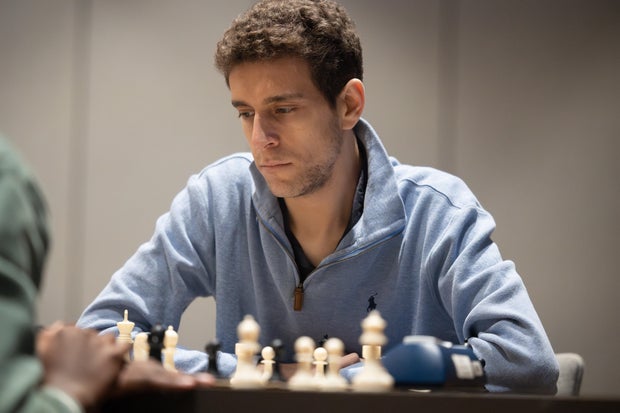
Arkady Dvorkovich, president of the International Chess Federation, said Wednesday that he had formally referred all relevant public statements made by Kramnik before and after Naroditsky’s death to the body’s ethics and disciplinary commission for review. He promised the federation would take “appropriate action” in any cases where public harassment or bullying was observed.
The body requires substantial evidence to launch a cheating investigation and can sanction a player who makes unfounded accusations based on emotion or insufficient data, in accordance with its anti-cheating laws. There are no documented reports that the federation investigated Naroditsky.
The Associated Press reached out to Kramnik via social media Wednesday for comment.
Naroditsky’s accuser harshly criticized
The investigation comes as several grandmasters, including Hikaru Nakamura and Nihal Sarin, have denounced Kramnik’s conduct, saying the Russian professional harassed Naroditsky and tried to destroy his reputation.
Magnus Carlsen, a five-time world chess champion, called Kramnik’s relentless pursuit of Naroditsky “appalling.”
During his latest live stream on Saturday, Naroditsky told his huge online following that Kramnik’s cheating allegations had taken a toll on him.
“Since the Kramnik case, I have the impression that if I start doing good, people assume the worst intentions. The problem is just the lingering effect,” Naroditsky said, adding that Kramnik was one of his “heroes.”
Ennio Leanza / Keystone via AP 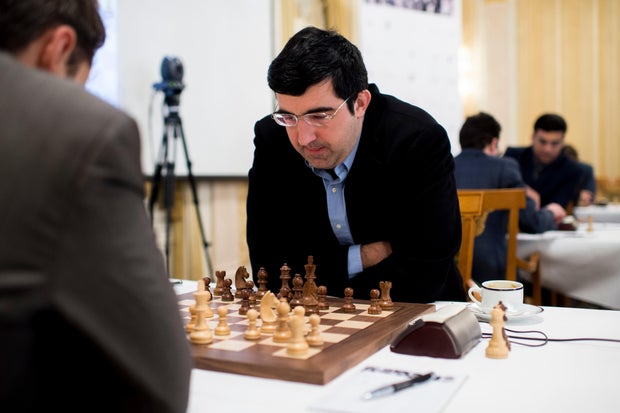
This is not the first time Kramnik has been accused of harassment. The popular Internet chess server Chess.com shut down Kramnik’s blog on the site in 2023, saying he had used it to spread baseless allegations about “several dozen players”.
The following year, Kramnik posted a list of players on social media under the title “Cheating Tuesdays” which included Czech grandmaster David Navara. Navara later shared on his blog that Kramnik’s public accusations caused him to consider suicide. Kramnik responded by accusing Navara of defamation.
In June, the federation responded to players’ public feuds, saying the way Kramnik presents his arguments “brings great harm to the chess community” and “could be ruinous for the careers and well-being of some players.” The group invited Kramnik to present details of his approach and statistical data for formal evaluation.
Allegations of chess cheating have soared during the pandemic
Kramnik’s anti-cheating crusade exploded as gaming moved online during the COVID-19 pandemic.
Many elite players swapped the physical chessboard for a keyboard to continue playing during lockdown, creating a surge in popularity of streaming content and fast-paced online gaming that Naroditsky excelled at.
Brain sports players are known to value respectful conduct on set. But in the digital arena, a new level of toxicity has developed, with allegations of cheating multiplying and becoming much harder to prove. Players now have sophisticated computer systems that could give them an unfair advantage, as well as new ways to profit from their online success.
In blitz and bullet chess, where players have only a few minutes to complete intense matches, experts say top talent often moves with computer-like speed and precision. Naroditsky was among the top 25 blitz players in the world and won the U.S. National Blitz Championship in August.
“Recently, public debate in the world of chess has too often gone beyond the limits of what is acceptable, harming not only people’s reputations but also their well-being,” Dvorkovich admitted on Wednesday. “When this happens, discussions can turn into harassment, intimidation and personal attacks – a particularly serious concern in the current environment.”
“The chess community has long respected the achievements of General Director Vladimir Kramnik, and his contribution to our sport is undeniable,” he continued. “The same high standards that accompany great achievements, however, also bring a responsibility to uphold the principles of fairness and respect and to be ambassadors for the sport.”
Dvorkovich said the federation would create an award in Naroditsky’s memory.
Kramnik continued to publish articles about Naroditsky on the day his death was announced, calling it a tragedy and speculating about the cause. Kramink wrote on the social platform X that the death “should be investigated by the police.” He wrote Wednesday that he received threats after revealing “public information about the ‘dark side’ of modern chess.”


