‘The sun is slowly waking up’: NASA warns that there may be more extreme space weather for decades to come


NASA scientists warn that the sun can “wake up” from a brief period of relative inactivity, contradicting the assumptions spent on our star at home. If this is true, it could mean that decades of potentially dangerous spatial time are in store.
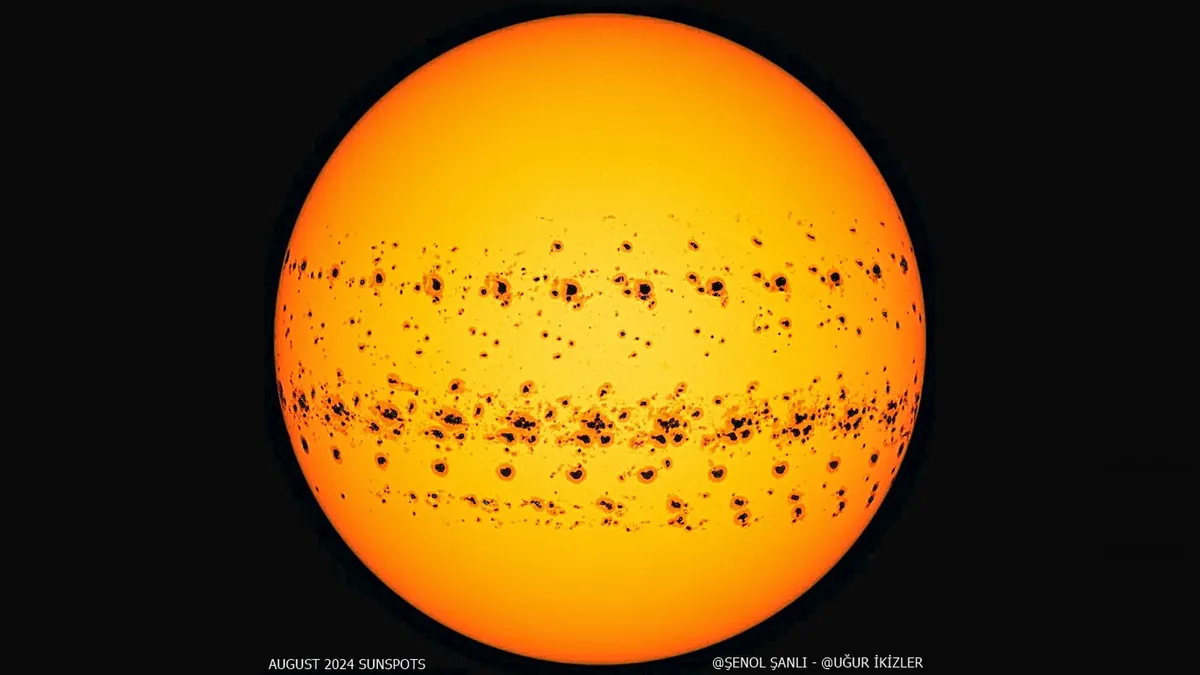
The sun follows a cycle of about 11 years of solar activity which begins with a period of prolonged calm, known as the minimum solar, and is based on an explosive peak, called solar – When our star house frequently Right of powerful sunscreen on us. This pattern is known as the “sunscreen cycle”, because the number of dark patches on the surface of the sun increases and falls with solar activity. The cycle of solar spots is, in turn, governed by a 22 -year longer cycle, known as the Hale cycle – during which the magnetic field of the sun Flips entirely then reverses again.
In the early 2000s, solar activity down has led some scientists to believe that we may have entered a new “deep solar minimum”. This theory gained ground after the last solar maximum, between 2013 and 2014, which was much lower than previous cycles. However, the current cycle of solar spots, which has just culminated, massively upset this theory.
In a new study, published on September 8 Astrophysical newspaper lettersThe researchers have analyzed several metrics of solar activity, including solar wind, the force of the magnetic field and the number of solar spots, and found that they have been on an upward trend since about 2008, and could rise more on future cycles, suggesting that the minimum solar theory is indeed dead.
In relation: 10 supercharged solar storms that blunt us in 2024
“All signs pointed to the sun in a prolonged phase of low activity”, the main author of the study Jamie JasinskiA plasma physicist with NASA laboratory propulsion jet in southern California, said in a NASA declaration. “It was therefore a surprise to see that the trend was reversed. The sun wakes up slowly.”
We are currently end the most recent solar in the sun, which officially started at the beginning of 2024And he didn’t play as planned.
When the current cycle of solar spots began at the end of 2019, experts from Space Weather Predication Center (SWPC) – which includes scientists from NASA and the National Oceanographic and Atmospheric Administration (NOAA) – predicts that solar maximum would most likely start at 2025 and would be comparable to the previous lower cycle.

However, as the current cycle progressed, it quickly became clear that this was not the case and that the maximum solar Arrive earlier and be much more active than initially planned. SWPC scientists later recognized their error, issuing their Very first updated forecastswho came Just in time for the arrival of solar maximum.
Since then, the sun has reached its The highest number of solar spots in more than 20 years and spitting a Save the number of powerful X -class rockets – The most powerful type of explosion that the sun is able to produce.
During the current maximum, the earth was also struck by several major geomagnetic storms or disturbances in the magnetic field of the planet. The most remarkable was An “extreme” event in May 2024which sparked part of the The most vibrant Aurora displays over the centuries And caused more than $ 500 million in damage.
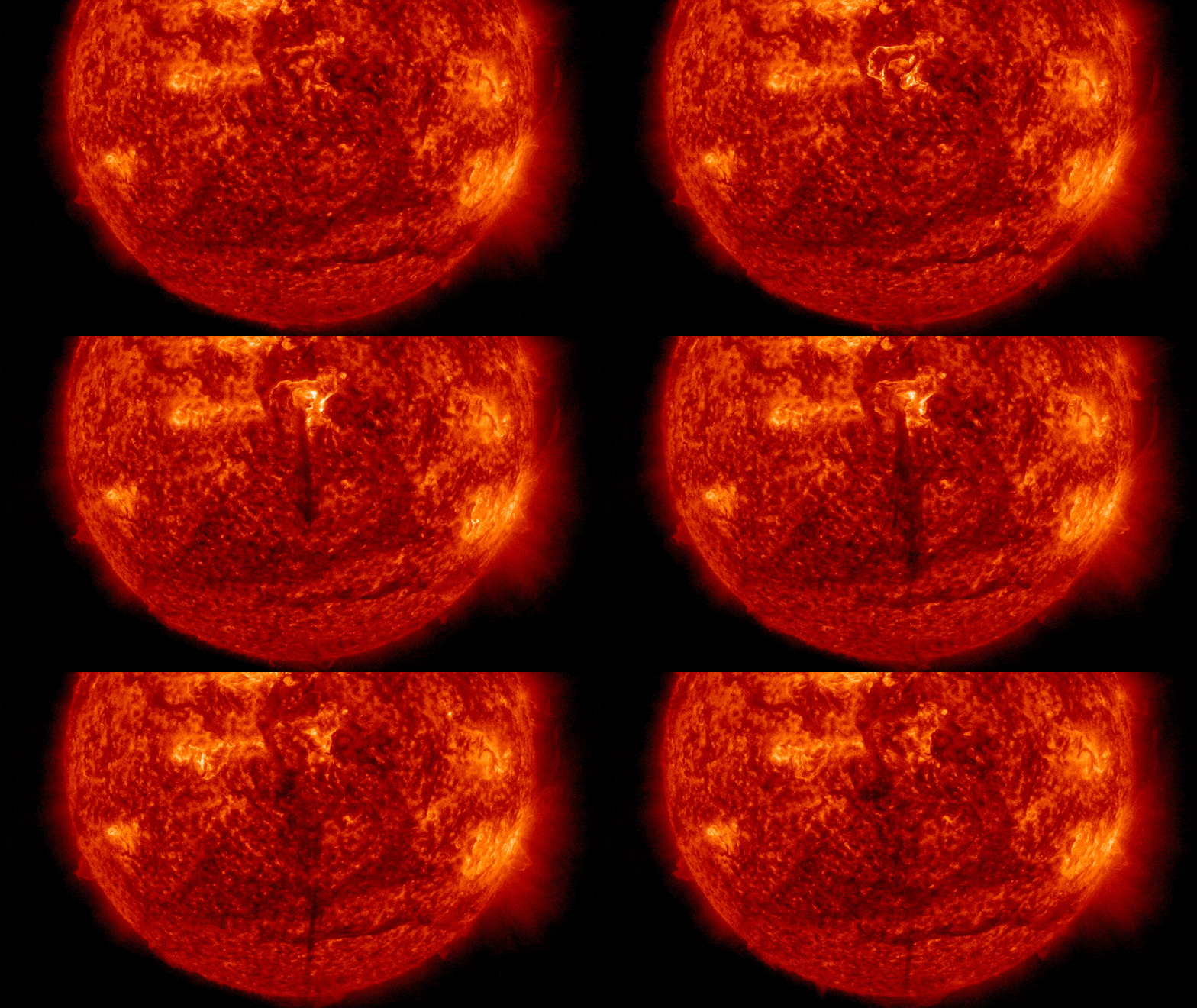
Now, the new study warns that what we have witnessed in recent years will probably become the “status quo” in the coming decades. This could be particularly problematic because humanity has become much more dependent on technologies subject to interference of the space weather, such as electrical networks, GPS controlled machines and orbit satellites, which can be knocked out of the sky by solar storms.
We do not currently know why the sun has experienced a blip in solar activity in recent decades or what could stimulate its current resurgence: “The longer term trends are much less predictable and are something that we do not yet understand completely,” said Jasinski.
Another earlier study this year proposed that the recent increase in activity could be part of a less known and sub-studied solar cycle at 100 yearsknown as the Centennial Cycle of Gleissberg. However, the new study does not mention it at all.