Cocaine Pollution May be Changing How Far Atlantic Salmon Swim — with Potential Ecosystem Effects


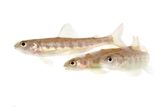
Atlantic salmon are born in freshwater rivers, migrate to the ocean, then return with unerring precision to their spawning rivers to reproduce. All of this traveling is tiring, but it appears that some of these fish are swimming farther from an unusual source.
Researchers first studied the effect of cocaine pollution on wild salmon in a paper published in Current biology. The researchers used implants that slowly released cocaine or its main metabolite into the bodies of their salmon, as well as telemetry devices that tracked the fish’s movements for two months.
“The idea that cocaine affects fish may seem surprising, but the reality is that wildlife is already exposed to a wide range of human-made drugs every day,” Marcus Michelangeli, an environmental scientist at Griffith University and co-author of the new paper, said in a statement. “What’s unusual isn’t the experiment, it’s what’s already happening in our waterways.”
Salmon and cocaine pollution
Cocaine pollution is increasing in our waterways, but previous work has only studied the drug’s impact on fish in the laboratory.
The study found, unsurprisingly, that fish on cocaine and its metabolite swam farther than unexposed fish. The authors say the findings are important because anything that changes the way salmon move and migrate will have an impact on their ecosystem.
“Where fish go determines what they eat, what eats them and how populations are structured,” Michelangeli said. “If pollution changes these patterns, it could potentially affect ecosystems in ways that we are only beginning to understand.
Learn more: Caffeine, cocaine and painkillers found in sharks in Bahamas – a sign of human pollution reaching marine predators
Increase salmon swimming
Michelangeli and his team studied a group of 105 salmon that migrated to and from Lake Vättern, Sweden’s second largest lake, for eight weeks. The team divided their fish into three groups: a control group not exposed to any chemicals, a group exposed to cocaine, and a third group exposed to a compound called benzoylecgonine, a cocaine metabolite frequently found in sewage samples.
All three groups of fish decreased their movements over the eight weeks of the study as their overall activity decreased. But at the end of the study, fish exposed to cocaine or benzoylegonine were more active than control fish.
During the last two weeks of the study, the fish given cocaine swam about 5 kilometers further than the control fish, and those given benzoylegonine swam almost 14 kilometers further, almost double the distance.
The drugs also changed fish migration routes. Unexposed fish remained in the southern part of the lake, while fish dosed with cocaine and metabolites moved north. During the final weeks of the study, fish exposed to benzoylegonine traveled more than 7 miles (about 12 kilometers) farther from their release site than control fish.
Effects of cocaine pollution
The finding that benzoylegonine has a stronger effect on movement than cocaine itself is important because risk assessments focus more on cocaine than its metabolites, even though the latter are more common in waterways.
There’s probably no risk that this chemical adventure will have an impact on people who snack on salmon, according to the study authors. The levels of cocaine they dosed into the salmon reflected levels already present in waterways, and the compounds break down over time.
Researchers now plan to determine the extent of this type of pollution in our waterways and whether cocaine affects the reproduction or lifespan of salmon.
Learn more: Do sharks ingest bales of cocaine and other pollutants?
Article sources
Our Discovermagazine.com editors use peer-reviewed research and high-quality sources for our articles, and our editors review the articles for scientific accuracy and editorial standards. See the sources used below for this article:


