Could Yellowstone National Park Visitors See New Thermal Feature Again This Summer?


Summer is in full swing, which means that families and friends load their cars and go to national parks for the last summer road trip. Along the way, they can stop in Yellowstone National Park and attend the new thermal characteristic of the park.
In 2024, one of the park’s scientists identified the new hydrothermal characteristic. According to the US Geological Survey (USGS), the new characteristic “appeared right before our eyes – literally!”
The new feature can be seen from the road, and although it seems to have become almost dormant in winter, it is possible that the functionality can reappear this summer! In May 2025, the functionality remains in dormant, but there is still a lot of summer.
Spot steam
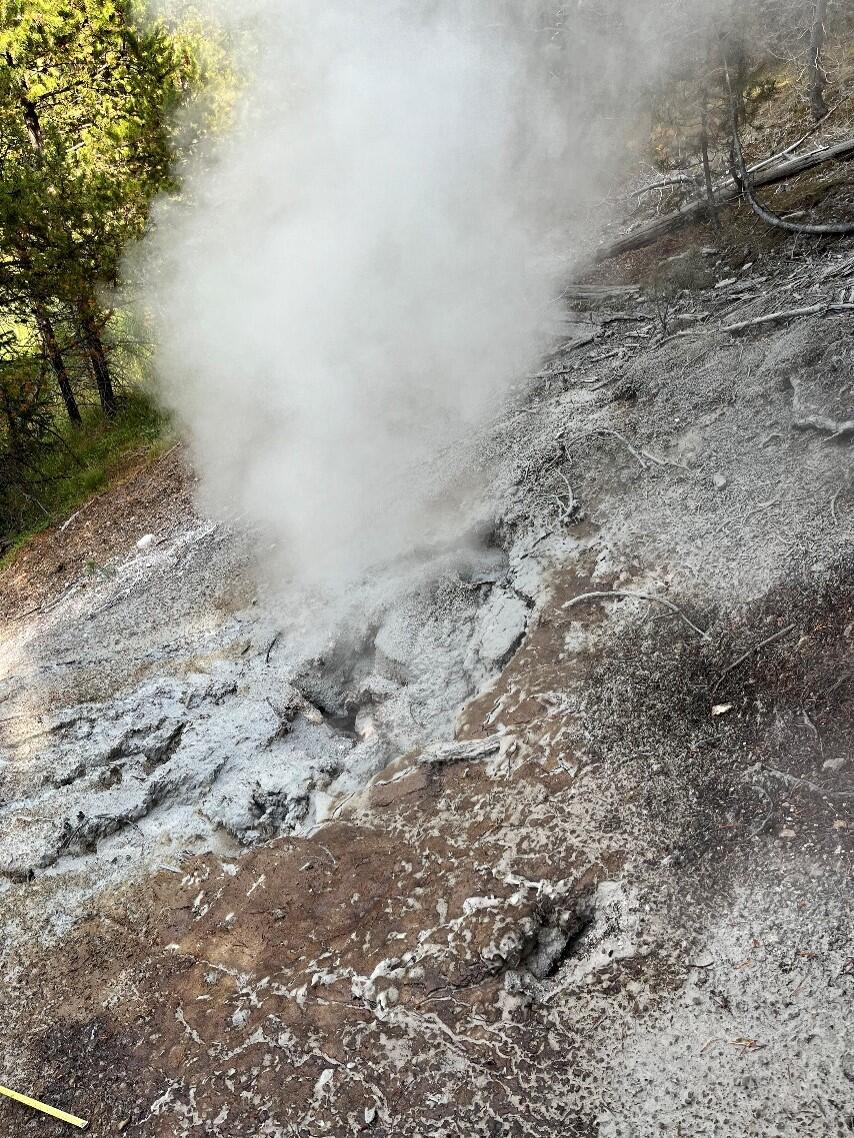
In August 2024, a scientist in the park led near Mammoth Hot Springs, one of the most notable attractions in the park, when they spotted steam rising from a plot of trees in a rather marshy area. Seeing it, scientists reported the discovery to the park geology staff to confirm whether the functionality was indeed new.
A geological research team has made its way through the marshy area and found the characteristic, noting that the gray siliceous clay slightly covered the opening, which indicated that it was rather new. According to the USGS, the new hydrothermal feature is around 171 degrees Fahrenheit and is located in the thermal zone of Springs on the road, where a similar characteristic has emerged approximately 20 years earlier.
Learn more:: The Yellowstone bison meets a tragic end to Hot Spring, showing the danger of hydrothermal characteristics
A hydrothermal home
Yellowstone National Park is a home in volcanic history. Located in Caldera Yellowstone, the park is home to Thousands of thermal characteristicsGoing from vapor vents to hot sources, including geysers, mud pots and more.
The park is rich in these thermal characteristics due to presence of a magma tank located below, and The magma continues to flow to this day.
According to the USGS, the new feature is located at the foot of a rhyolite lava flow, about 10 feet above the marshes, in a hydrothermal modified area about 200 feet long. Although this feature is new for park geologists, it is possible that it can come from a different hydrothermal characteristic which emerged decades ago.
In 2003, a similar hydrothermal feature saw the day on the other side of the rhyolite flow near the nymph lake. Researchers think that it is likely that the hydrothermal characteristic of 2003 and the news that emerged in 2024 is connected.
“We could execute a line along the axis of the old active zone, and it would come across the new functionality. This line also follows the trend of defects which take place from the Norris Geyser basin to the North in Mammoth Hot Springs and in Yellowstone Caldera Chronicleswhich is part of the USGS.
Out of steam
The 2003 hydrothermal characteristic remains active; However, the new 2024 feature has since lost steam. He remained active well in the fall of 2024 but was almost cold during the winter
According to the USGS, the hydrothermal characteristic remains active, but the water in the vent seems to keep a shock absorber on steam – for the moment.
According to the USGS, this new feature did not start getting rid of steam again. But it is possible that some time this summer, visitors to the park can review the steam getting up through the trees.
Find out more: Magma under Yellowstone seems to be in motion
This article is a republished version of this before Article published here.
Article Sources
Our writers at Discovermagazine.com Use studies evaluated by high -quality peers and sources for our articles, and our publishers examine scientific precision and editorial standards. Review the sources used below for this article:
A graduate of Uw-Whitewater, Monica Cull wrote for several organizations, including a focus on bees and the natural world, before coming to Discover Magazine. His current work also appears on his travel blog and his Common State magazine. His love of science came to watch PBS shows like a child with his mother and spend too much time at Binging Doctor who.


