
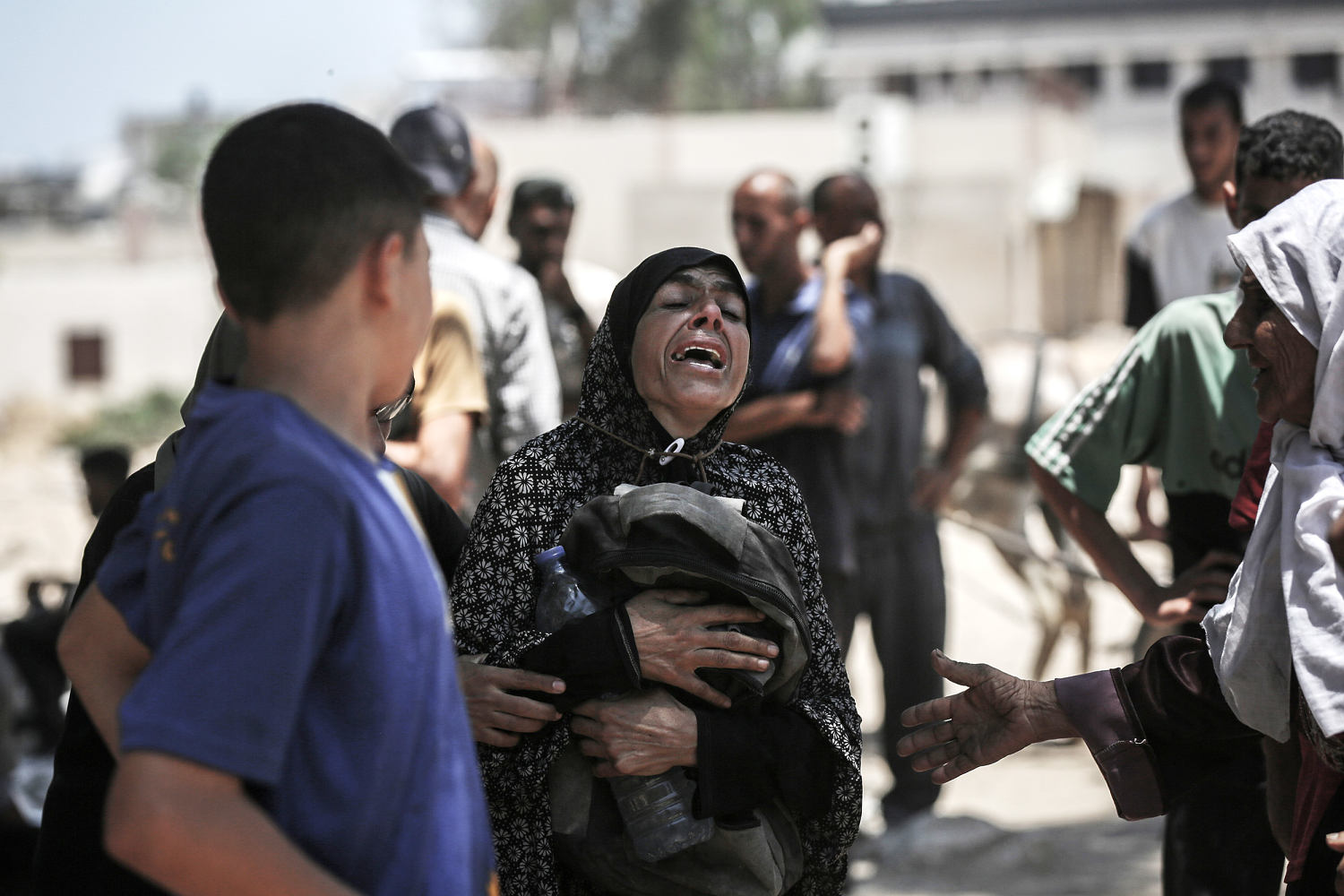
While that blockade was lifted in May, Israel has since allowed only limited aid into the enclave, largely distributed by the controversial U.S.- and Israel-backed Gaza Humanitarian Foundation under a system that has seen hundreds of Palestinians killed by Israeli forces while making their way to collect food.
According to Dr. Travis Melin, an anesthesiologist from Oregon volunteering in Gaza, the evidence of widespread hunger is clear in hospitals, where malnourishment runs close to “100 percent” among patients.
United Nation Secretary-General Antonio Guterres also pointed to the ongoing breakdown of humanitarian conditions in Gaza where the “last lifelines keeping people alive are collapsing,” according to Stéphane Dujarric, his spokesman.
Sunday appeared to mark the deadliest day of aid-related deaths yet, with more than 90 people reported killed as they tried to reach food, Dr. Marwan Al-Hams, director of field hospitals, told NBC News.
Most were killed while trying to reach aid entering through a crossing with Israel, Zaher al-Waheidi, head of the Health Ministry’s records department, told The Associated Press.
The incident did not appear directly related to the distribution system operated by the Gaza Humanitarian Foundation — the controversial American and Israel backed humanitarian organization that has been criticized by the United Nations and most humanitarian groups.
The World Food Programme said in a statement Sunday that a 25-truck WFP convoy had been carrying vital food supplies from the Zikim border point when it encountered “large crowds of civilians anxiously waiting.”
It said that as the convoy approached, the crowd came under fire from Israeli tanks, snipers and other gunfire, resulting in “the loss of countless lives.”
Israel Defense Forces spokesman Lt. Col. Nadav Shoshani said in a post on X on Sunday that the incident was being examined, but that “the number of casualties reported does not align with the information held by the IDF.”
The United Nations human rights office, OHCHR, said earlier this month that nearly 900 people had been killed in the enclave trying to access food.
‘Worse than I’ve ever seen’
In a news release Sunday, GHF said it had distributed more than 82 million meals through its handful of aid distribution points in the enclave since it began operations in late May. But among a population of roughly 2.1 million people, that amount equates to less than one meal per person per day over the more than 50 days since the organization launched its program.
While other aid efforts are also underway in the enclave, humanitarian experts have warned that not nearly enough food is reaching Palestinians, while food prices in local markets have skyrocketed amid the shortage of goods.


