Digg is back from the dead to fix everything I hate about Reddit


If you’re an Apple user of a certain vintage, you probably remember Digg. In the mid-2000s, Digg was THE place to discover new websites, post and vote on content, and join communities and discussions. You can submit photos or links to other websites and people will vote for or against your submission. Sound familiar? In a way, it was Reddit before Reddit.
Digg died in flames in 2012, but has now been revived and prepared for a new era. Although I’m a huge Reddit addict (just look at the trauma I’ve inflicted on myself on its behalf), I’m excited to use Digg and see if it can beat Reddit at its own game. And there are very good reasons for that.
A war against robots
The Digg reboot is rich in intrigue, both in terms of what its creators plan to do and who their creators are in the first place. On the one hand, the relaunch is led by original Digg founder Kevin Rose and Reddit co-founder Alexis Ohanian. The two former rivals are now working together to take on the Reddit giant.
But I’m much more interested in the service itself than in those who work behind the scenes. Indeed, the new iteration places a heavy emphasis on eliminating bots and AI-driven spam, instead giving you confidence that every post you see on the platform is written by human hands.
If you’ve spent any time using Reddit, you’ll know what a game-changer it could be. I love Reddit for its communities, humor, and wide range of topics that teach me new things every day. But at the same time, I hate how it’s flooded with obvious spam. Whether it’s posts or comments, you can never be entirely sure whether what you’re reading was created by a human or a bot.
Bots are often used on Reddit to build an account’s “karma” or reputation. A bot can steal a previously popular post and republish it using the exact same title, aiming to quickly attract attention. An account with high “karma” is generally considered more trustworthy by users, and this can then be exploited by the account owner for all sorts of nefarious purposes.
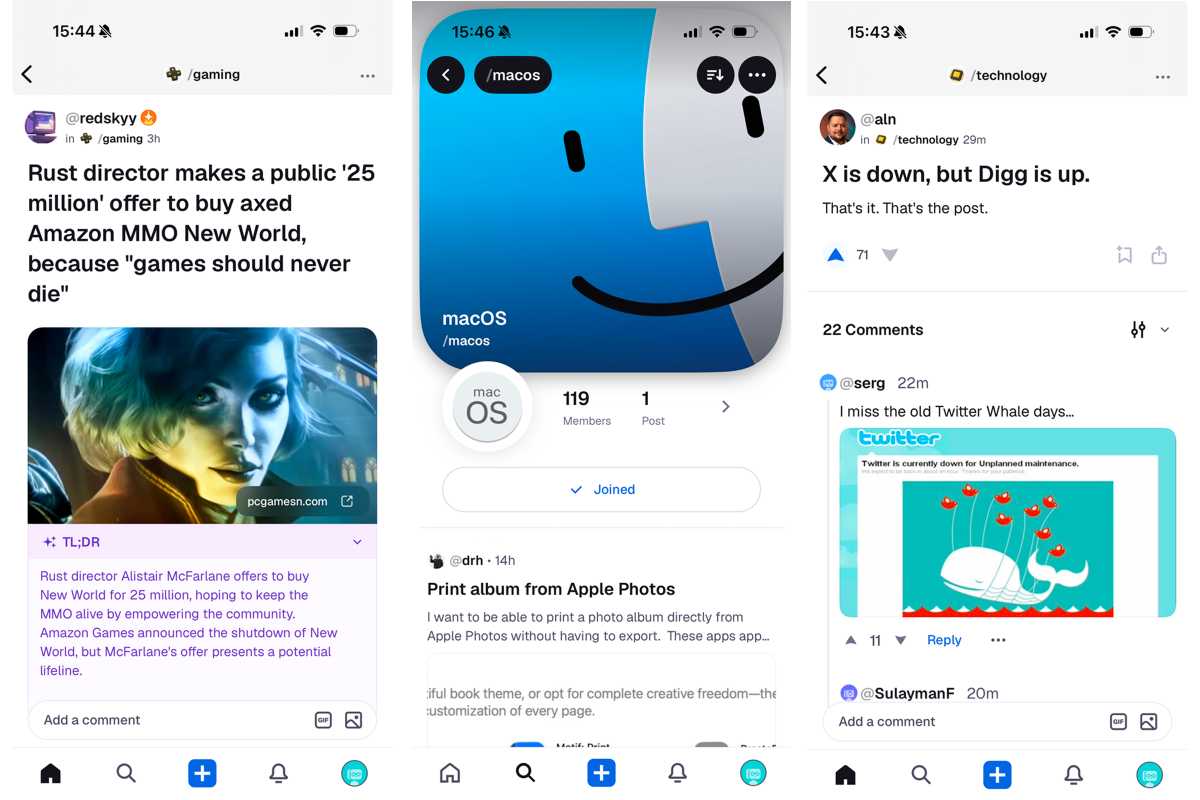
Digg takes on bots with its community-focused interface.
Foundry
Obviously, this is bad for any online community – and it can be potentially terminal if enough users become discouraged by it and leave for greener pastures. Reddit’s bot infestation is the worst part of using the website, and it’s just the strength of the site’s positive aspects that has kept me going.
Perhaps motivated by Reddit’s cautionary tale, Digg decided to make a concerted effort to prevent these bots from ruining its own online platform.
Interestingly, Digg’s Rose told TechCrunch that he didn’t want users to be forced to go through “some sort of crazy KYC process,” referring to the rigorous know-your-customer checks that financial institutions often impose. Instead, Digg wants to be able to detect “small trust signals along the way and package them all into something meaningful.” The idea is to make bot detection fairly unobtrusive to regular humans, while still being effective enough to keep the site functioning as it should.
To achieve this, it could be zero-knowledge proofs, which verify the data without exposing it to anyone. Or, you may need to prove you own a product before posting it to a dedicated community. Users could also be verified through the Digg app if they meet in person.
The plan is to use a “plateau” of techniques to verify the humanness of users and lock down bots, Rose says. If it works, Digg could become a much healthier place for users, less affected by spam, bots and other junk – and that in turn could make it the type of destination that Reddit once was.
Robots are just the beginning
There are a few other things that might help distinguish Digg from Reddit and similar community sites. For example, community managers (moderators) will be able to set rules for their forums, with moderation logs being visible and transparent in order to help users understand the decisions made in their communities. There are also plans to link Digg to other third-party sites. A community dedicated to film reviews, for example, could integrate film scores from Letterboxd.
Your feed, on the other hand, is entirely made up of communities you follow. No more promoted communities, no more popular communities that don’t interest you, just things you know you want to engage with. Call me naive, but this seems pure, untouched and unmanipulated.
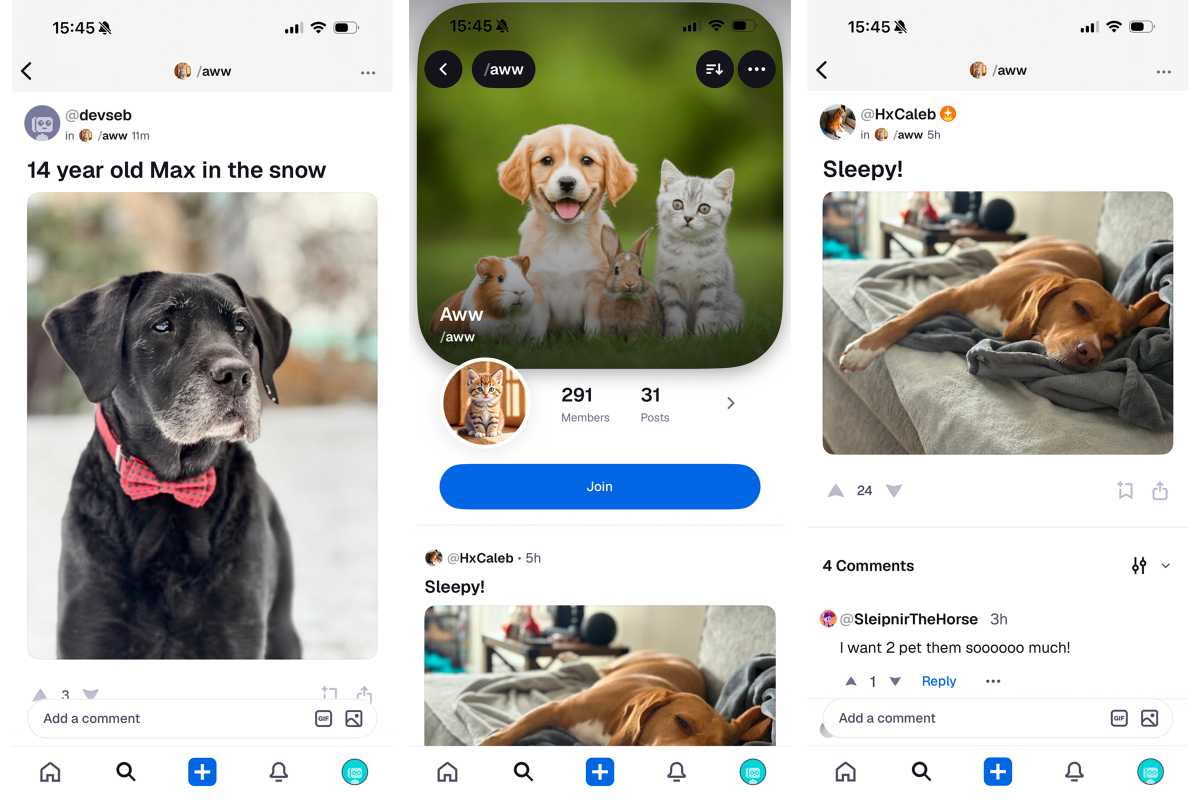
Digg plans to integrate with third-party apps.
Foundry
Sure, there’s an algorithm behind the feed, but Digg promises it’s “designed to inform and delight, not exploit your attention.” Its Most Dugg feed shows the most popular posts over the past 24 hours, without any additional algorithmic calculations. The Trending feed, on the other hand, takes into account both the number and ratio of upvotes for a post. Having both of these options – and a transparent explanation of how they work – means you don’t have to worry about receiving something that’s designed to make you angry and outraged for the sake of engagement.
It may be brand new, but the Digg app is already head and shoulders above Reddit’s own app. One of the reasons I downloaded the Apollo client on my iPhone is that it’s much better than Reddit’s native app, which is plagued by incessant ads and poor design choices. Digg’s app is a lot like Apollo: it’s clean, ad-free, and fun to use. It’s not as feature-rich as Apollo, but even in its early stages it’s clear that it’s ahead of Reddit’s in-house app.
The old is the new, the new
Despite being over 20 years old, the reboot made it feel fresh and exciting. Even though I didn’t use it much in its first iteration — StumbleUpon was my content aggregator of choice at the time — it feels like an opportunity to get in on the ground floor and shape the communities I’m a part of, all, hopefully, without the scourge of spam that often rears its ugly head on Reddit.
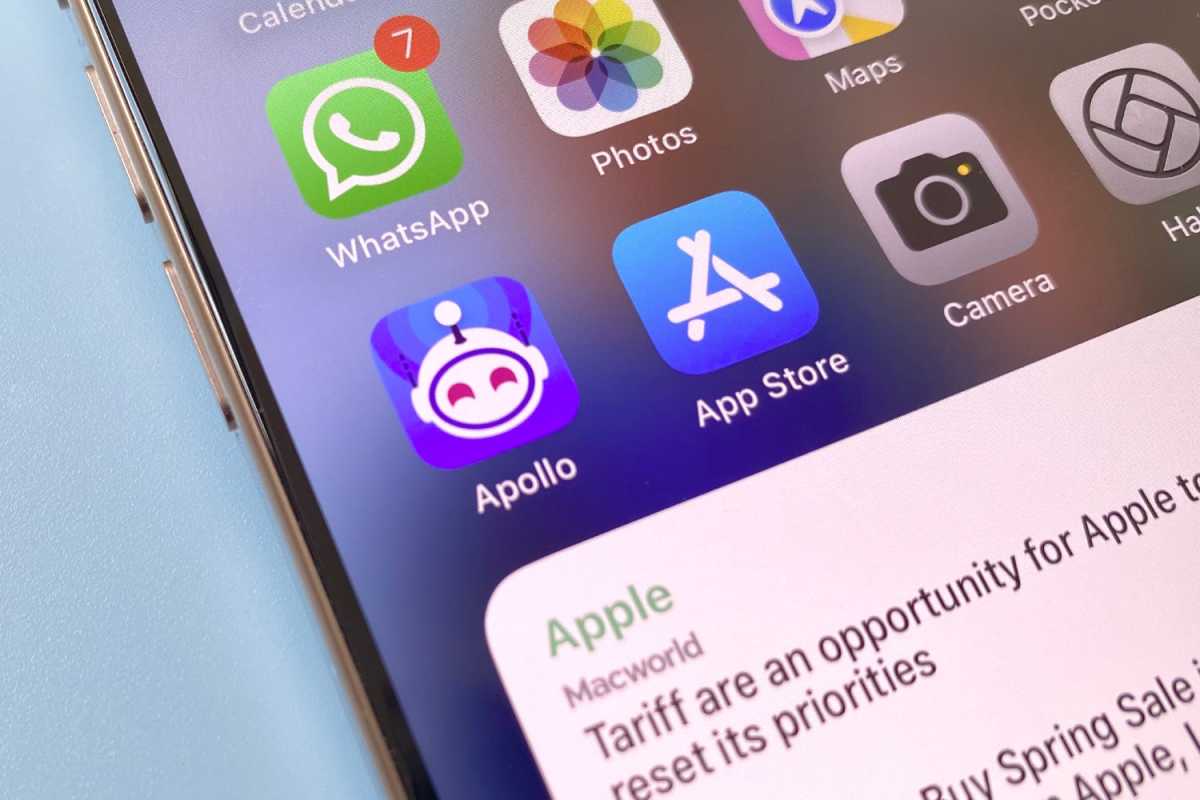
Reddit killed Apollo and other third-party apps last year.
Foundry
Because as much as I love Reddit, I’ve been turned off by some of the site’s recent developments, namely forcing third-party client applications and signing user-generated content to be trained on AI models. Digg comes without any of this baggage.
It’s still early, and Digg needs enormous effort – and luck – to reach even a fraction of Reddit’s size. That doesn’t mean it’s not worth a try, though. After its impressive start, I have my fingers crossed.


