DNA building blocks on asteroid Ryugu, bacteria that eat plastic waste, and more science news

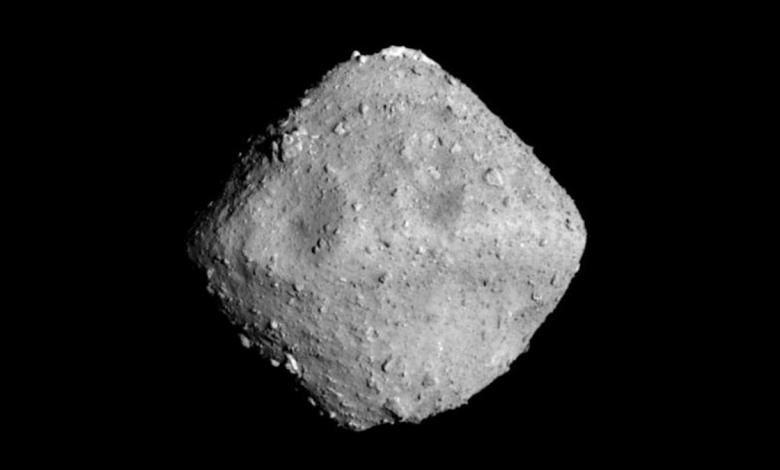
Remember when Japan sent a spacecraft to an asteroid 110 million miles away to collect dirt from the surface? Six years after its arrival on Earth, this sample allowed us to better understand what could have given rise to life on our planet. Read on to learn about the latest discoveries and other science news we found interesting this week.
DNA Ingredients on Ryugu
In 2020, a capsule from the Japanese Hayabusa2 space probe returned to Earth with samples collected from the surface of the asteroid Ryugu, and scientists spent the following years analyzing these materials for clues about the conditions that existed in the early solar system. This week, Japanese researchers reported an exciting discovery: the Ryugu samples contain all five building blocks of DNA and RNA. The results, coupled with those of other recent studies, could allow us to better understand how the ingredients of life arrived on Earth billions of years ago.
The study, published in the journal Natural astronomyfound the nucleic bases adenine, guanine, cytosine, thymine and uracil – all of which were also found in samples taken from another asteroid, Bennu, last year, and before that in meteorites named Murchison and Orgueil. This suggests that these nucleic acid bases were widespread in the early solar system and supports the hypothesis that carbonaceous asteroids like Ryugu and Bennu transported them to Earth, the authors explain in the paper. Ammonia was also found in the samples, which could play a role in the formation of these nucleic acid bases.
The discovery of these building blocks “does not mean that life existed on Ryugu,” said Toshiki Koga, the lead author of the study from Japan’s Agency for Marine and Earth Science and Technology. AFP. “Instead, their presence indicates that primitive asteroids could produce and preserve molecules important for chemistry linked to the origin of life.”
Bacteria work together to eat plastic waste
German researchers have identified a trio of bacteria that can digest a common plastic additive, but only when they work together. The study published in the journal Frontiers of microbiology discovered that a “consortium” of bacterial strains (two from species of the genus Pseudomonas and one of Microbacteria) was able to break down several phthalate esters (PAEs), often used to make plastics more flexible. These chemicals are increasingly found in the environment as plastic pollution increases, and research suggests they can have harmful effects on human and wildlife health.
The team focused on microbes that could be found right in their own lab, taking a sample of the biofilm that had formed on the polyurethane tubes of a bioreactor. This sample was then incubated in growth medium containing diethyl phthalate PAE (DEP) as the main source of carbon and energy. They ultimately obtained a stable culture of bacteria capable of breaking down DEP, provided that the concentration of DEP did not exceed 888 milligrams per liter, according to a press release. The consortium was able to engulf all of the DEP in 24 hours at 30 degrees C. It was also able to grow on the PAEs dimethyl phthalate, dipropyl phthalate and dibutyl phthalate.
The researchers identified the bacteria in the consortium through DNA sequencing, but found that they were not individually capable of fighting PAE, suggesting that they break down the chemicals through a “cooperative process” known as cross-feeding. The consortium could provide another tool in the pollution control toolbox, with the potential to help break down PAEs in contaminated areas or accelerate the degradation of PAE-containing plastics by making them more brittle. “This approach could also be effective for treating industrial plastic waste streams,” they note.
Hubble witnesses a rupture
Newly released images from the Hubble Space Telescope show the unexpected breakup of Comet C/2025 K1 (ATLAS) – Comet K1, for short – as it exited the solar system in November. A team of researchers who had originally planned to observe another comet ended up changing targets due to technical problems, eventually catching Comet K1 just after it began to collapse. Hubble captured three 20-second images between November 8 and 10, 2025, the first of which the team estimates took place about eight days after fragmentation began. During the observation period, one of the smaller pieces of the comet also began to break apart. Talk about being in the right place at the right time.
“Never before has Hubble captured a fragmenting comet so close to the time it actually collapsed,” John Noonan, a research professor in the physics department at Auburn University, said in a statement. “Most of the time, it’s a few weeks to a month later. And in this case, we were able to see it a few days after.” You can read more about this rare sighting here.
Before you go, be sure to also check out these stories:
-
States sue EPA for abandoning its role as regulator of greenhouse gas emissions
-
Blue Origin also wants to put AI data centers in space


