Dog Skull Analysis Rewrites Evolution of Humanity’s Best Friend


November 13, 2025
2 min reading
Dog skull analysis rewrites the evolution of humanity’s best friend
A surprising diversity of dog shapes and sizes evolved long before the Victorians began creating modern breeds.
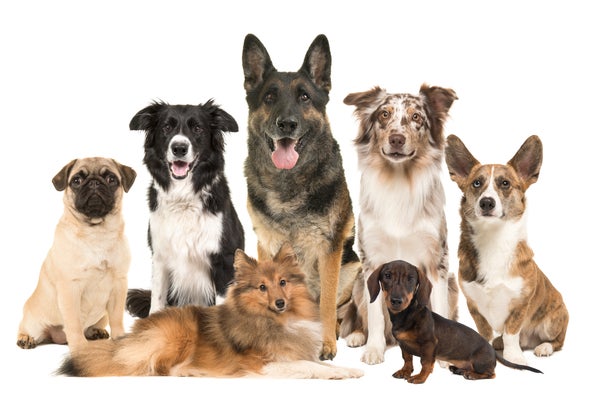
MirasWonderland/Getty Images
Modern dog breeds come in a bewildering array of shapes and sizes: from Chihuahua to Great Dane, Corgi to Greyhound, Pug to German Shepherd. Indeed, the domestic dog, Canis familiaris, shows more variation in its physical characteristics than any other mammal species on Earth. Conventional wisdom has it that this extreme variation is the result of humans intensively breeding dogs for particular traits over the past 200 years. Now, a new analysis of the skulls of modern and ancient dogs and wolves has turned that idea on its head, revealing a much older origin of canine diversity.
Archaeologists have long been interested in the evolution of dogs because this species is believed to be the first animal domesticated by humans. Evidence indicates that dogs evolved from wolves and were domesticated at various times and in different parts of the world. From there, the story becomes more difficult to discern because the record of ancient dog remains (including any DNA or other molecules that may have been preserved) is spotty. Although some archaeological evidence suggests that the first domestic dogs may date back 33,000 years or more, ancient DNA analyzes place the origin of our canine companions at more than 11,000 years ago. Regardless, scientists didn’t think the characteristics of early dogs were particularly variable. It wasn’t until people began intensive breeding programs in the mid-1800s that dogs began to transform into wildly different forms — or so the story goes.
In the new study, Allowen Evin of the University of Montpellier in France and colleagues analyzed hundreds of dog and wolf skulls spanning the past 50,000 years. The oldest skull in their sample with definitive dog features dated to nearly 11,000 years ago, matching DNA estimates from when dogs evolved from wolves. What is surprising is that researchers discovered great diversity in the size and shape of dog skulls among the first specimens studied. Although these characteristics did not reach the extremes seen in modern breeds, such as bulldogs, with their squashed faces, and borzois, with their ultralong snouts, these ancient dogs had half the diversity of modern dogs, much more than expected.
On supporting science journalism
If you enjoy this article, please consider supporting our award-winning journalism by subscription. By purchasing a subscription, you are helping to ensure the future of impactful stories about the discoveries and ideas shaping our world today.
The results indicate that humans were not the sole driving force behind dog evolution, as previously thought. Other factors, such as climate or geography, may have contributed significantly to making humanity’s best friend the extraordinarily diverse species it is today.
It’s time to defend science
If you enjoyed this article, I would like to ask for your support. Scientific American has been defending science and industry for 180 years, and we are currently experiencing perhaps the most critical moment in these two centuries of history.
I was a Scientific American subscriber since the age of 12, and it helped shape the way I see the world. SciAm always educates and delights me, and inspires a sense of respect for our vast and beautiful universe. I hope this is the case for you too.
If you subscribe to Scientific Americanyou help ensure our coverage centers on meaningful research and discoveries; that we have the resources to account for decisions that threaten laboratories across the United States; and that we support budding and working scientists at a time when the value of science itself too often goes unrecognized.
In exchange, you receive essential information, captivating podcasts, brilliant infographics, newsletters not to be missed, unmissable videos, stimulating games and the best writings and reports from the scientific world. You can even offer a subscription to someone.
There has never been a more important time for us to stand up and show why science matters. I hope you will support us in this mission.