DOJ subpoenas more than 20 doctors and clinics that provide trans care to minors


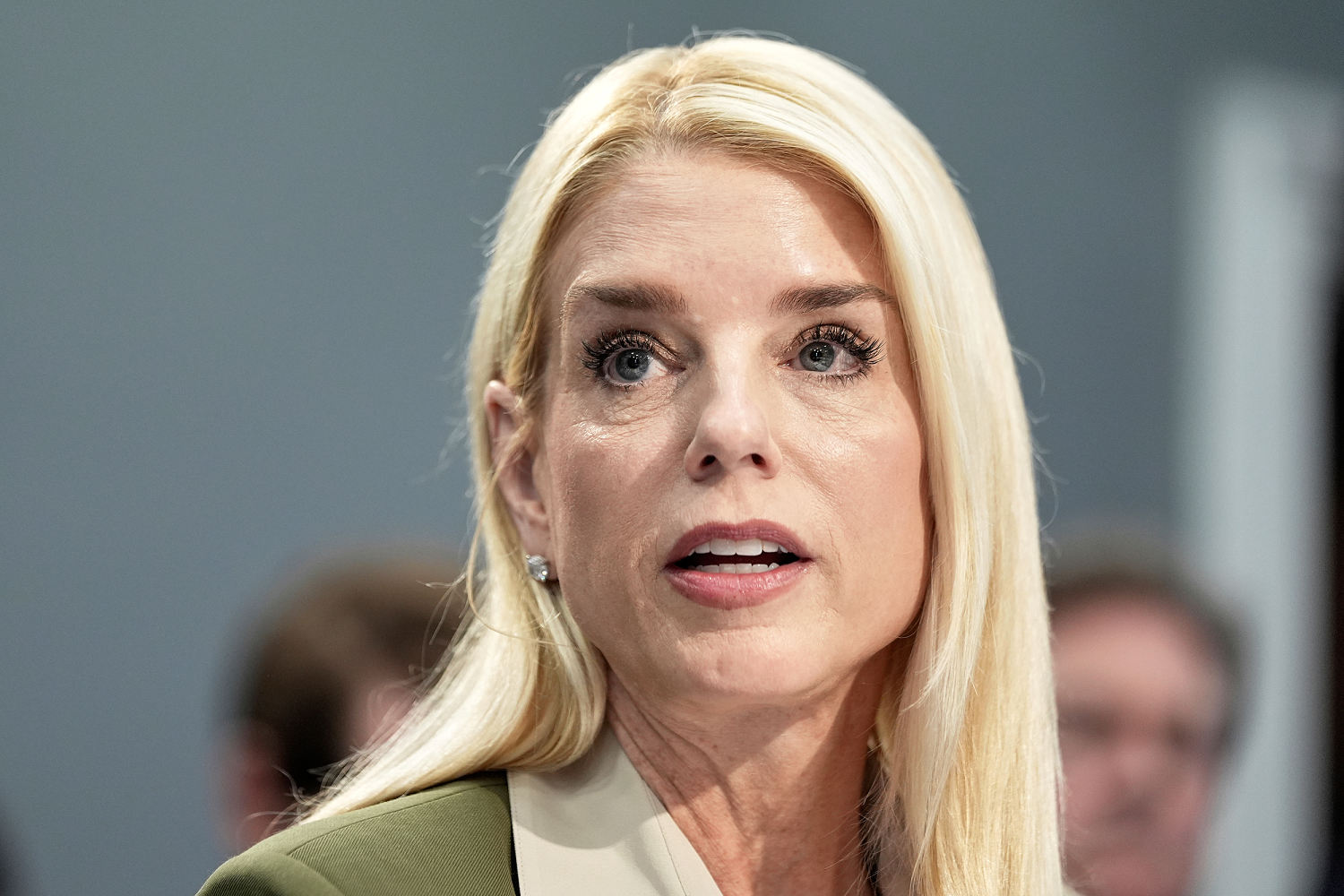
The Ministry of Justice has announced that it had sent more than 20 assignments to appear to the doctors and clinics involved in the “carrying out transgender medical procedures”.
The brief announcement of the department on Wednesday did not appoint any of the 20 doctors or clinics or said where they were. He also did not specify what constituted “transgender medical procedures”, but said that his investigations “include health care fraud, false declarations, etc.
“Health professionals and organizations that have mutilated children at the service of a distorted ideology will be held responsible by this Ministry of Justice,” said Prosecutor General Pam Bondi in a press release.
Also on Wednesday, the Federal Trade Commission organized a day workshop on the “dangers of affirmative care between the sexes”. In his opening remarks, the president of the FTC, Andrew Ferguson, suggested that such care is misleading and require a more in -depth examination by the Commission.
The workshop and the announcement of the Ministry of Justice are the last climbing of the Trump administration campaign to restrict transgender rights and access to medical care related to the transition.
The FTC panel presented more than a dozen speakers on Wednesday who criticized transgender health care, including people who received care such as minors and now say that they regret it; Doctors and psychologists who do not agree with current standards to provide such care; And political scientists and lawyers who oppose access to transitional care for minors.
Claire Abernathy said she had a double mastectomy at her 15th anniversary and was drained, or stopped identifying herself as Trans, at 18.
“My doctors did not tell me that hormones would cause permanent side effects,” said Abernathy, now 20 years old. “They hid these effects to me. They worked to silence me when I tried to complain about these abuses. We must make sure that more children are sold products that they cannot come back.”
A common refrain of many panelists was that it is not possible that someone was “born in the wrong body” and that there is no evidence to support transitional care as a treatment of gender dysphoria, the medical term for the distress that results from the conflict between the identity between the sexes and the sex of a person attributed to the birth.
Miriam Grossman, a children’s psychologist who testified in favor of state legislation to prohibit access to transgender care for minors, said that someone could know with certainty that their gender identity was more authentic than their birth sex “is not entirely proven and imperable”.
“There is no objective evidence to be born in the wrong body, and to say it misleads and benefits from consumers, and this has an impact on their medical decisions,” said Grossman.
Ferguson said that the statutory mandate of the FTC was to “protect people from deceptive remedies and allegations. He added that the FTC would publish a public information request next week according to what was learned during the workshop.
‘Not the FTC’ Way
The workshop has faced the backlash of activists and also of certain FTC employees, Reuters reported. Nearly 150 FTC employees signed a “concern declaration” dated July 2 about Wednesday workshop, writing that he “would draw a new territory for the Commission by precipitating in confidential consultations as a doctor-patient”.
They added: “In other words, in our opinion, this is not the FTC way.”
Thursday, three former FTC employees also opposed the workshop during an event organized by Public Knowledge, a non -profit organization that promotes freedom of expression and an open internet.
Among them, Eileen Harrington, who has worked for the FTC for almost 40 years and was her executive director from 2010 to 2012. She said that, thanks to the workshop, the “FTC has embarked on a sort of overtaking that we have not seen for more than 50 years”.
Harrington helped develop the FTC workshop process in 1992 when she was director of the marketing practices division. Before a workshop, she said, the FTC would publish a public declaration on the subject, then invite the public to submit comments. He would also invite stakeholders with a variety of views to talk to the workshop.
“Yesterday’s event is little like what we intended to create in 1992 and that the FTC did over the years,” said Harrington, noting that the public was prohibited to attend in person and that the FTC has sorted the people who were authorized to speak and who represented only one point of view.
Joe Simonson, spokesperson for the FTC, criticized the public knowledge event in a telephone interview.
“I looked up that finances public knowledge, and I see that it is a great technology, and it is therefore logical for me that a large non-profit organization funded by technology, is devoted to copyright law, would seek an excuse to attack the Federal Commerce Commission, even if it means standing against young men and women who say that they have been abused and mutilated by medical professionals” Simonson.
He added that the workshop was not an open presence because the panelists received death threats.
With regard to criticisms that the workshop included only one point of view, Simonson said: “Many panelists who seemed to say they are victims of mutilation and abuse, and I don’t know who is on the other side.”
Asked about the majority of trans people, including young people, who say they do not regret receiving treatment, Simonson said: “We are not talking about these people. We are talking about mistreated and mutilated people.”
Kellan Baker, Executive Director of the Institute for Health Research and Policy at Whitman Walker Health, a medical clinic in Washington, DC, said that he had helped create the event on Thursday to provide prospects that were excluded from the FTC workshop.
“We wanted to hear the parents who are able to take care of their children and want what is best for their children,” said Baker. “We also wanted to hear transgender health experts.”
All the main medical associations in the United States, such as the American Medical Association, the American Academy of Pediatrics and the American Psychological Association, support access to care related to minors and oppose restrictions.
Recent restrictions on trans care
Some European countries have limited access to such care, but only one, the United Kingdom, has indefinitely prohibited new prescriptions of puberty blockers to treat minors of dysphoria between the sexes.
Twenty-five states restrict access to puberty blockers and hormone therapy for trans minors, although the courts have permanently prevented the restrictions of taking effect in Montana and Arkansas, according to the Movement Advance Project, an LGBTQ reflection group. Arizona and New Hampshire ban operations for minors, which are only recommended in rare cases. Seventeen states and Washington, DC, have measures that protect access to transgender health care. Care is legal in seven other states which do not protect it or prohibit it.
No federal law restricts access to care related to the transition. However, the Trump administration sought to reduce it thanks to a combination of decrees and actions of federal agencies. In January, President Donald Trump signed an executive decree aimed at prohibiting federal funds from going to hospitals or medical schools that provide care for minors, although several judges have blocked this part of the order.
Then, in a memo in April, Bondi ordered American lawyers to use laws against female genital mutilation to investigate doctors who “mutilate” children “under the cover of care” and to continue these “offenses as far as possible”.

:max_bytes(150000):strip_icc()/Health-GettyImages-2211746899-164b51ff84a648a1bb753d0824dddc5b.jpg?w=390&resize=390,220&ssl=1 "5 Supplements That Can Improve Bloating Naturally")

