Earliest African cremation was 9,500 years ago


Archaeologists have discovered Africa’s oldest known cremation pyre at the foot of Mount Hora in Malawi. According to a paper published in the journal Science Advances, radiocarbon tests date the site to around 9,500 years ago, prompting a rethinking of group work and rituals in these ancient hunter-gatherer communities.
Many cultures practiced some form of cremation. For example, there is a Viking cremation site known as Kalvestene on the small island of Hjarnø in Denmark. And in 2023, we reported on an unusual Roman burial site where the cremated remains were not transported to a separate final resting place but remained in place, covered with brick tiles and a layer of lime and surrounded by several dozen bent and twisted nails – perhaps an attempt to prevent the deceased from rising from the tomb to haunt the living.)
But this practice was extremely rare in hunter-gatherer societies, because building a pyre is labor intensive and requires a lot of community resources. There is very little evidence of cremation before the mid-Holocene (between 5,000 and 7,000 years ago). According to the authors of the latter paper, the oldest known concentration of burned human remains was discovered at Lake Mungo in Australia and dates back 40,000 years, but there is no evidence of a pyre, making it difficult to determine specific details.
The oldest pyre discovered so far is the site of Xaasaa Na’ in Alaska, dating to around 11,500 years ago and containing the remains of a 3-year-old child. There is evidence of burned human remains in Egypt dating back around 7,500 years, but the first confirmed cremations in this region were only 3,300 years ago.
This is what makes the discovery of an intact hunter-gatherer cremation pyre with the remains of an adult female at the Hora-1 site so significant. Situated under an overhang at the foot of a granite hill, Hora-1 was first excavated in the 1950s. Archaeologists determined that it was a burial site between 8,000 and 16,000 years ago, with the interment of several intact (uncremated) bodies. The pyre is unique: a bed of ashes containing 170 bone fragments, mostly from arms and legs. This is the only example of cremation on the site.
A bed of ashes
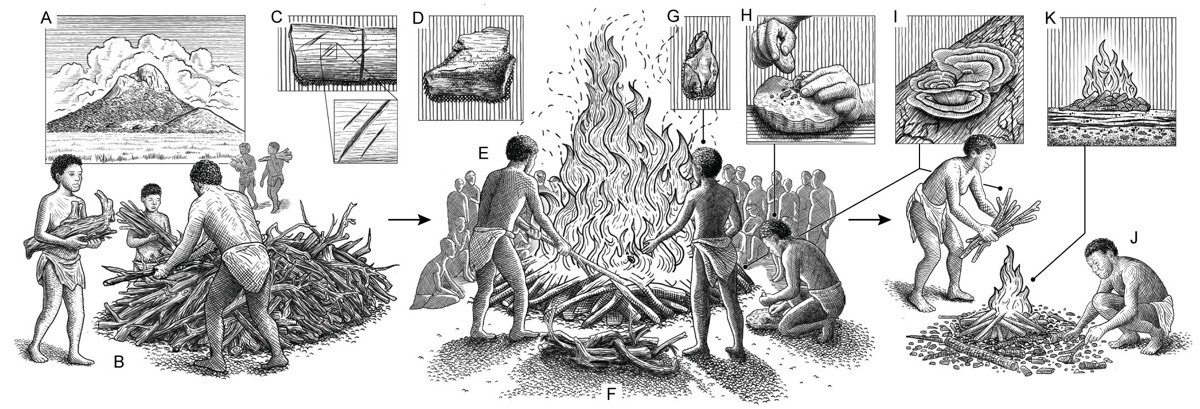
Reconstructed events of the 9,500-year-old pyre.
Patrick Fahy
Reconstructed events of the 9,500-year-old pyre.
Patrick Fahy
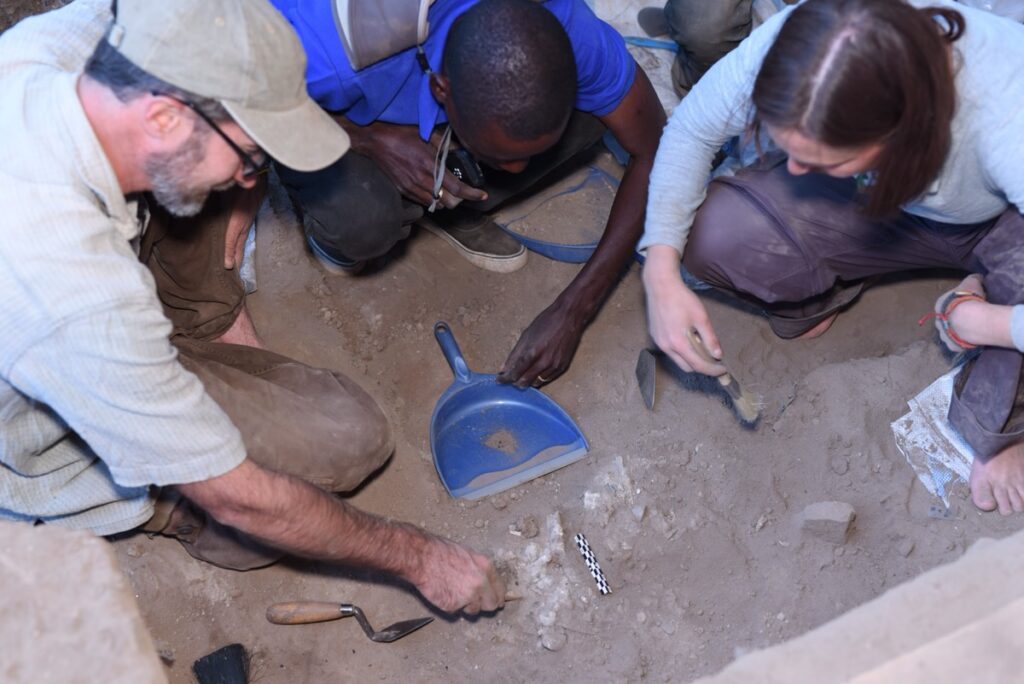
Recovery of cremated remains.
Grace Veatch
Recovery of cremated remains.
Grace Veatch
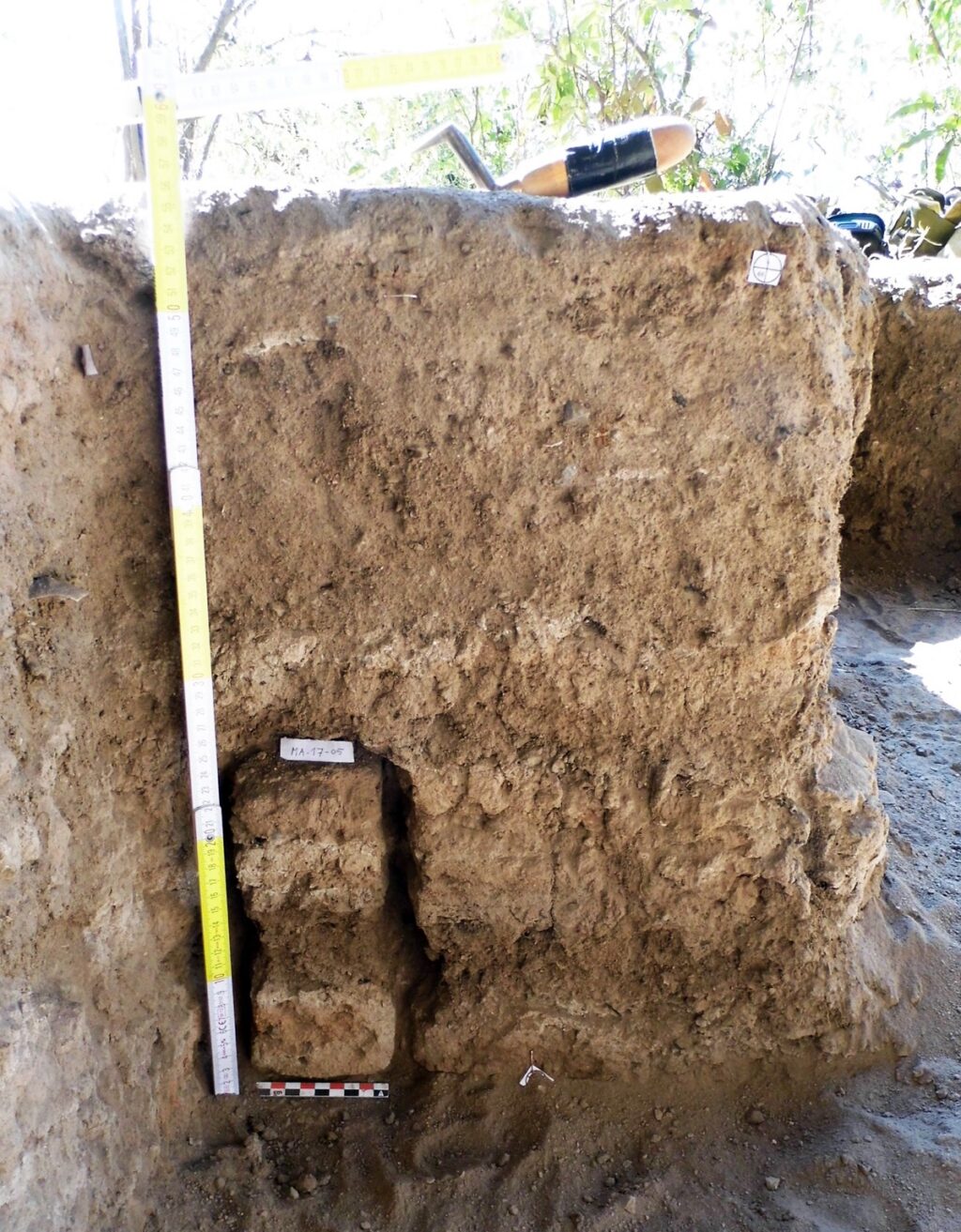
Sedimentary walls showing scratched layers of ash from the pyre.
Flora Schilt
Sedimentary walls showing scratched layers of ash from the pyre.
Flora Schilt
Recovery of cremated remains.
Grace Veatch
Sedimentary walls showing scratched layers of ash from the pyre.
Flora Schilt

Microscopic layers of ash.
Flora Schilt
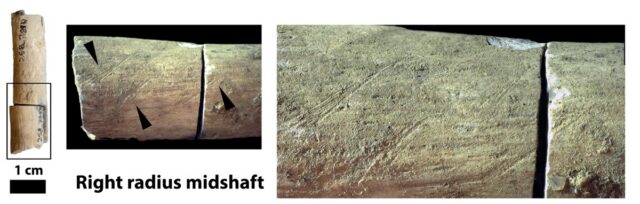
Bone modifications made with stone tools.
Jessica Thompson
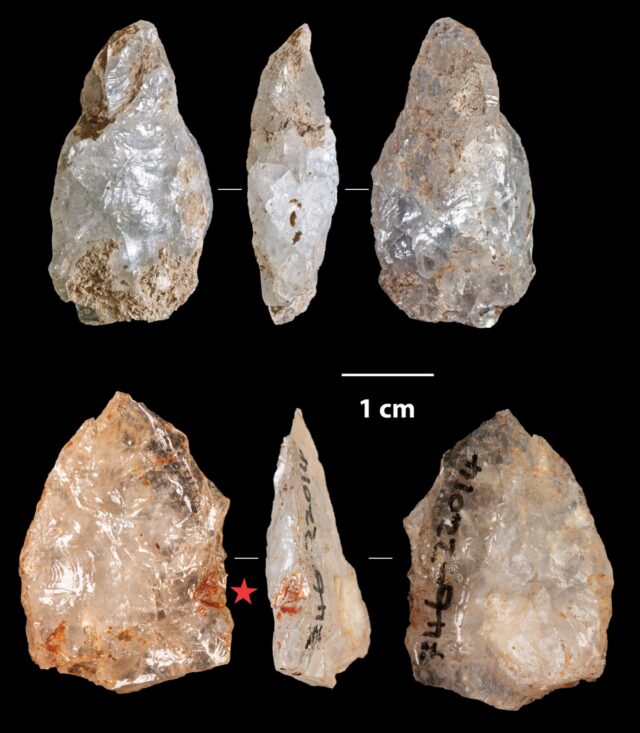
Cut stake tips.
Justin Pargeter
Examination of the remains found at the pyre site revealed that they belonged to an adult woman, aged 18 to 60, who was likely cremated within days of her death. The team also found distinctive cut marks on several bones, suggesting the bones had been skinned before cremation. Given the lack of teeth or skull in the pyre, it appears that whoever cremated the woman also removed the head. The body was probably positioned with the arms and legs flexed, based on the distribution of the limbs.