Earth models can predict the planet’s future but not their own


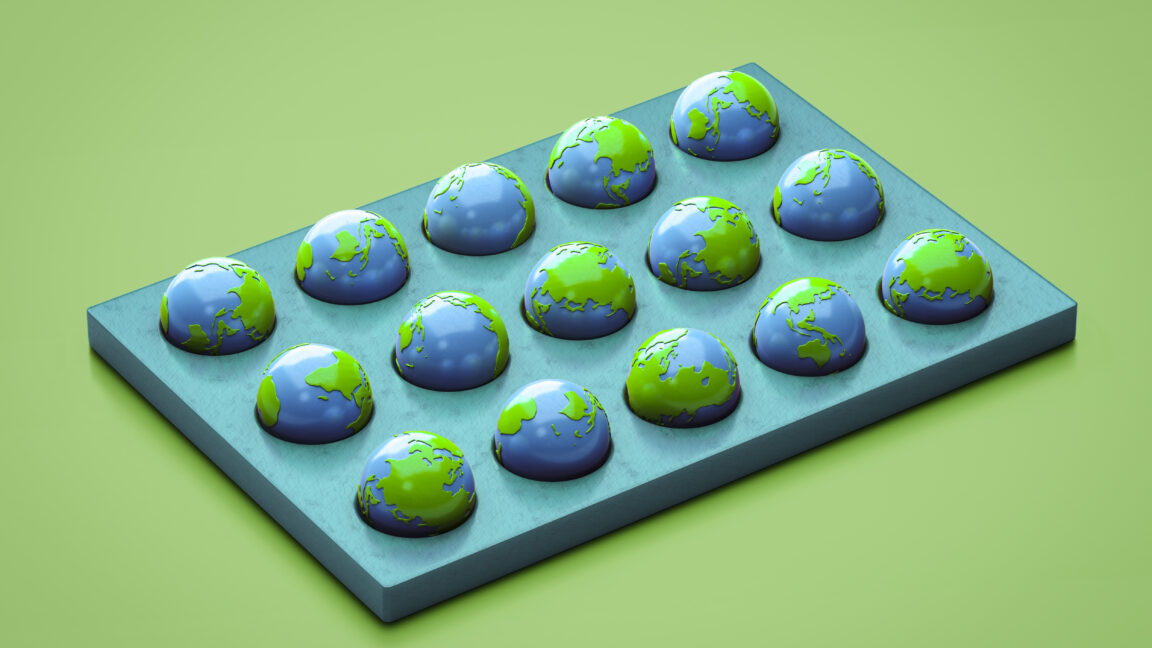
Meanwhile, experts say that financing cuts could mean that modeling capacities migrate abroad, a science may never be carried out and that expertise could be lost.
With this stroke of talent, said Andrew Dessler, professor of atmospheric sciences at Texas A&M University, countries like China can catch up with the United States “It would have been very difficult for them to have a more respected scientific organization or scientific system,” said Drawing. “Our research universities are really the desire for the world, and our government laboratories are the desire for the world.”
But they will not be, he said, if the country loses the expertise of those who work there.
E3SM scientists You want to understand how the Earth changes over time and how much conditions vary in long -term projections, as, say, how the average temperature can be raised over time, but extremely low temperatures nevertheless explode colorado. Finally, these scientists hope to integrate enough chemistry, physics and biology to create a “digital twin” of the planet – modeling the land in a way faithful to its real form.
It is a noble objective, especially since even the current and less twin stage has taken scientists more than 10 years of software and settings development. “The models are very important in terms of code there is,” said Lawrence, the scientist of the Earth system at Ncar. (Thanks to a spokesperson, Lawrence Livermore National Laboratory, whose scientists direct the development of the model, refused to comment on this story. “We are unable to offer interviews on E3SM for the moment,” wrote Lab spokesperson Jeremy Thomas; he did not answer a question sent by email on why.)
Lawrence, however, knows, at the head of a similar project, called the model of the community of community land, a first version of which served as the basis for E3SM.


