Ebola and hantavirus aren’t the next COVID, experts say. Here’s what to know : NPR


A health care worker from Children’s National Hospital works at a drive-thru coronavirus testing site April 2, 2020 in Washington, DC. The COVID-19 pandemic is shaping many Americans’ response to Ebola and hantavirus.
Drew Angerer/Getty Images
hide caption
toggle caption
Drew Angerer/Getty Images
Global health emergencies are returning to headlines, with recent outbreaks of hantavirus on a cruise ship and Ebola in the Democratic Republic of Congo.
The internet reacted accordingly, with the situation evoking painful reminders of COVID-19 for many people. Fear-filled questions have surfaced on Reddit, comedic videos are ubiquitous on TikTok and Instagram, and search terms involving the word “pandemic” have increased on Google Trends in recent weeks.
The COVID-19 pandemic has presented the United States with a global health emergency it may never have imagined.
That experience influences how some people think about Ebola and hantavirus, public health and infectious disease experts say. Fear of exotic-sounding illnesses has always existed, but people now know how life-changing a pandemic can be.
As Chandra Harvey, an Instagram content creator whose video joking about another possible pandemic has been viewed more than 100,000 times, told NPR: “We’re all dealing with PTSD from COVID. »
For Harvey, COVID-19 has “heavily impacted” his family, with some loved ones hospitalized. “COVID has impacted all of us,” she said.
At the start of the COVID-19 pandemic, “you worried about your friends, neighbors and loved ones dying from COVID,” said Dr. Ali S. Khan, dean of the College of Public Health at the University of Nebraska Medical Center. More than a million Americans have died from COVID-19.
Although Ebola is currently spreading in parts of East Africa, infectious disease experts told NPR that the average American shouldn’t worry about Ebola or hantavirus becoming a repeat of COVID-19.

Here’s what to know about the difference between Ebola and Hantavirus and COVID-19, as well as what people should keep in mind when reading alarming headlines or scrolling through social media.
The effect of COVID-19 on Americans
There’s a “scare factor” with some illnesses, said Dr. Amesh Adalja, a senior scholar at the Johns Hopkins Center for Health Security and an infectious disease physician. Even though each year on average, many more people die from the flu than from Ebola, “some diseases cause fear in people,” he said.
Harvey, the content creator, said hearing about two illnesses in a row “blew out” to her family.
“Ebola…with the combination of hantavirus at the same time, it feels like it’s too much,” she said. “Anytime you hear about something from the perspective of a virus, it’s just scary.”
Adalja said the memory of COVID-19 also causes Americans to group outbreaks together.
But diseases spread differently. COVID-19 (like measles) can be spread through the air. Ebola is usually spread through bodily fluids, such as vomit or blood. Hantavirus is most commonly transmitted to humans through contact with the urine, feces, or saliva of infected rodents, although a strain has been identified that can spread from person to person.

“The nuances of the biology of different pathogens, the trajectories of different epidemics, all of that gets lost because what [many people are] what worries them is that a disruptive event like COVID will turn their whole life upside down,” Adalja said.
Some may also be concerned about the deadly nature of these illnesses and the lack of treatment options, as well as the fact that they both gained attention in the same month.
Additionally, the delay in detecting the Ebola outbreak made it more difficult to control the situation, infectious disease specialists told NPR. Dr. Craig Spencer, an associate professor of public health at Brown University and an emergency physician at Brown’s Pandemic Center, told NPR’s A Martínez that the Trump administration’s firing of staff at the Centers for Disease Control and Prevention, the elimination of the U.S. Agency for International Development and the U.S. withdrawal from the World Health Organization are impacting the current response in the Democratic Republic of Congo.
In a statement to NPR on Monday, the State Department said it was “false to assert that USAID reform has negatively impacted our ability to respond to Ebola,” adding that funding and support to fight Ebola would continue.
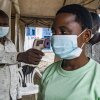
Caitlin Rivers, an epidemiologist at Johns Hopkins, said she was “very concerned about the Ebola outbreak as an epidemiologist.”
However, “I’m not worried as a mother, which means I don’t expect Ebola to influence my community or actually the United States,” said Rivers, author of the book. Crisis averted: the hidden science of fighting epidemics. Likewise, public health officials say the risk hantavirus poses to the general public is very low.
The broader context of pandemics
Pandemics and epidemics have been a part of American and global life for centuries, dating back to ancient times.
In the 20th century, influenza pandemics dominated the years 1918, 1957, and 1968. During this century, there were notable outbreaks of SARS (severe acute respiratory syndrome), H1N1 influenza virus (swine flu), Zika virus, mpox, and measles. Ebola has also seen several outbreaks in recent decades, with the 2014 outbreak killing more than 11,000 people.
Humans have been fighting infectious diseases since they first appeared, Adalja said.
Adalja said he places the Ebola and hantavirus outbreaks within the broader story of pandemics, outbreaks and outbreaks: “Not everything has the capacity to be that disruptive force like COVID was. »
“[People] “We need to understand that pandemics have always been a problem that humans will face,” Adalja said. “But science, technology and medicine offer us the ability to control these problems, to make them less impactful, to be proactive.”
Rivers, the epidemiologist, said that, in his experience, a major explosion of international attention occurs about every two years.
“They are much more common than I think many people realize.”
What to think about when you hear about a new illness
Instead of immediately turning to fear, experts say, Americans can focus on targeted issues and stay informed with information provided by local, state and national health officials.
Adalja asked, “Are people talking about this spread the same way they talk about COVID? Similarly, Dr. Abraar Karan, an infectious disease physician and Stanford University faculty member, reflects on personal risk: “ [experts] talk about my individual risk, like if I leave my house, go to work and come home? »
Adalja also advised to “be very careful about what you see on social media if it doesn’t come from an official news source, because a lot of misinformation is deliberately spread.”
Harvey, the Instagram influencer, said that since COVID-19, she calls herself the “handwashing police.” She carries hand sanitizer in her purse and constantly makes her son wash his hands. “A lot of these things have become routine for us.”
Rivers said if people are concerned, they can wear a mask and avoid crowded indoor spaces or, if available, get vaccinated. “Focusing on these controllables can be helpful,” she said.


