
Julie Howell did not know what she was getting into last year when she was asked about a new inmate who had arrived at her prison – or that she was about to become an unwitting supporting character in the ongoing drama around convicted sex offender Jeffrey Epstein.
It started when Howell received an unusual email from her husband in August: A reporter with The Telegraph wanted to know how she felt about the fact that Epstein’s co-conspirator, Ghislaine Maxwell, had just been transferred to her minimum-security prison camp in Bryan, Texas.
Howell had plenty of thoughts, as did some of the other inmates. After consulting the prison handbook and a fellow inmate to try to confirm there was no prohibition against speaking to the press, Howell — who had recently started serving a one-year prison sentence for stealing almost $1 million from Tarleton State University, where she had been an associate professor — shared her views in a message for her husband to forward to the reporter.
“Every inmate l’ve heard from is upset she’s here. This facility is supposed to house non-violent offenders. Human trafficking is a violent crime. She helped find, groom, and traffick [sic] children for Epstein,” Howell wrote to the reporter, according to a copy of the email shared with CNN.
“We have heard there are threats against her life and many of us are worried about our own safety because she’s here. We had to be locked down in our units with the blinds closed because she’s here so she’s causing us to lose the little freedom we have in here, all because she’s cooperating with authorities.”
Her husband forwarded her note to the reporter. Several days later, Howell was in trouble.

Ex-inmate on finding out Ghislaine Maxwell had arrived at her prison

She had just wrapped up a puppy training program that is designed to help rehabilitate incarcerated individuals when a prison guard whisked her away to the lieutenant’s office. She said the lieutenant asked her if she was familiar with the name Cameron Henderson, the journalist with whom Howell had shared her thoughts several days prior.
Speaking to CNN in her first interview since completing her prison sentence, Howell – who is now on supervised release – recalled the officer telling her: “‘It’s all over the world wide web.’ He just kept saying, ‘This is above me.’”
After Howell had waited for about an hour in a cell, she said the warden of Bryan camp, Tanisha Hall, came to see her. “She came in and asked what I was thinking, said that her phone was blowing up all weekend; I ruined her weekend; I shouldn’t have talked to them,” Howell said.
She apologized and explained to Hall that because her own daughter had been the victim of sex trafficking, Maxwell’s arrival at Bryan had been particularly upsetting to her. Maxwell was found guilty of carrying out a years-long scheme with Epstein to groom and sexually abuse underage girls – charges she has denied.

“[Hall] rolled her eyes and flipped her hair back and she was like, ‘It’s too late for apologies,’ and walked out,” Howell said. Later that day, she was shipped off to a federal detention center in Houston, which houses male and female inmates of varying security levels.
Given the close public scrutiny of every aspect of the Epstein case, Maxwell’s incarceration has been a particularly sensitive subject.
Convicted sex offenders are not typically eligible to serve time at a minimum-security prison camp, so Maxwell’s transfer from a low-security prison in Tallahassee, Florida, to the Bryan prison camp last summer was highly unusual, according to prison consultants. It prompted speculation that the government was giving Epstein’s accomplice special treatment in exchange for Maxwell staying quiet about President Donald Trump’s past relationship with Epstein.
Maxwell only further fueled those questions when she spoke flatteringly of Trump during her interview with then-Deputy Attorney General Todd Blanche and said she never heard of Trump doing anything inappropriate. Maxwell has also signaled publicly that if the president were to grant her clemency, she would clear his name of any wrongdoing as it pertains to Epstein. (Trump has not been accused by law enforcement of criminal wrongdoing related to Epstein; he appears numerous times in the Department of Justice’s Epstein files.)
A Bureau of Prisons spokesperson told CNN that the bureau does not discuss details related to any specific inmate, and that it is “committed to maintaining the highest standards of integrity, impartiality, and professionalism in the operation of its facilities.” BOP staff are prohibited from “providing preferential treatment to any inmate,” they said, and violators would be subject to disciplinary actions. As for whether inmates can communicate with members of the media, the spokesperson cited a BOP memo and said it is allowed with prior approval.
Warden Hall declined to comment for this story. The DOJ and lawyers for Maxwell did not respond to requests for comment.
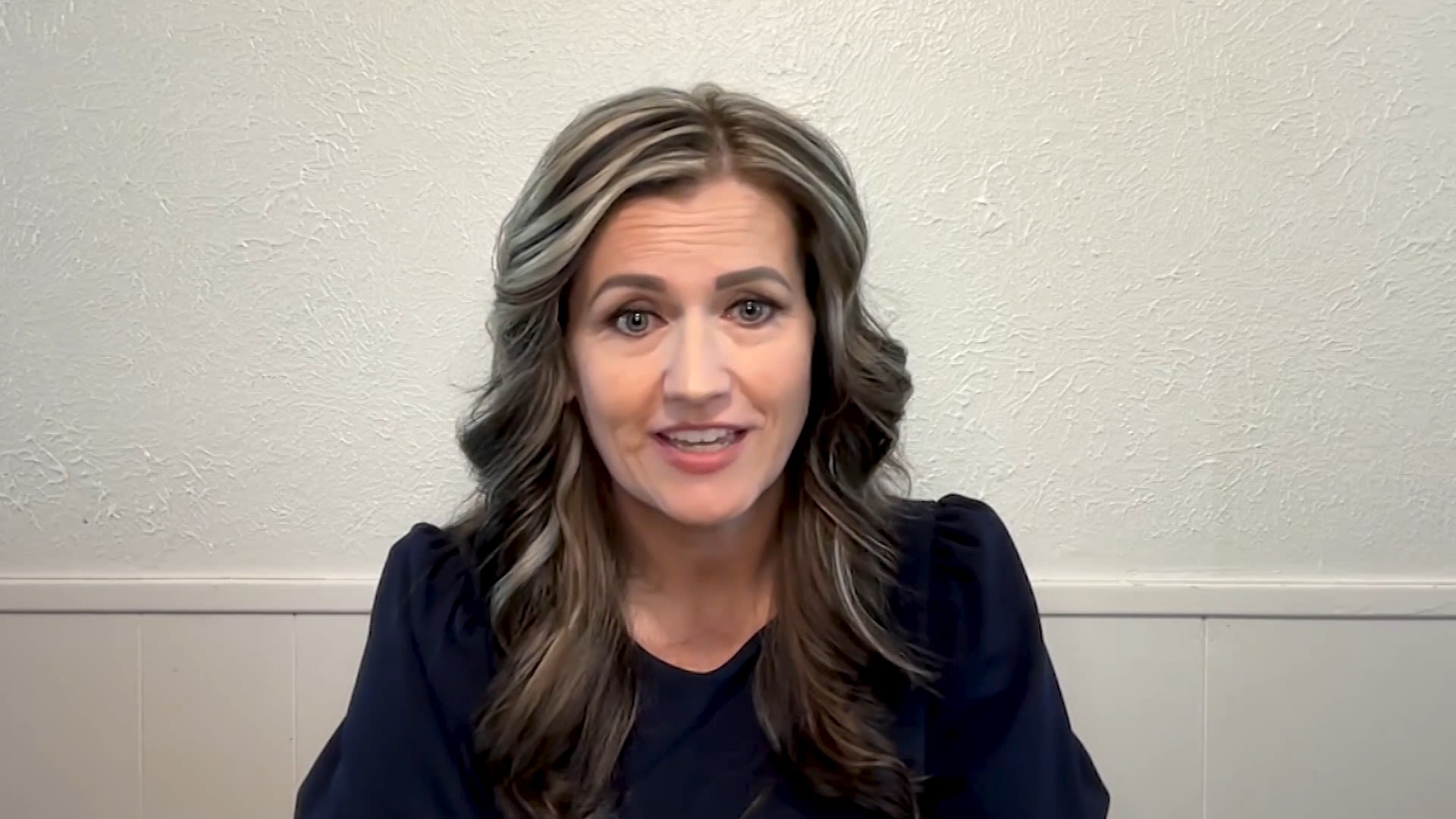
Ex-inmate says warden told her she “ruined her weekend” by speaking to reporter

Howell was officially reprimanded for disruptive conduct, mail abuse and contacting the public without authorization, according to the Bureau of Prisons’ incident report dated August 7 that CNN examined. The report stated that what Howell shared with the British media outlet had been “published on news/media outlets world-wide containing sensitive information involving FPC Bryan’s security operations and information about high-profile inmates.”
Howell stayed at the federal detention center in Houston for about three months before being transferred to a halfway house. She was released from BOP custody several weeks ago and recently spoke with CNN.
Howell said while she was in Houston, a handful of other former Bryan camp inmates arrived and said that they too had been moved out of their minimum-security camp after speaking out about Maxwell.
One of those former Bryan inmates spoke with CNN under the condition of anonymity because she is still under BOP custody and fears being further reprimanded.
This woman, also a white-collar criminal who is serving time for financial crimes, overlapped with Maxwell at the Bryan prison camp for several months. She said the prison’s warden made it abundantly clear as soon as Maxwell arrived that speaking out about the convicted child sex trafficker would not be tolerated.
“Somebody in my [dorm] made a comment: ‘You know, this is what happens when you bring a pedophile to a camp.’ And [the warden] started screaming: ‘Don’t ever make that comment. I never want to hear you say that again,’” the former Bryan inmate recalled.
She and other inmates also took note of the unusual treatment that Maxwell received after arriving at Bryan. Meals and water were delivered to her, she was escorted by armed guards, and she was also given access to areas like the chapel for private visitations. CNN previously reported on some of the atypical privileges afforded to Maxwell, including unlimited access to toilet paper.
The inmate who spoke with CNN anonymously said she talked to a reporter in September about Maxwell’s presence at Bryan. Because of what had happened to Howell the previous month, this inmate said she was careful not to criticize Maxwell in her conversation with the reporter. She shared that she had seen Maxwell try to help other inmates with their cases; she also told the journalist that she had seen a number of marshals at Bryan camp since Maxwell’s arrival. She never thought she was sharing sensitive information, she told CNN.
Within an hour or so of that phone call with the reporter, the inmate said she was called into the lieutenant’s office. On the way, she ran into the camp’s warden.
“I was diverted to listen to the warden scream at me in front of the main cafeteria area,” this inmate said. “I told her I wasn’t sharing her business, I was speaking on my behalf. And she just basically berated me there and told me that I was jeopardizing the safety of her staff and interfering with an FBI investigation, of which I knew nothing about.”
This inmate was reprimanded for contacting the public without authorization, according to a copy of the incident report provided to CNN. Just like Howell, she was sent to the federal detention center in Houston. She has spent the subsequent months requesting numerous administrative remedies – a formal complaint process for inmates within the BOP – according to records that CNN viewed. Those requests have repeatedly been denied.

“Very unfair”: Ex-inmate on Ghislaine Maxwell’s transfer to minimum-security prison

Blanche’s two-day meeting with Maxwell last July was highly unusual – a senior DOJ official does not typically meet with a convicted sex offender to directly question them. The then-deputy attorney general defended her transfer from Florida to Texas by citing “numerous threats against her life.” He did not elaborate.
But prison consultants interviewed by CNN said Maxwell’s transfer to a minimum-security prison camp, given the crimes she was convicted of, was clearly atypical.
“The most unusual case ever, period,” said Holli Coulman, who works with white-collar prisoners for Pink Lady Prison Consultants. “Never has happened before to any inmate going from an FCI (federal correctional institution) to a camp with the particular charges that she has. Period.”
As for the punishments Howell and other inmates faced, Sam Mangel, a federal prison consultant who has had clients serving time at the Bryan camp, said inmates “absolutely can talk to the press” as long as they are sensitive to the fact that those communications are monitored. Mangel said being punished for speaking with a member of the press, in his view, is “absolutely not” typical.
Coulman, however, said any inmate should first receive permission from the prison’s warden to speak with a reporter, pointing to language in a BOP statement that says the warden would typically approve or disapprove of interview requests.
The punishment that some inmates appear to have received for speaking about Maxwell, Mangel added, is one more reminder of the tenuous rights that most federal inmates are afforded in prison.
“It is a very punitive environment, and [prison officials] have 100 percent latitude to decide for any reason that somebody shouldn’t be there or could potentially be causing an issue,” Mangel said. “It’s just easier for the staff to remove them over to some other place, without having to deal with it. I think that’s what you’re seeing.”
Howell, meanwhile, said she is thrilled to be reunited with her family and is beginning to adjust to life after prison. She recently adopted her daughter’s child, who was conceived when her daughter was the victim of child sex trafficking. She said she considers herself lucky for having had the support of her family and attorney throughout the ordeal – something that many of her former fellow inmates do not.
“There are some women in there who literally have no one… They don’t have family support. They don’t know what to advocate for,” she said. “They make it so difficult, I think, so that you don’t put that work in. But if you don’t even know that it’s possible, then you’re just sitting there.”


