Executions nearly doubled in the U.S. last year, and soared abroad : NPR

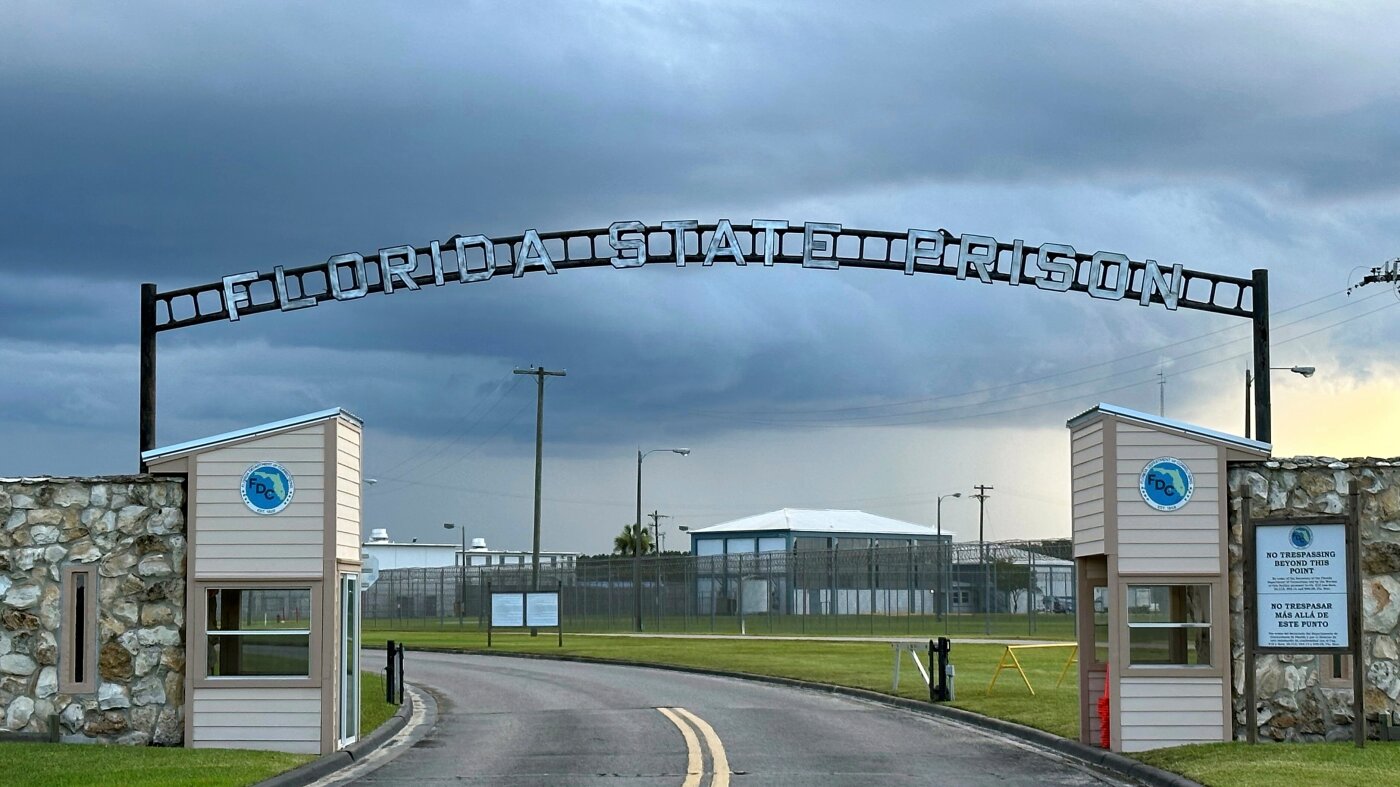

Among the 11 U.S. states that executed prisoners in 2025, Florida leads with 19 executions.
Curt Anderson/AP
hide caption
toggle caption
Curt Anderson/AP
The number of executions worldwide reached a 44-year high in 2025, according to a new report from Amnesty International, as state-sanctioned killings nearly doubled in the United States in the space of a year.
A total of 2,707 people have been killed in 17 countries on criminal charges ranging from drug offenses to acts of political dissent, the human rights organization reported on Sunday. This represents a 78% increase in the number of executions compared to the previous year, when Amnesty recorded 1,518 executions.
Iran carried out most of last year’s executions, killing 2,159 people, more than double the number of 2024 executions. In September, Amnesty said that by 2025, Iran had already reached its highest number of executions in 15 years. He attributes the increase in part to the country’s growing use of the death penalty “as a tool of state repression and to crush dissent” since 2022, when a large protest movement for women’s rights erupted.
According to Amnesty, many countries have used the death penalty to enforce tough drug laws, including Iran and Saudi Arabia, the latter of which executed at least 356 people in 2025. The nonprofit organization, which supports the abolition of the death penalty, says its tally does not include the thousands of alleged executions carried out in China, which the organization describes as the leading country for executions in the world.
The United States has also seen a sharp increase in prisoner executions: 47 in 11 states over the past year, up from 25 in 2024. The United States, where the death penalty only applies to cases of murder or treason, is the only country in the Americas to carry out criminal executions last year, according to Amnesty.
Florida leads with 19 executions. The state’s Republican governor, Ron DeSantis, has defended the death penalty, hailing it as a “powerful deterrent” to crime and “an appropriate punishment for the worst offenders.” He made sentencing easier: in 2023, he lowered the legal threshold for the death penalty in Florida, eliminating the requirement for a jury to unanimously recommend the sentence.
Texas had the second highest number of executions, with 169, followed by Alabama and North Carolina.
Justin Mazzola, deputy director of research at Amnesty International, says the “huge increase” in executions in the United States is “specifically linked to what was happening in Florida.”
“Normally, Florida only runs between one and two, sometimes as many as six in a single year,” he said. “Last year they executed 19 people, or almost one every two weeks,” Mazzola said.
Amnesty International describes the death penalty as “the cruelest, cruelest, most inhumane and most degrading punishment.”
Mazzola argues that the growing use of the death penalty in the United States runs counter to the American public’s growing opposition to the practice.
Support for capital punishment peaked in 1994 at 80 percent, according to Gallup, but fell precipitously, Mazzola said, “as people increasingly understand all the issues involved in the death penalty, from racism and the targeting of people from low-income backgrounds, to issues of mental health and intellectual disabilities.”
Today, support for the death penalty in the United States is at its lowest level in five decades: 52% of Americans support capital punishment – the lowest since 1972, according to Gallup poll data from October.
A recent report from the Death Penalty Information Center confirms this trend. The center studies state executions but takes no position on whether they should be abolished.
“Our own research shows that the majority of American juries reject death sentences for a variety of reasons,” said the center’s executive director, Robin Maher, citing concerns about fairness and wrongful convictions.
“I think it’s a growing recognition that the death penalty is a failed policy. It really doesn’t deliver on the promise it once had to deter future crimes and punish inappropriately.”


