First female ‘beast-huntress’ gladiator depiction uncovered in lost mosaic


A 3rd-century mosaic lost during World War I likely depicted a gladiator scene that challenged widely held assumptions about gender dynamics in ancient Rome. After re-examining notes first compiled in 1860, University of California sports historian Alfonso Mañas believes that the artwork excavated in Reims, France, presented the first known illustration of a veinmaker– a female beast fighter.
Ancient Roman gladiator games were not limited to brutal spectacles between male warriors. They featured a diverse (and frequently rotating) group of professional fighters, criminals, enslaved citizens, and even wild animals battling each other. Only a handful of primary sources refer to women gladiator fighters, and even fewer mention women confronting captured predators such as big cats or bears. The earliest example dates from the reign of Nero (54-68 CE), while other documents mention veinmaker matches at the opening of the Colosseum in 80 CE. Most historians have long believed that female-to-female beast fighting fell out of favor around 100 CE, while gladiator warriors occasionally appeared over the next century
In 1860, archaeologist Jean Charles Loriquet discovered a massive mosaic in the northern French city of Reim depicting various forms of gladiator combat. Measuring approximately 36 feet by 29 feet, the intricate tiling included 35 medallions depicting various arena scenes.
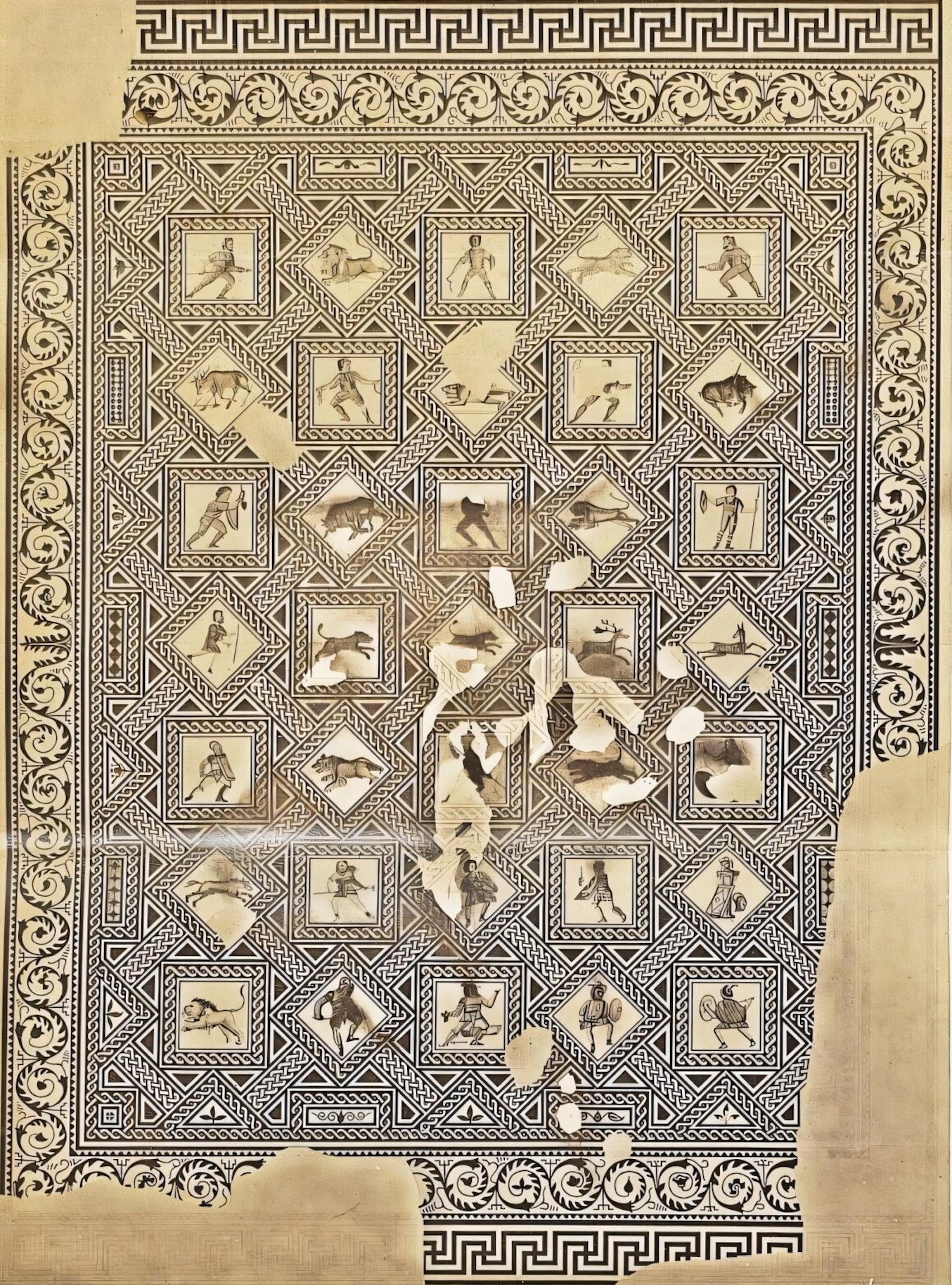
“Loriquet had already understood that the different images were related to each other. So two neighboring gladiators…meant a fight between these two gladiators, and similarly an animal next to a person meant a hunt,” explained Mañas in a study recently published in The International Journal of Sports History.
Tragically, a World War I bombing campaign destroyed the artwork in 1917. Only a single medallion of the mosaic remained and is today in the Musée Saint-Rémi in Reims. But all was not lost. After his excavation, Loriquet took the time to sketch in his notes a detailed illustration of the entire mosaic. After comparing the surviving museum medallion figure to Loriquet’s accurate rendition, it is clear that the archaeologist took great care to ensure overall accuracy. And one scene in particular stood out above all the others.
While almost all of the fighters depicted in the mosaic appeared fully clothed and bearded, one individual pursuing a leopard stood out both for his clothing and his physical anatomy. From his writings, even Lorikeet seemed to think that something about this fighter was different.
‘Lorikeet did not initially identify the person as female, but he probably had doubts, as he did not identify him as male either, preferring the neutral term’character“, Mañas wrote.
The French archaeologist also took care to highlight the figure’s hairless face, but the most striking and obvious difference is visible in the warrior’s proportions. The creator of the mosaic intentionally left the subject’s torso bare to illustrate her breasts and emphasize that, unlike the other fighters, she was a woman. Armed with a whip and possibly a dagger, she is also shown chasing the leopard.
It would take the anonymous woman more than 165 years to receive her due. For decades, researchers claimed that she must have played the role of a clown known as pegnary responsible for agitating the animals. Although such roles existed in gladiator games, Mañas clarifies that she does not wear traditional clothing. pegnary clothes, nor is she armed with the right equipment. Instead, Mañas argues that the woman was a trained hunter, or veinmaker.
“The term that best defines what the woman in the image is doing is that of successor (help), a type of seller who contributed to the development of sale (hunting), in this case by pushing the beast towards another seller», he writes. “So the woman is a veinmakerof the successor type (a branch officeshe-helps).
If true, the reexamination not only gives it due credit: it both rewrites the timeline of gladiatorial combat and recontextualizes ancient Roman gender norms. Around 1,800 years old, the work depicts women fighting animals long after the empire banned them from playing the role of gladiators.
“Identifying the only known visual source depicting a single Roman female beast hunter is very important,” Mañas explained. “But what’s more, since the mosaic dates from the third century, it adds a whole century to the story of these arena hunters.”

The best new PopSci 2025 releases