Flipboard’s ‘social websites’ are a new spin on decentralized social media

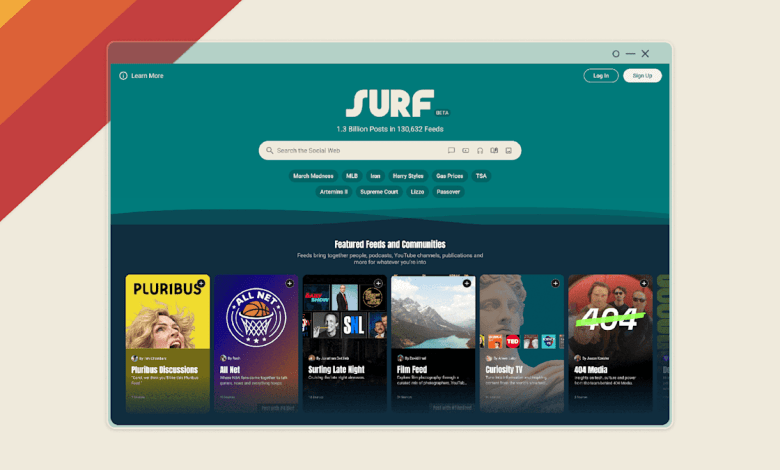
Flipboard has been one of the biggest proponents of decentralized social media. Now the company, known for its social news reader app, is rolling out its latest experiment, “Social Websites.”
The project offers publishers and creators a simpler path to what is often called the “open social web,” which includes fediverse, as well as other protocol-based platforms like Blueksy. The company says it could also help creators of all stripes regain control of their audiences on mainstream social media platforms and other “walled gardens.”
In practice, social websites are essentially microsites that allow creators and publishers to aggregate posts from decentralized platforms and RSS feeds into one place where users can browse blog posts, newsletters, podcast episodes as well as relevant comments from Bluesky, Mastodon and other federated services. It’s also the first web version of Surf, Flipboard’s reading app designed for the open social web.
The company has already partnered with a handful of publishers and creators who have created their own “social websites” on Surf. For example, rolling stone has created a site dedicated to its political coverage, which presents the articles of its authors as well as the news. Creator David Rushing created a site called “All Net” inspired by the NBA fan community on Threads. All Net features Bluesky, Threads, and Mastodon publications, as well as clips from NBA podcasters and creators on YouTube. Fans can’t just follow the feeds of these social sites, but can also participate in the conversation around posts from disparate platforms in a single space.
“The social web is really promising and really great, but it’s quite complex and difficult to use,” Flipboard CEO Mike McCue told Engadget. “What we’re trying to do is make sure that [so] as if in 15 minutes you could create one of these communities. »
Removing complexity is certainly something the broader protocol-based social web could benefit from. And the Surf website is refreshingly free of words like “protocol” and “federation.” You can view content from Mastodon, Pixelfed (the fediverse version of Instagram), PeerTube (fediverse YouTube) without ever having to log in and understand how to use these platforms.
But there are also plenty of benefits for publishers and individual creators, according to McCue. He’s had a front-row seat to years of volatile dynamics between publishers and social media platforms through Flipboard. “They’re really done with investing in a new audience on a new platform of billionaires where discovery is totally obscured,” he said. “Creators and publishers are looking for a way to take back social media, to own their own communities and their own relationships with their audiences.”
It’s less clear whether this experiment will drive meaningful traffic to publishers. The rise of alternatives to Twitter hasn’t always led to increased traffic to websites, which are also grappling with increasing pressure from AI search. For now, Flipboard only offers ten publisher social websites, although anyone can now start tinkering with the site and create their own.


