Fluoride shortage for US drinking water : NPR

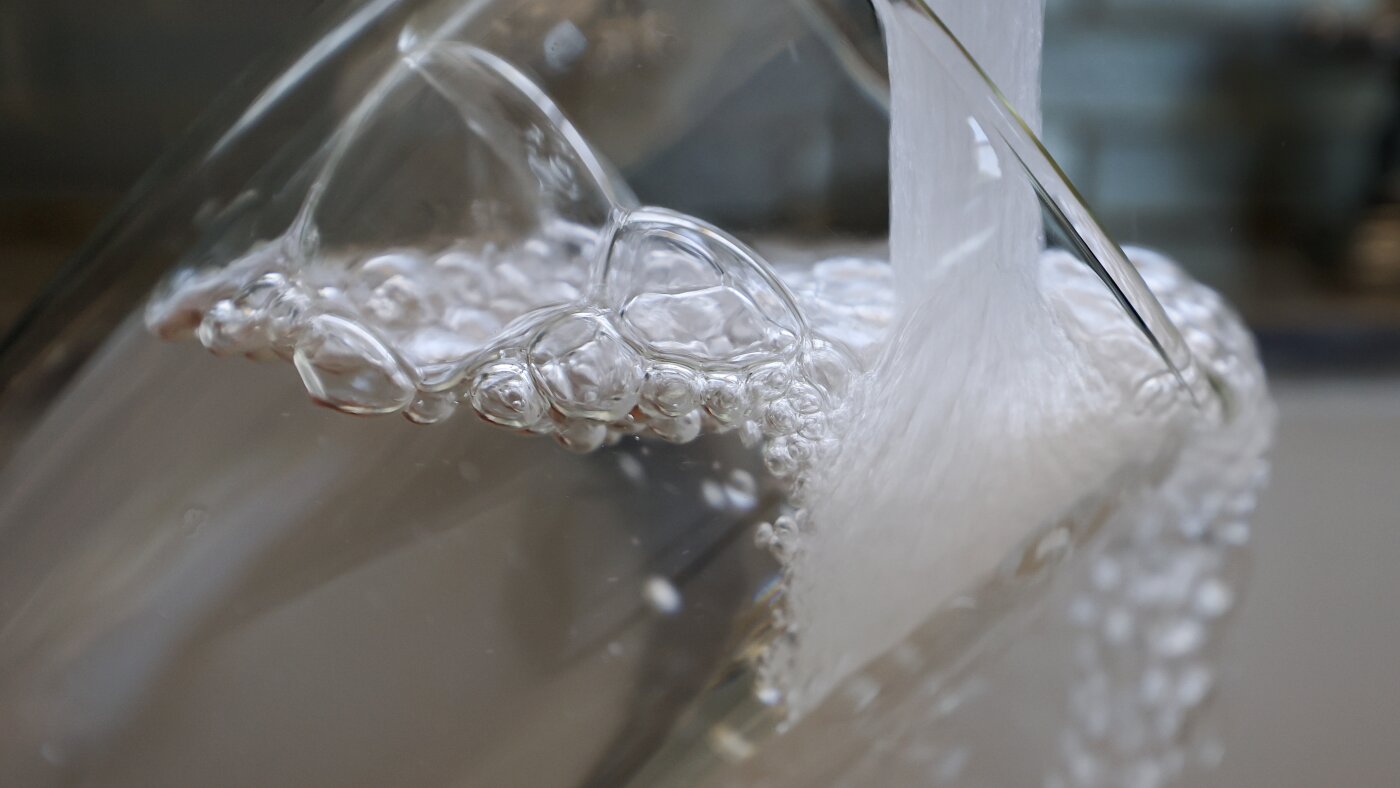

A disruption in supply is leading some water networks to reduce the amount of fluoride in drinking water.
Joe Raedle/Getty Images
hide caption
toggle caption
Joe Raedle/Getty Images
This week, Baltimore City’s public water system cut fluoride levels in its drinking water by almost half. This is a response to supply chain tensions caused by conflict in the Middle East.

“We were alerted that our supplier was going to reduce the supply from three deliveries per month to two,” says Matthew Garbark, director of the Baltimore City Department of Public Works.
In response, the water system, which serves 1.8 million customers, is lowering fluoride levels by 0.7 milligrams per liter, as recommended by the U.S. Public Health Service, to 0.4 mg/L.
Baltimore City is not alone. U.S. water systems are facing a shortage of hydrofluorosilicic acid, a chemical used to fluoridate drinking water to prevent cavities and tooth decay.
The specialty chemical comes primarily from a small pool of international producers. And conflict in the Middle East is disrupting the supply chain. Managers of U.S. water systems say the shortage of fluorinated chemicals is unprecedented.
Companies manufacture this acid in large factories, mainly abroad. U.S. suppliers import and deliver the product. The acid arrives at water treatment plants across the United States in liquid form, transported in 5,000-gallon tank trucks. “We don’t make it, we don’t produce it. All of our chemicals are purchased and rely on the supply chain to get to our plants,” says Garbark.
Deployed factory staff
Israel is one of the world’s leading producers of the chemical. “From what we understand, one of the major suppliers in Israel temporarily lost a number of employees, because they were called into service with the Israeli army,” says Dan Hartnett, political director of the Association of Metropolitan Water Agencies. “It basically shut down production at their factory in Israel. They weren’t producing acid. They weren’t able to ship it.”

Hartnett says he has yet to hear widespread concerns from city water managers. However, if the shortage persists, more people may be forced to reduce their fluoride intake or stop adding it to their water. “There is concern that if the conflict in Iran drags on and the supply chain continues to be disrupted, an increasing number of systems could begin to face similar challenges,” he says.
Approximately 60% of the U.S. population receives fluoridated drinking water. Many communities have chosen to add fluoride to tap water for decades, as a public health measure that is expected to reduce cavities by about 25%.
Reducing fluoridation levels in drinking water due to supply chain constraints is a new development, distinct from the efforts of activists who have campaigned to end the practice on health grounds, although the medical community considers low levels of fluoride in drinking water safe.
Shortage leads to rationing
Although global disruptions such as the COVID pandemic have caused delays in processing some water treatment chemicals in the past, “we’ve never reached the point where we’ve started reducing our chemical use,” says Ben Thompson, chief production officer at WSSC Water, which serves 1.9 million residents in suburban Maryland outside Washington, DC.
Like the City of Baltimore, WSSC Water decided to reduce fluoride levels, from 0.7 mg/L to 0.4 mg/L. The WSSC supplier informed the utility by letter that it would now receive 20 percent fewer chemicals, due to the national shortage.
“We’re trying to expand our supplies, because we don’t know to what extent or how long this will continue,” Thompson says. Water consumption increases during the summer months, so he takes steps to “maintain ground level” and keep a consistent amount of fluoride in the water supply.
Pencco, the Texas-based supplier for Baltimore City DPW and WSSC Water, did not respond to an interview request.
In Pennsylvania, water systems in Lititz Borough in Lancaster County and Hanover Borough in York County reported similar shortages in March involving other providers. The supply crisis led them to consider temporarily stopping community water fluoridation, although in both cases the supply problems were resolved within weeks.
Water utilities reducing fluoride say drinking water remains safe. Fluoride is not required by the Environmental Protection Agency, which regulates drinking water. “The reduction has no impact on water quality, it is simply a reduction in fluoride treatment,” says Thompson.
Other sources of fluoride include fluoridated toothpastes and certain teas and foods.
Thompson says these reductions are temporary. The WSSC aims to bring fluoride levels back into full compliance with public health recommendations when supplies return. But he couldn’t predict when that would happen.