French national shows symptoms on return from hantavirus-hit ship

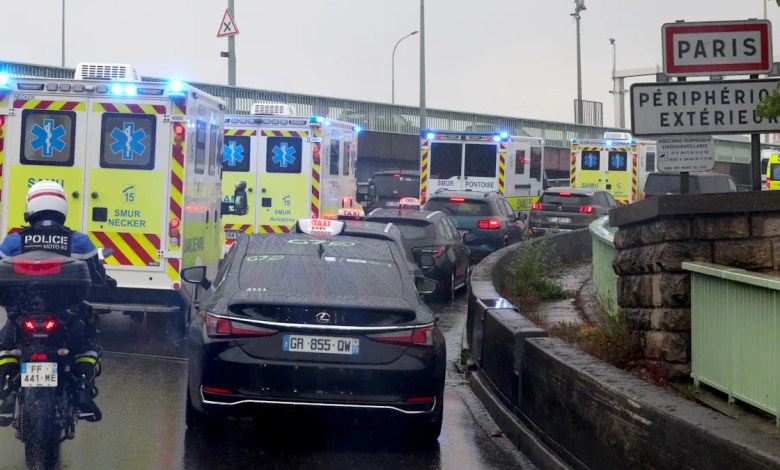
A cruise ship passenger hit by a hantavirus outbreak showed symptoms of the disease while being repatriated to France, the country’s prime minister said.
Sebastien Lecornu said the French national developed symptoms while on a charter flight from Tenerife to Paris and the five evacuees from the MV Hondius were therefore “immediately placed in strict isolation until further notice”.
The French citizens are among more than 90 tourists who will be repatriated on Sunday by the Dutch ship, which anchored off the Canary Islands before dawn.
Three passengers died after traveling on the ship, two of whom were confirmed to have the virus.
After the French flight landed at Le Bourget airport, officers wearing personal protective equipment (PPE) could be seen meeting them on the tarmac. Ambulances then transported them to Bichat hospital in the French capital.
There, they will be quarantined for 72 hours and undergo a full assessment, before being sent home to self-isolate for 45 days, the French Ministry of Europe and Foreign Affairs said in a statement.
Fourteen Spanish nationals flown from Tenerife to Madrid are now subject to mandatory quarantine at a military hospital in the Spanish capital.
The British nationals were flown back to Manchester. None of the Britons have reported symptoms but they are being monitored, the UK Health Security Agency (UKHSA) said.
A plane carrying 26 passengers and crew, including eight Dutch nationals, has arrived in the Netherlands.
A flight left for the United States on Sunday carrying 18 people – all American passengers from the cruise and a British national residing in the United States.
One of the Americans began showing mild symptoms of hantavirus and another tested slightly positive for the Andean strain of the virus after being evacuated from the cruise ship, the U.S. Department of Health and Human Services said.
The two passengers “were traveling in the aircraft’s biocontainment units out of an abundance of caution,” HHS said.
Flights for Turkish and Irish citizens were also planned for Sunday, while Spanish Health Minister Mónica García said the last two evacuation flights would depart on Monday afternoon.
Six passengers are returning to Australia and 18 others will be flown to the Netherlands. Both planes are also carrying passengers from other countries that have not sent their own repatriation flights.

Officials in PPE awaited French nationals upon their arrival at Le Bourget airport [Reuters]
Spanish Health Secretary Javier Padilla said more than 90 of the Hondius’ 150 passengers and crew will have been sent home by the end of Sunday. A flight to Australia is expected on Monday.
The cruise ship anchored in Granadilla port earlier on Sunday and medical teams boarded around 7 a.m. local time (0600 GMT).
Thus began the carefully choreographed process of evacuation and repatriation of those on board, designed by the Spanish government and the World Health Organization (WHO).
Passengers could be seen from a distance strolling on the ship’s deck or at the windows, all wearing white medical masks, as the first evacuations took place on Sunday morning.
Several of them sat socially distanced on the first evacuation boat, filming and taking photos as they approached land, where they were greeted by officials in white protective suits.
As they were couriered to the airport, some British passengers – dressed in blue PPE – waved and gave thumbs up as they passed the assembled media.
The arrival of the Hondius has been opposed by some, including the regional president of the Canary Islands, who has expressed concerns about the spread of the virus in Tenerife.
Hantaviruses are usually carried by rodents, but human transmission of the Andean strain – which the WHO says was contracted by some of the ship’s passengers while in South America – is possible.
Symptoms may include fever, extreme fatigue, muscle aches, stomach pain, vomiting, diarrhea and shortness of breath.
Helen Clark, co-chair of the Independent Group for Pandemic Preparedness and Response (IPPR), told the BBC there were lessons to be learned about how viral outbreaks on ships should be managed.
“Passengers disembarked and dispersed to the four winds when there was a death of a potentially infectious pathogen on board,” she explained.
When asked if the world was prepared for another pandemic, she said there was still work to do.
“There is not yet enough funding to help low-income countries strengthen their early detection, surveillance and response capacities,” she said.
She added that “the direction is good if countries come together to make it possible to do much, much better than what we did with Covid.” The IPPR assessed the global response to Covid-19.
The first passenger death occurred on April 11 and another on May 2. A 69-year-old Dutch woman who left the ship in St. Helena on April 24 traveled to South Africa, where she died two days later.
Two British men with confirmed cases are receiving treatment in the Netherlands and South Africa.
A third Briton is being treated for a suspected case on the remote island of Tristan da Cunha, to which British army doctors have parachuted fresh supplies to treat him.

British nationals returning to the UK will be taken to an isolation center where they will be held for up to 72 hours. Doctors will then assess whether they can isolate at home or in another appropriate location based on their living conditions.
Once all passengers and crew have disembarked, the Hondius will continue its journey to the Netherlands, where the body of one of the deceased passengers and his belongings will be disinfected before being evacuated.
Additional reporting by Toby Mann


