Fusion energy company Commonwealth applies to join a U.S. power grid—a first


April 28, 2026
2 min reading
 Add us on GoogleAdd SciAm
Could fusion energy soon join the US power grid?
Fusion energy startup Commonwealth Fusion Systems aims to commission its first power plant by the early 2030s, but daunting technical hurdles remain.
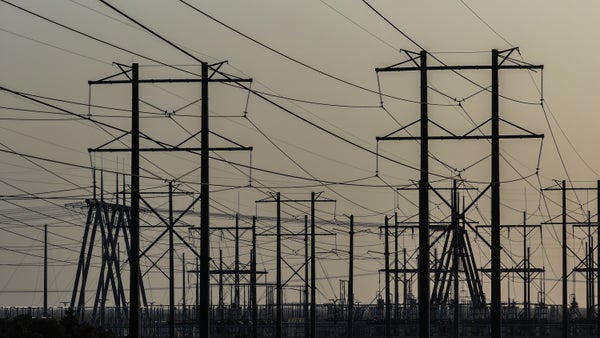
On Tuesday, a fusion energy startup announced it had applied to join a U.S. power grid — a first that could one day allow homes and businesses to be powered by nuclear fusion.
Commonwealth Fusion Systems is seeking to join a power grid operated by PJM Interconnection and providing 182,000 megawatts of electricity to more than 67 million people living in 13 states and Washington, DC. But technical obstacles to bringing fusion online remain: one of the major obstacles is actually producing a stable fusion reaction that generates more energy than it consumes.
The application process requires a potential energy supplier to provide detailed technical information to the network operator, including descriptions of the planned fuel type. In Commonwealth’s case, the company is developing a model of a tokamak reactor that uses high-power lasers and powerful magnetic fields to combine two isotopes of hydrogen – deuterium and tritium – in a process that mimics nuclear reactions in the sun. The promise of the device is that a fusion reaction could generate unlimited clean energy. This energy, in the form of heat, is used to boil water and produce steam, which then drives a turbine to produce electricity.
On supporting science journalism
If you enjoy this article, please consider supporting our award-winning journalism by subscription. By purchasing a subscription, you are helping to ensure the future of impactful stories about the discoveries and ideas shaping our world today.
Much of this process remains theoretical, however, as physicists have yet to prove that fusion can work as a large-scale energy source. Recent results from Germany’s Wendelstein 7-X demonstrated that it could hold superheated plasma for 43 seconds. And its rival, the Joint European Torus, apparently managed to accomplish this feat for a full minute before its reactor was decommissioned in 2023. While such capabilities are impressive, there is still a long way to go before a fusion device can be connected to a grid. Commonwealth plans to open its first power plant, called ARC (for “affordable, robust, compact”) in Virginia in the early 2030s. And the company aims to demonstrate a first model, called SPARC (for “smallest possible ARC”), in 2027.
Commonwealth has demonstrated some success: the company’s toroidal field magnet technology was validated by the Department of Energy in September 2025. The superconducting magnets generate the magnetic field used to contain the high-temperature plasma generated by a fusion reaction. But the Commonwealth has not yet tested the entire system.
Commonwealth co-founder and CEO Bob Mumgaard said in a statement that the company is “committed to delivering the benefits of fusion and enabling a future with abundant and secure energy,” [which] This means we’re not just proving how fusion physics works: we’re showing exactly how the watts of a fusion power plant move from our machine to the customer, working with the grid and a utility.
“By becoming the first fusion energy developer to enter a major grid operator’s interconnection queue, we are demonstrating that when you are serious about building a power plant in the early 2030s, you act now,” he said. “It’s an execution.”
It will likely take years for the Commonwealth’s bid to be approved; the company will navigate a complex process that will include multiple impact studies and other analyses, as well as reviews of its capabilities, readiness, security controls and other compliance.
PJM Interconnection did not immediately respond to a request for comment.
It’s time to defend science
If you enjoyed this article, I would like to ask for your support. Scientific American has been defending science and industry for 180 years, and we are currently experiencing perhaps the most critical moment in these two centuries of history.
I was a Scientific American subscriber since the age of 12, and it helped shape the way I see the world. SciAm always educates and delights me, and inspires a sense of respect for our vast and beautiful universe. I hope this is the case for you too.
If you subscribe to Scientific Americanyou help ensure our coverage centers on meaningful research and discoveries; that we have the resources to account for decisions that threaten laboratories across the United States; and that we support budding and working scientists at a time when the value of science itself too often goes unrecognized.
In exchange, you receive essential information, captivating podcasts, brilliant infographics, newsletters not to be missed, unmissable videos, stimulating games and the best writings and reports from the scientific world. You can even offer a subscription to someone.
There has never been a more important time for us to stand up and show why science matters. I hope you will support us in this mission.


