GoPro’s new Mission 1 camera system includes a large 8K sensor and a model that accepts interchangeable lenses


You likely have a singular vision of what a “GoPro camera” is. The company invented the traditional action camera and has largely stuck to that format for years. Now, GoPro announced the Mission 1 Series at NAB 2026 and it’s a huge shift. The line includes three compact cameras built around a 50-megapixel 1-inch sensor and the company’s new GP3 processor. The lineup spans from a standard model through a high-framerate flagship to a version with a Micro Four Thirds lens mount — a combination that puts GoPro into categories it hasn’t competed in before. If you’ve been following action cameras, this one is worth paying attention to.
Rather than creating another action camera that creatives can try to use as a makeshift cinema camera, the company has created a camera that’s actually made for long-form content creation. New thermal management, longer battery life, and increased accessory compatibility make this a very capable little brain for a bigger rig.
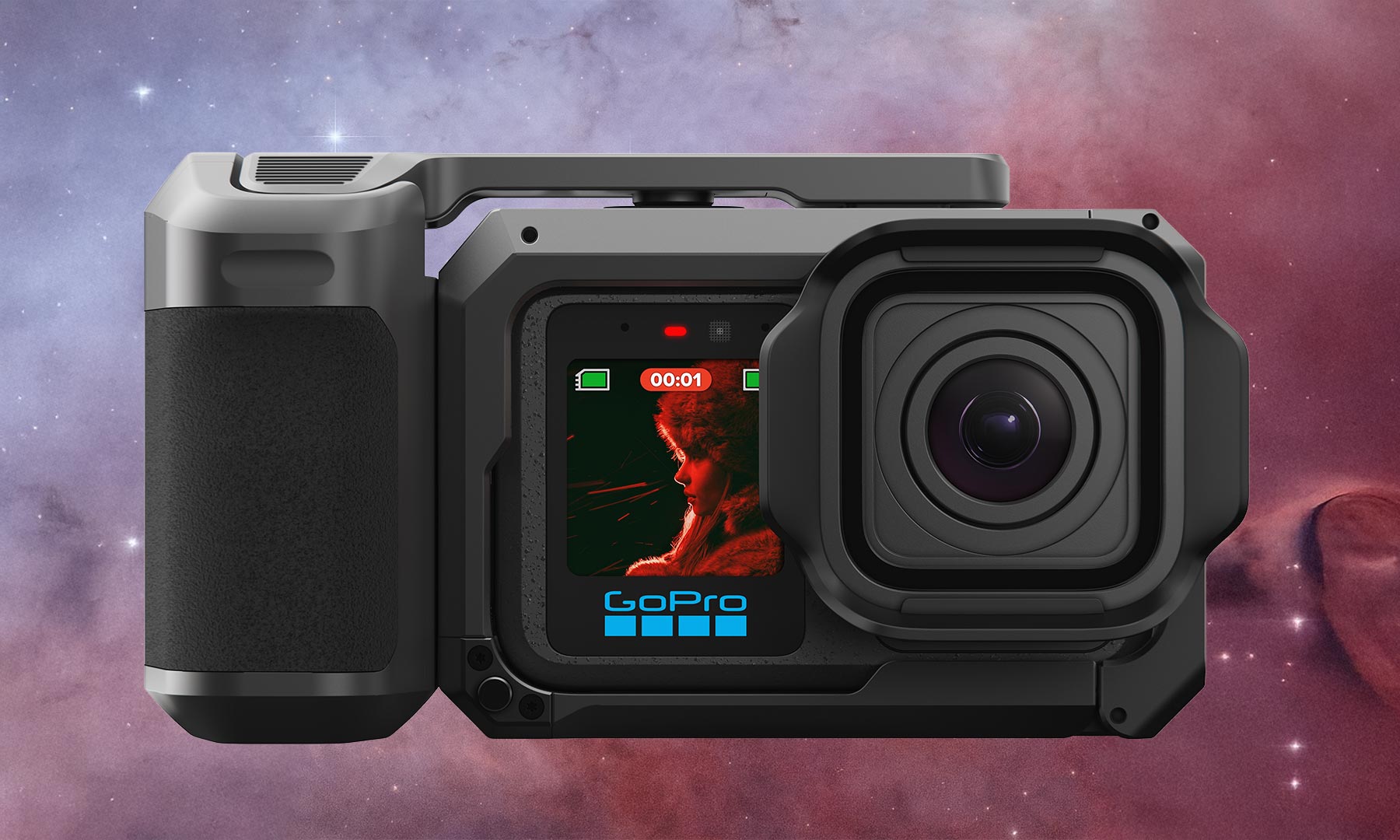
All three models share the same sensor and processor foundation. The differences between them come down to maximum framerates and, in the case of the Pro ILS, the lens system entirely.
GoPro Mission 1 specs at a glance
Mission 1
- 50MP 1-inch sensor, GP3 processor
- Up to 14 stops of dynamic range
- 8K/30fps video
- 4K/120fps and 1080p/240fps slow motion
- 4K/120fps open gate
- 10-bit color, HLG-HDR, GP-Log2
- 32-bit float audio, four onboard microphones
- Fixed lens, 159-degree native field of view
- OLED rear display (14% larger than prior GoPro models)
- Waterproof to 66 feet without housing
- Preorder May 21, ships May 28
Mission 1 Pro
- 50MP 1-inch sensor, GP3 processor
- Up to 14 stops of dynamic range
- 8K/60fps video
- 4K/240fps and 1080p/480fps slow motion; 1080p/960fps burst slow motion (up to 10 seconds)
- 8K/30fps and 4K/120fps open gate
- 10-bit color, HLG-HDR, GP-Log2
- 240Mbps maximum bitrate
- Timecode sync
- 32-bit float audio, four onboard microphones
- Fixed lens, 159-degree native field of view
- OLED rear display (14% larger than prior GoPro models)
- Waterproof to 66 feet without housing
- Over 3 hours recording at 4K30 / over 5 hours at 1080p30 (Enduro 2 battery)
- Preorder May 21, ships May 28
Mission 1 Pro ILS
- 50MP 1-inch sensor, GP3 processor
- Up to 14 stops of dynamic range
- 8K/60fps video
- 4K/240fps and 1080p/480fps slow motion; 1080p/960fps burst slow motion (up to 10 seconds)
- 8K/30fps and 4K/120fps open gate
- 10-bit color, HLG-HDR, GP-Log2
- 240Mbps maximum bitrate
- Timecode sync
- 32-bit float audio, four onboard microphones
- Micro Four Thirds lens mount
- HyperSmooth stabilization with rectilinear prime lenses
- Weatherproof
- Ships Q3 2026
The cameras

Mission 1 is the entry point. It records 8K at 30fps, 4K at up to 120fps, and 1080p at 240fps. The 4K/120fps mode is available in open gate. It shares the Mission 1 Pro’s sensor, color science, and audio system, and carries over the same waterproofing and display.
Mission 1 Pro is where the frame rate ceiling rises significantly. It adds 8K open gate recording, pushes 4K to 240fps for slow motion, and reaches 1080p at 480fps in standard recording mode. For bursts of up to 10 seconds, it can also capture 1080p at 960fps. Maximum bitrate is 240Mbps. Battery life runs over three hours at 4K30 and over five hours at 1080p30 on the Enduro 2 cell.
Mission 1 Pro ILS shares the Mission 1 Pro’s full video specification including 8K/60fps, 4K/240fps, and 8K/30fps and 4K/120fps open gate. However, it swaps the fixed lens for a Micro Four Thirds mount. One important distinction: it’s weatherproof rather than waterproof. The fixed-lens Mission 1 and Mission 1 Pro are rated to 66 feet without a housing; the ILS carries only a weatherproof rating. It doesn’t ship until Q3 2026.
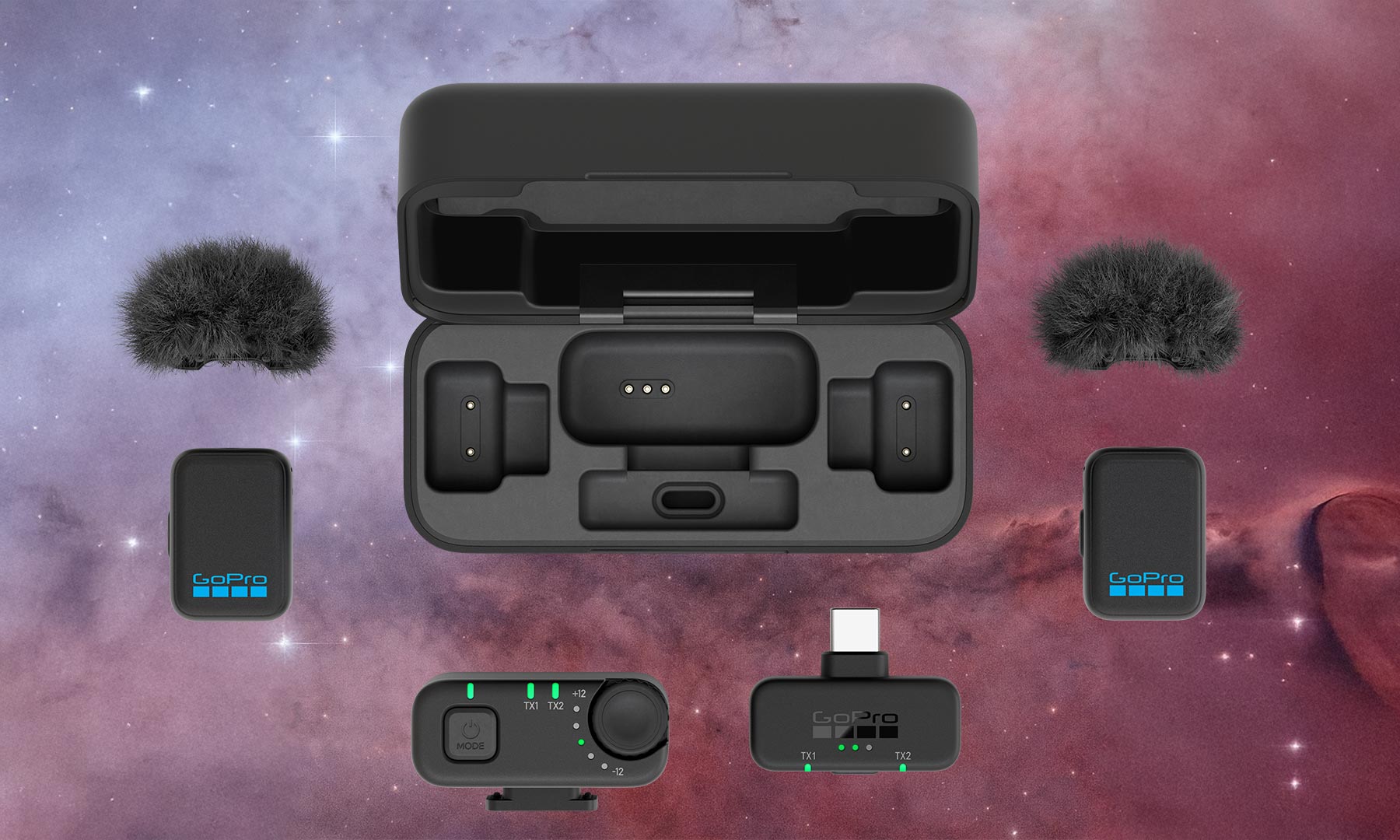
A Mission 1 Pro Grip Edition also ships May 28. Accessory launches including a wireless microphone, media module, and battery grip are staggered from May through Q3 2026. GoPro has not announced pricing for any model yet.
What 8K open gate actually means
Most cameras, when recording video, read from a cropped portion of their sensor. Even if the sensor can capture more, the camera maps a 16:9 crop to fit a standard delivery format. The term “open gate” comes from cinema camera jargon. The film gate was the physical aperture that controlled how much of each frame you exposed. Open gate means using the full sensor area rather than a crop of it.
On the Mission 1 Pro, 8K open gate captures the full width and height of the 1-inch sensor, yielding a larger-than-16:9 frame. There are two practical reasons this matters. First, this format maximizes your field of view. Nothing is being trimmed to fit a delivery ratio. Second, it gives editors room to reframe in post. Shooting 8K and delivering 4K means you have considerably more resolution to work with; an editor can push in, pan, or level a horizon without degrading the output image. Perhaps more importantly here in 2026, you can also shoot footage that works in both horizontal and vertical format.
The 4K/120fps open gate mode extends the same logic to slow motion. 4K at 120 frames per second delivered at 24fps gives you 5x slow motion without any reduction in frame size or field of view. The standard Mission 1 offers this too, and the Pro also unlocks 4K/240fps standard slow motion and 8K/30fps open gate.
Mission 1 Pro ILS: GoPro’s first interchangeable lens camera
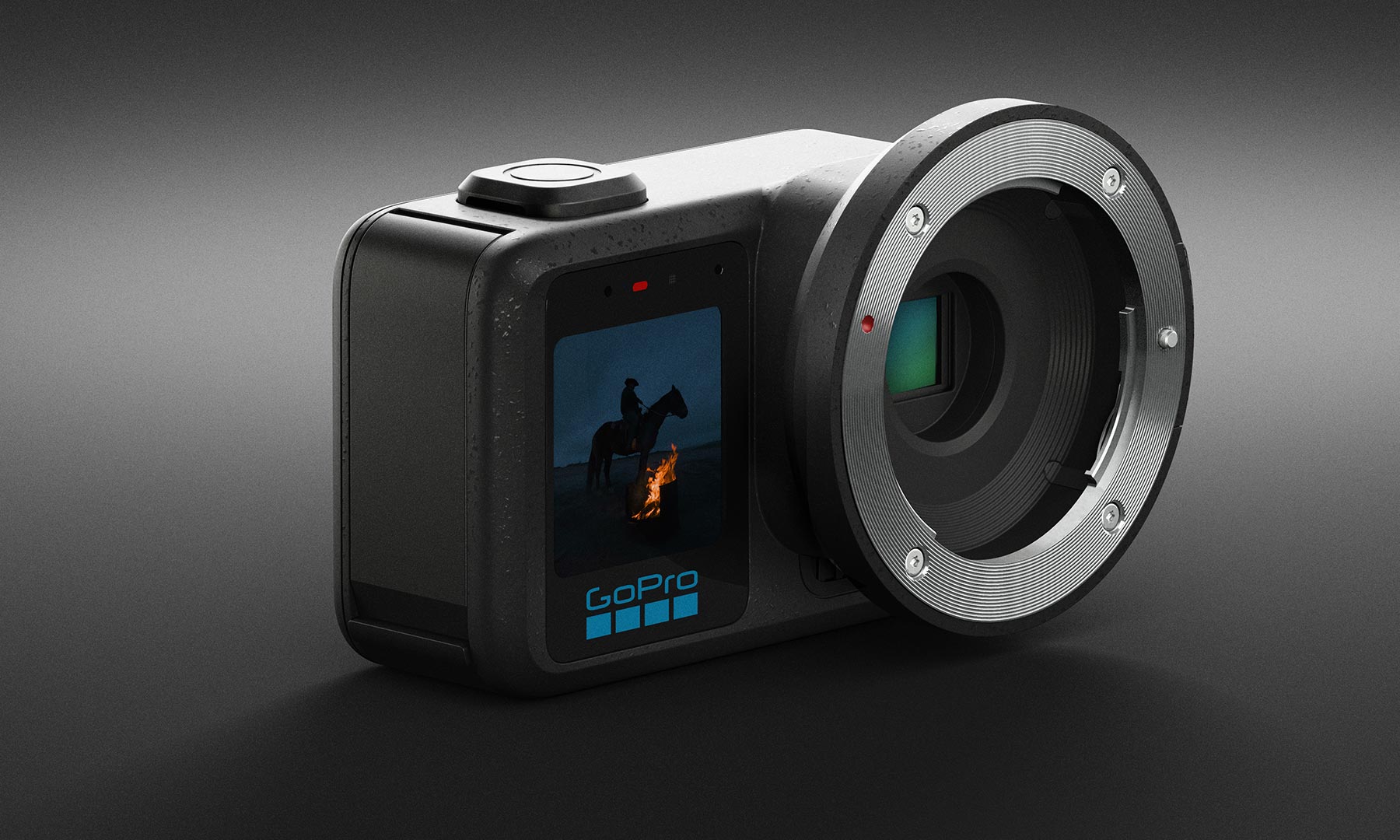
The Mission 1 Pro ILS is the variant that doesn’t have a direct equivalent anywhere else. GoPro has never made an interchangeable-lens camera, and the choice of Micro Four Thirds makes it very interesting, especially to users who have already been using adapted lenses or Black Magic cameras.
Micro Four Thirds is a mirrorless mount standard developed jointly by Olympus and Panasonic, introduced in 2008. It has a large native lens ecosystem, but the more significant aspect for most shooters is how widely it adapts to other systems. The MFT flange distance, the gap between the mount face and the sensor plane, is short enough that adapters exist for nearly any other lens mount. Canon EF, Nikon F, Leica M, Canon FD, C-mount, PL, and tons more all work MFT with readily available adapters. That’s not true for most other mirrorless camera mount standards. Someone with a collection of Nikon glass, or a cinematographer who shoots on PL lenses, can put that glass on an MFT body for relatively little additional investment. The ecosystem is as large as you want it to be.
The one-inch sensor gives the camera an effective crop factor of 3X. Because the sensor is only using a section in the center of the image circle, you’re getting the sharpest part of the lens’s image. That also means lenses will appear more “zoomed in” when attached to this camera than they will on others with bigger chips. A 50mm lens, for instance, will give you the same angle of view as a 150mm lens on a full-frame camera. That has its advantages and disadvantages, but it’s still fantastic to have options without having to rely on digital zoom.
Audio and other specs
True content creators will be glad to see 32-bit float audio recording across the entire line. Recording audio in 32-bit float captures a wide enough dynamic range that peaks that would normally clip, or quiet tracks buried by ambient noise, can be recovered cleanly in post without needing to re-record. It doesn’t replace an external recorder for demanding work, but for a camera this size, it raises the floor considerably on what you can usably capture in unpredictable conditions.
GP-Log2 is GoPro’s logarithmic recording profile that flattens contrast and extends dynamic range, giving colorists more latitude to grade the footage. HLG-HDR (Hybrid Log-Gamma) is the other option, designed to be viewable on HDR displays without additional grading. GoPro quotes up to 14 stops of dynamic range at the sensor, with all three models benefiting from the same 1-inch sensor and GP3 processor combination.
How does the Mission 1 compare to what came before — and what’s out there now?
The 1-inch sensor is a tangible step up from the smaller sensors in GoPro’s HERO line. A 1-inch sensor has roughly four times the surface area of the 1/2.3-inch sensors in earlier GoPros, which translates to better noise performance in low light and more natural depth of field effects. It’s a sensor size that’s become standard in professional compact video cameras: the Sony RX100 line and DJI’s Pocket 3 use 1-inch or near-equivalent sensors for similar reasons.
At the Pro tier, 8K/60fps open gate puts the Mission 1 ahead of most cameras in its size class on resolution and framerate on paper. The more interesting comparison may be the Mission 1 Pro ILS against compact cinema cameras from Blackmagic, Z CAM, and others — where the Mission 1 would be distinguished primarily by its ruggedness and compact body. GoPro has taken unconventional approaches to niche form factors before. The HERO10 Black Bones was built specifically for FPV drone pilots willing to strip the camera down to its bare chassis. Whether the actual image quality matches what the spec sheet suggests is something we’ll be able to evaluate once we can shoot with it.
GoPro is showing all three cameras at NAB 2026 (April 19–22, Booth C5519). The Mission 1, Mission 1 Pro, and Mission 1 Pro Grip Edition open for preorder May 21 and ship May 28. The Mission 1 Pro ILS arrives in Q3. We’ll have a full review once we get camera time — check back for it.

2025 PopSci Best of What’s New