Damning report finds ‘culture of mistrust’ at Edinburgh maternity unit


Andrew PickenBBC Scotland

 Getty Images
Understaffing and a “culture of mistrust” led to delays and harm to patients at one of the UK’s busiest maternity units, a study has found.
An inspection of maternity care at the Royal Infirmary in Edinburgh found some women waiting to go into labor experienced delays of more than 24 hours.
He also said staff were reluctant to submit safety reports and had raised concerns about being overwhelmed and unsupported.
The damning findings echo those of NHS Lothian’s own review of the struggling maternity unit last year – but the health board insisted it was making progress in improving and investing in its women’s services.
The review of Edinburgh’s maternity ward follows a BBC Disclosure investigation which heard calls for urgent action to improve the safety of maternity wards across Scotland.
The inquest heard from a number of families who had received poor and sometimes fatal care.
Concerns about Edinburgh Maternity Hospital were raised in 2024 by whistleblowers, forcing NHS Lothian to carry out an internal safety review.
It concluded that mothers and newborns suffered harm due to understaffing and a “toxic” work culture.
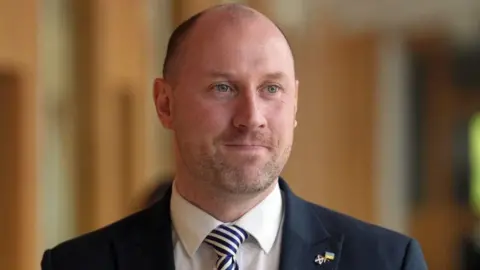
Health Secretary Neil Gray said the Healthcare Improvement Scotland (HIS) report was “deeply, deeply concerning”.
Gray, who said he had suffered a loss in his own family, told BBC Radio’s Good Morning Scotland that he had asked NHS Lothian to make its recommendations “immediately”.
 Getty Images
An unannounced inspection was carried out in June this year by safety watchdog HIS.
It has now published its report, which reveals staff were “working hard to provide compassionate and responsive care in very difficult circumstances”.
He made 26 demands for improvement and raised “serious concerns” about the unit to NHS Lothian and the Scottish Government.
The inspectors found:
- Delays of between seven and 15 hours for an obstetric examination in the triage department for some women, and the onset of labor was delayed by up to 29 hours
- Only 13% of records containing essential patient observations, such as blood pressure and heart rate, were fully complete at the time of the visit. An inspector had to inform staff that these observations indicated a potential deterioration in a woman’s condition.
- Delays in escalation of care led to ‘significant adverse outcomes’ for women
- Errors were occurring due to poor communication between different areas of care, leading to issues such as forgotten medications.
- The majority of staff described a negative culture characterized by a lack of visible senior leadership. Many staff members were “emotional and in tears” speaking of the “overwhelming feeling of helplessness, frustration and worry for not only patient safety, but also staff safety”.
- Five of the six individual rooms in triage at the maternity ward did not have any call bell system. One woman told detectives she was in pain but had no way of getting staff’s attention.
SON Chief Inspector Donna Maclean said all interactions seen during the inspection between women, babies and families were “positive and respectful”.
“Some staff were complimentary and described their line manager as supportive,” she said.
“However, the majority of members of the multidisciplinary team we spoke with were frustrated with staffing levels and told us this posed a safety risk, which they had raised repeatedly with managers.
“They shared their concern about being overwhelmed, unsupported and unheard.”
Concerns were raised about the mix of skills within the department, difficulties in providing individual care to women and delays in observations or escalation of clinical concerns.
“Our inspection highlighted gaps in incident reporting and a reluctance to submit incident reports, with staff describing a culture of distrust,” she added.
“These are concerning issues that may significantly impact lessons learned from adverse events in the system and reduce opportunities for safety improvement.
“Women told us of mixed experiences within the hospital. While some were complimentary of their care, they also told inspectors of poor communication that left them uninformed and without a ‘voice’ in their care.”
BBC Scotland News spoke to more than a dozen midwives, anonymously, who work at the Edinburgh maternity ward.
They explained some of the challenges they faced within the unit when it came to dealing with pressures such as understaffing and workload.
The 2024 review of NHS Lothian confirmed or partially confirmed 17 safety concerns and concluded “there is no doubt that there were safety concerns, near misses and real adverse consequences for women and babies”.
At the time, BBC Scotland spoke to some families facing poor maternity care.
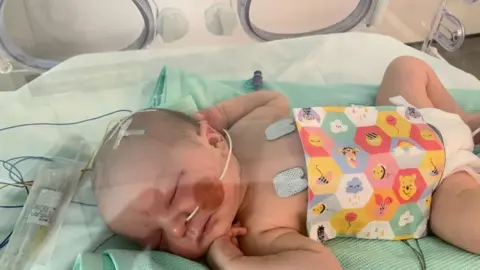
This included Naomi Robertson, whose son Roddy was born there in August 2023.
A review of his birth revealed that he had suffered a brain injury after multiple missed opportunities for observation and treatment due to understaffing and the high number of complex patients at the hospital.
The SIS inspection in June this year also revealed evidence suggesting that not all severe birth tears were being recorded correctly and that the number of women experiencing significant blood loss may be underestimated.
Staff also described an environment in which staffing levels varied significantly between shifts, with HIS observing reduced midwife availability of up to 50% on some shifts and noting “sometimes there were no staff to meet care needs”.
 Naomi Robertson
The leading cause of maternal death in the UK is venous thromboembolism, where a blood clot blocks blood flow.
In incident reports provided by NHS Lothian, HIS found that errors relating to venous thromboembolism risk assessment and medication were the second leading cause for a patient safety incident report to be submitted by staff in the six months prior to the inspection.
Elsewhere, inspectors found gaps in incident reporting, including some stillbirth reports only being submitted 11 days after death, with some workers describing a “reluctance to submit incident reports due to perceived repercussions and a culture of distrust”.
And some maternity student midwives said they felt forced to “just carry on” without adequate support, with some being implicated in patient medication errors.
Health Secretary Neil Gray said he had met some of the families who had shared their experiences at the maternity ward and was grateful to them.
He told BBC Scotland News: “They should know that it’s not just words that I have, but empathy and a personal commitment to seeing improvements be made.”
In a statement to Holyrood, Mr Gray announced that NHS Lothian’s maternity services would be placed under additional oversight and support from the Scottish Government.
In Scotland, health boards are subject to the NHS Board Performance Escalation Framework which is graded from one to five, five being the worst, and which relates to specific problem areas.
NHS Lothian maternity services have been moved to stage three of this framework.
In addition, a new Scottish Maternity and Neonatal Task Force will be formed to oversee improvements in this area.
In his statement, Mr Gray offered his condolences to the families who took part in the BBC Disclosure investigation and those who have lost loved ones in the care of NHS Lothian maternity services.
He added: “I am deeply disappointed and concerned by the findings of this report, particularly those relating to the experiences of women giving birth.
“I am also very concerned by the findings relating to poor culture. We will not tolerate these issues in our NHS. I appreciate the courage of the nurses who spoke out both in the BBC program and to SIS.”
 PA Media
In May, NHS Lothian apologized to maternity care staff after an investigation revealed a toxic work culture within its women’s services.
Professor Caroline Hiscox, chief executive of NHS Lothian, said the HIS report “effectively endorses” its ongoing program to improve patient safety and working culture.
This includes the recruitment of 70 additional midwives, all of whom will be in post by the end of December.
She added: “I know these reports are concerning and I apologize to the women and their families and can reassure them that these issues are taken extremely seriously.
“An improvement plan is underway at NHS Lothian after whistleblowing issues were raised in 2024 and we have been very clear that wider issues, such as staffing, recruitment and working culture within the department, will take time to resolve.
“Significant investments and improvements have already been made.”
She added: “I would like to reiterate the apology we made to staff earlier in the year when they raised concerns with us about staffing levels and a difficult working culture where bad behavior was tolerated.
“This is not acceptable in any workplace. We know there is still more to do to ensure our staff feel supported at work, can safely raise concerns and can thrive.”


