Hantavirus found in shocking number of Pacific Northwest rodents


May 21, 2026
3 min reading
 Add us on GoogleAdd SciAm
Shocking number of Pacific Northwest rodents may carry hantavirus
The creatures carried the Sin Numéro variant of the hantavirus, which can spread from rodents to humans, but not from person to person.
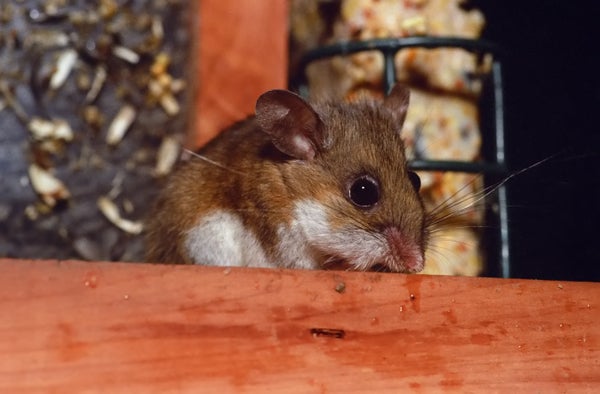
A surprising number of rodents captured in a recent study in the Pacific Northwest were carrying Sin Numéro virus, a type of hantavirus that is in the same family as the Andean type, causing an ongoing outbreak that has so far killed three people and sickened many others.
The number of rodent carriers was higher than previously thought, says Stephanie Seifert, an assistant professor at Washington State University and co-author of a study published in April in Emerging infectious diseases.
The research was conducted in the summer of 2023, before the current hantavirus outbreak, which began on a cruise ship in early May. The researchers collected stool and tissue samples from a total of 189 rodents of various species, including several types of voles, mice and chipmunks, from farms and other areas in eastern Washington and western Idaho. The samples were tested for both hantavirus antibodies, a sign of an active infection, and viral RNA, which can indicate whether the rodent previously carried the virus.
On supporting science journalism
If you enjoy this article, please consider supporting our award-winning journalism by subscription. By purchasing a subscription, you are helping to ensure the future of impactful stories about the discoveries and ideas shaping our world today.
The results showed that about 10 percent of them had Sin Numéro at the time the samples were taken, while almost 30 percent showed signs of previous infection.
Sin Numéro is not transmissible from human to human, unlike the Andes virus at the center of the cruise ship outbreak. Instead, people become infected when exposed to rodents and their excretions, such as their feces and urine. This limitation has made cases of Sin Numéro rare, but it remains deadly: the virus was first identified in 1993 after 11 people died and nearly two dozen others fell ill in the Four Corners region of the United States. Its mortality rate is between 35 and 50 percent.
Human cases of hantavirus are relatively rare in the United States, with most occurring in the Southwest. But a disproportionate number of the total cases were seen in the Pacific Northwest: Of the 864 cases recorded in the United States between 1993 and 2022, 109 were in Idaho, Oregon or Washington state, according to the study. Despite this, few studies have examined the frequency of viruses in rodents in the region. It is therefore difficult to say whether the number of rodents carrying the virus has increased over the years, explains Seifert.
However, climate change could play a role in the spread of the virus, believes Seifert. Wetter winters can lead to increased vegetation, which in turn can support a larger population of rodents. Warmer winters can also lead to extended breeding seasons and improve the chances of surviving the cold, which can also increase the population. The way humans use the land can also increase their exposure to animals. Seifert notes that area farmers have begun using techniques that don’t involve plowing, which would scare away the creatures.
“We know that plowing disrupts rodents that escape from cropland to surrounding refuges, including rural homes and outbuildings,” she says. “Will conversion to no-till result in fewer human-rodent interactions or support more robust and diverse rodent communities that continually expand toward neighboring homes and support a higher baseline prevalence in [Sin Nombre virus]? I don’t know the answer. But additional research could lead to a better understanding, she adds.
However, the question of whether such a study will take place remains open. Seifert says his team’s current funding is exhausted.
“If there’s anything Americans should take away from this, it’s that expertise in infectious disease systems is not like a faucet that we can turn on and off whenever it suits us,” she says. “If you want hantavirus or Ebola experts here, ready to take action with answers and solutions, then we need to fund our public health research and basic science. »
It’s time to defend science
If you enjoyed this article, I would like to ask for your support. Scientific American has been defending science and industry for 180 years, and we are currently experiencing perhaps the most critical moment in these two centuries of history.
I was a Scientific American subscriber since the age of 12, and it helped shape the way I see the world. SciAm always educates and delights me, and inspires a sense of respect for our vast and beautiful universe. I hope this is the case for you too.
If you subscribe to Scientific Americanyou help ensure our coverage centers on meaningful research and discoveries; that we have the resources to account for decisions that threaten laboratories across the United States; and that we support budding and working scientists at a time when the value of science itself too often goes unrecognized.
In exchange, you receive essential information, captivating podcasts, brilliant infographics, newsletters not to be missed, unmissable videos, stimulating games and the best writings and reports from the scientific world. You can even offer a subscription to someone.
There has never been a more important time for us to stand up and show why science matters. I hope you will support us in this mission.