How Labor Day Emerged From the Movement for a Shorter Workday


This article is part of TPM Cafe, the House of TPM for the opinion and the analysis of the news. It was initially published during the conversation.
Most of the world observes International Workers Day on May 1 or the first Monday in May of every year, but not the United States and Canada.
Instead, Americans and Canadians have celebrated Labor Day as a national holiday on the first Monday in September 1894, 12 years after the first celebration of the Labor Day in New York.
The celebrations are not the same.
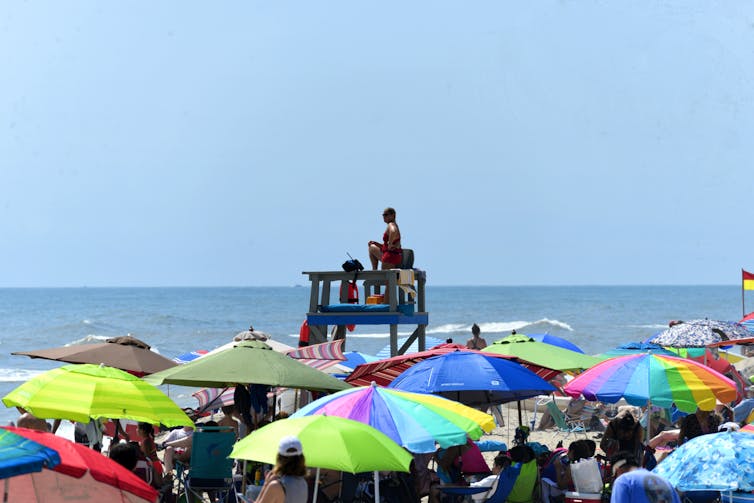
In a large part of Europe, Asia, Africa and Latin America, the event commonly called May Day honors the political and economic power of workers, often with demonstrations by socialist parties or workers and tributes to national labor rights. The American Labor Day offers parades of labor unions in many places, but for most Americans, it is less the organized workforce and more barbecues, beach days and rear sales at school.
The two holidays, however, took place during the same period, in the United States almost 150 years ago, in the midst of an explosive lift at the American industrial heart. Their founder of workers born and immigrants from United in an extraordinary alliance to demand an eight -hour working day at a time when American workers worked on average 10 hours or more per day, six days a week.
The call for shorter hours was rooted in a big idea: that the workers’ days belonged to them, even if the employers had their workplaces and paid for their work. This idea inspired the highest objectives of a growing Labor Movement that extended from Chicago and New York to Stockholm and St. Petersburg. And Labor activism of the late 1800s still threw a light far from labor festival today, carrying a vital message on the fight for the control of the daily life of workers.
I am a historian at the University of Illinois Chicago, where I study the history of work. The fight for shorter hours is no longer a leading problem for the work organized in the United States. But it was a crusade for the eight -hour day that brought together the diversity of the coalition of working groups that created the Labor Day and May 1 in the 1880s.
Radical Roots of Labor Day
Directed by socialist unions, the founders of the Labor Day included qualified artisanal workers and born in the country by defending control of their trades, immigrant workers seeking to recover the chore of a day and revolutionary anarchists who saw the quest for the control of the workers’ day as a step towards the seizure of the factories and the state breeze.
They initially chose on September 5, 1882 for the first labor celebration to coincide with a general meeting in New York of what was then the largest and the widest association of American workers, the Knights of Labor. Two years later, the union leaders moved the annual event to the first Monday of September, giving a majority of workers for a two-day weekend for the first time.
While the parades and picnics of the Labor Festival spread, many American cities and states quickly made it official vacation. But as few employers have given workers a day off in its early years, the Labor Day also became “a general virtual strike of a day in many cities”, according to historians Michael Kazin and Steven Ross.
May 1 American roots
My students come from the working class, mainly immigrant families, and the history of Chicago’s labor conflict is all around our downtown campus in the heart of what was once meat packaging factories, standyards and crowded immigrant districts.
My office is around 12 blocks from the place – surrounded today by high -end office buildings – where the eight -hour movement has reached a bloody peak in the battle of Haymarket Square. May Day commemorates this battle.
On May 1, 1886, qualified workers’ unions organized by their profession or their trades led a general strike nationally for the eight -hour day. They were joined by radical socialists, militant anarchists and many members of the Knights of Labor. More than 100,000 workers participated across the country.
The most dramatic demonstrations occurred in Chicago, which had become the second largest city in the United States after years of rapid growth. Nearly 40,000 striking workers from Chicago have closed a large part of this industrial, agricultural and commercial hub. Three days later, a bomb launched during a rally in Haymarket Square killed seven police officers, causing a national repression of work activism.
In 1889, socialist unions and workers ‘parties, gathering in Paris for the first congress of a new international international, proclaimed on May 1 of international workers’ vacation. They partially followed by the example of the new American Labor Federation, which had called for renewed strikes on the anniversary of the action of 1886.
And they honored the memory of the eight workers’ activists who had been tried and convicted of the Haymarket bomb attack only on the basis of their speeches and their radical policies, in what was largely considered a rigged trial. Four “Haymarket martyrs” had been hanged and a fifth died by suicide before he could be executed.
A victory at previous work
Although May 1 has long been associated with European spring celebrations, its modern meaning has deeper American roots that precede Haymarket’s tragedy. It was on this date in 1867 that the workers of Chicago celebrated a previous victory.
At the end of the civil war, campaigns for an eight -hour working day appeared in cities across the country, defending a common interpretation of the abolition of slavery: for many workers, emancipation meant that employers only buy their work, not their life.
Employers could monopolize the means of workers to earn a living, but not their hours and their days.
The movement led to laws declaring a day of eight hours in six states, including Illinois, where the new rule entered into force on May 1, 1867. But employers have largely disobeded or bypassed laws, and the States failed to apply them during their duration, the workers therefore continued to fight for a shorter work day.
Seize the day
In the 19th century, the work of American workers was measured by the duration of their work and how paid they were. Although they were divided by their very different wages, they were united by the generally uniform hours at each workplace.
The demand for a shorter working day without a salary reduction was designed to please all employees, it doesn’t matter who they were, where they came from or what they did in life.
Labor leaders said the shorter hours meant that employers should hire more people, create jobs and increase time remuneration. Spending less time at work would allow workers to become greater consumers, which stimulates economic growth.
Having “eight hours for work, eight hours for rest and eight hours for what we are going”, a refrain from the popular work movement, would also leave more time for education, organization and political action.
More broadly, the struggle for shorter hours has encapsulated workers find it difficult to control their time, both on and off the work. This large -scale struggle included efforts to limit the number of years that people have spent their living by ending child labor and creating pensions for retired workers – a subject I am currently looking for.
Benjamin Franklin said: “Time is money”, which means that the time for leave costs money that workers could earn work. But the message of the movement for a shorter working day was that the value of workers’ life could not be calculated in dollars and hundred.
Divergent holidays
In the battle of Haymarket, the alliance of radicals and reformers, factory agents and qualified craftsmen, workers born in the United States and immigrant workers began to separate. And as union leaders of the American Federation of Labor, separated from socialists and anarchists, each side of the movement of divided workers claimed one of the two days of work that his family, showing the holidays more and more opposite and losing their shared base in the campaign for a shorter work day.
Politicians and conservative employers hostile to unions began to assimilate the organization of work to launch the bomb. In response, unions seeking to accept within the framework of American industry and democracy showed their allegiance to labor festival by waving the American flag, singing patriotic songs and describing themselves as Americans of Aboriginal origin and authorities as opposed to foreign workers with subversive ideas.
Many political radicals and immigrant workers, including they have found a large part of their following, have come to identify more with the movement of international workers associated with the day of May than to American business and politics. They disowned the origins of May Day among the American unions, even as many unions have moved away from the radical roots of the Labor Day. At the turn of the century, May 1 became further from the center of American culture, while labor festival has become more common and less militant.
20th century gains and losses
In the 20th century, unions won shorter hours for many of their members across the country. But they detached this demand from the larger agenda of workers’ autonomy and international solidarity.
They acquired a historic achievement with the federal promulgation of the eight -hour and 40 -hour work week for many industries in the 1930s. At this stage, economist John Maynard Keynes has planned that growing labor productivity would allow employees of the 21st century to work only three hours a day.
The productivity of workers continued to climb like Keynes predicted, and their salary increased – until the 1970s. But their working hours did not decrease, leaving the day of three hours a forgotten vision of what the organized work could achieve.


