How the Fiat 600 Changed Mobility

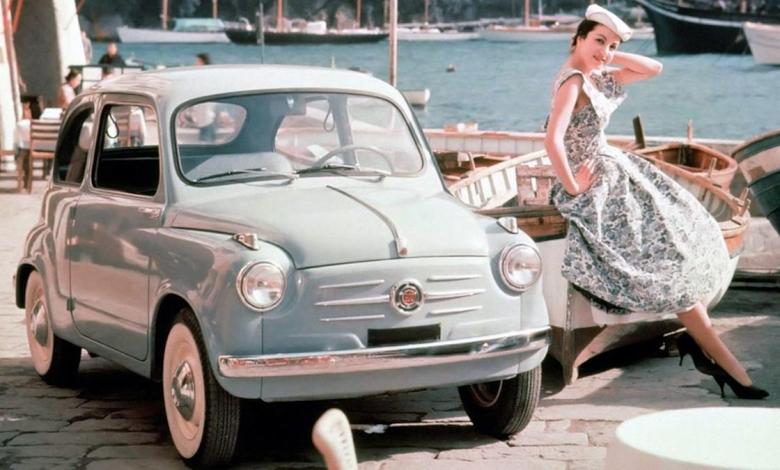
Most people in the Balkans immediately recognize the small car that powered an entire generation. Known locally as “Fića”, the version of the Fiat 600 built by Zastava played a major role in making car ownership accessible to ordinary families. It wasn’t flashy or fast, but it was affordable, simple to maintain, and perfectly sized for crowded streets and tight parking lots, making it feel tailor-made for everyday life. And Zastava was just one of many manufacturers who produced the Fiat 600 under license, from Spain to Argentina, proving that the idea behind it went well beyond Italy.
This reach raises an important question: what made this small Italian car so influential, and how did it help define the modern city car? In this article, we’ll look at the practical engineering of the Fiat 600, its global licensed production history, and its real-world impact on mobility, particularly in places where a first family car changed everything.
Fiat’s early roots and the rise of affordable automobiles

Photo courtesy: Autorepublika.
The Fiat 600 wasn’t the company’s first attempt at building small, affordable transportation. Fiat’s history dates back to 1899 with the 3½ CV, and throughout the 1920s and 1930s the company experimented with compact vehicles designed to put Italians on the road.
The most successful pre-war example was the original Fiat 500 “Topolino”. At the time, car ownership in Italy was still relatively rare for ordinary families. The Topolino became a major success, with over 520,000 units sold by the mid-1950s.
After World War II, Europe needed simple and affordable transportation. Volkswagen continued to develop the Beetle, Citroën introduced the 2CV in 1948 and Renault launched the 4CV. Fiat’s post-war Topolino remained popular but began to feel outdated as economic conditions improved and consumers wanted something larger and more practical.
Design a new type of small car

Photo courtesy: Autorepublika.
In the early 1950s, Fiat saw an opportunity to create a new model positioned above the Topolino. The car had to comfortably seat four passengers, remain affordable and reliable, and offer flexibility for multiple body styles. It also had to reach at least 53 mph while remaining as light as possible.
The project was assigned to Fiat engineer Dante Giacosa, who chose a rear-engine, rear-wheel drive layout. This configuration improved traction, simplified packaging and reduced production costs.
The Fiat 600 debuted at the Geneva Motor Show in March 1955. Measuring approximately 10.5 feet long, it was compact but practical. Power came from a 633 cc four-cylinder engine producing around 22 hp, paired with a four-speed manual transmission. Independent suspension and drum brakes on all four wheels made the car surprisingly modern for its time. Top speed was around 59 mph.
Priced at around $10,000 in today’s money, the Fiat 600 arrived just as the Italian economy began to expand rapidly. Demand was immediate and production struggled to keep up.
Multiple and platform expansion
Just one year after its launch, Fiat presented the Multipla, one of the first examples of compact multi-purpose vehicles. With three rows of seats in a vehicle just over 11 feet long, it could carry up to six passengers. Initially intended for taxis, the Multipla then found private buyers. Between 1956 and 1967, more than 240,000 examples were produced.
The same platform also supported commercial variants such as the 600T van and pickup.
In 1960, Fiat introduced the updated 600D with a larger 767 cc engine producing 29 hp. Italian production ended in 1969 after around 2.7 million units, after the Fiat 850 had already taken over as Fiat’s new small car.
A global success

Photo courtesy: Autorepublika.
The history of the Fiat 600 extends well beyond Italy. Licensed production took place in Germany under the Neckar brand, in Spain as the SEAT 600 and throughout South America. SEAT even produced a rare four-door version called the SEAT 800.
In Yugoslavia, Zastava began building the Fiat 600 under license in 1955, then producing the 750 and then the 850, with production continuing until 1985. In total, 923,487 examples were built in Kragujevac.
Special variants also appeared, including the open-top Fiat Jolly designed by Ghia and performance versions developed by Carlo Abarth. Some racing-adapted versions produced up to around 100 hp, dominating small-displacement racing classes across Europe.
Across all manufacturers and versions, production of vehicles based on the Fiat 600 has reached approximately 4.9 million units worldwide.
The legacy of the Fiat 600

Photo courtesy: Autorepublika.
The Fiat 600 helped define what a city car could be. It offered affordable mobility, practical packaging, and mechanical simplicity at exactly the right time in Europe’s postwar economic recovery.
While the smaller Fiat 500 is often more recognized today, the 600 arrived earlier and paved the way for mass motorization in Italy, Spain, Yugoslavia and parts of South America. Its impact on everyday transportation makes it one of the most important small cars in automotive history.
This article was originally published on Autorepublika.com and has been republished with permission from Guessing Heads. AI-assisted translation was used, followed by human editing and review.


