12 easy tweaks that maximize your Windows 11 PC’s speed


Clean up other waste
Foundry
If you updated Windows 11 from Windows 10 and have had this system for a few years, chances are it has accumulated some junk. Take the opportunity to do some spring cleaning while you’re at it!
There are many third-party programs that claim to help with this, but I recommend sticking to Windows’ built-in tools and manual cleaning.
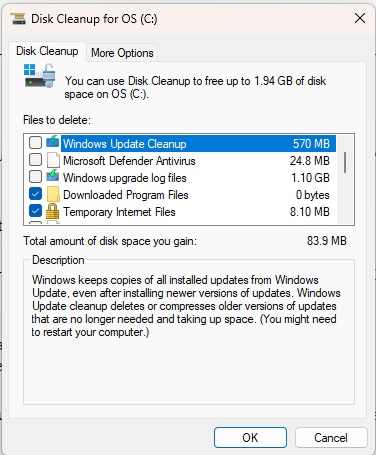
Start by running the Disk Cleanup application. Here you can check the options you want to empty and you will see on the right how much space each category represents. Click an option to see a description below. For example, Lifetime optimization files are files that Windows Update has downloaded and not yet used, but sometimes there can be unused files here even if you have installed all available updates.
The next step is to open Explorer and go to Downloads case. If you’re like me and leave most of the files you downloaded here without ever deleting the old files, you can free up dozens of gigabytes. Sort by size and remove anything you no longer need.
Windows also provides a way to remove old components via Command Prompt.
Type command prompt in Windows search, select Run as administratorand enter the following command:
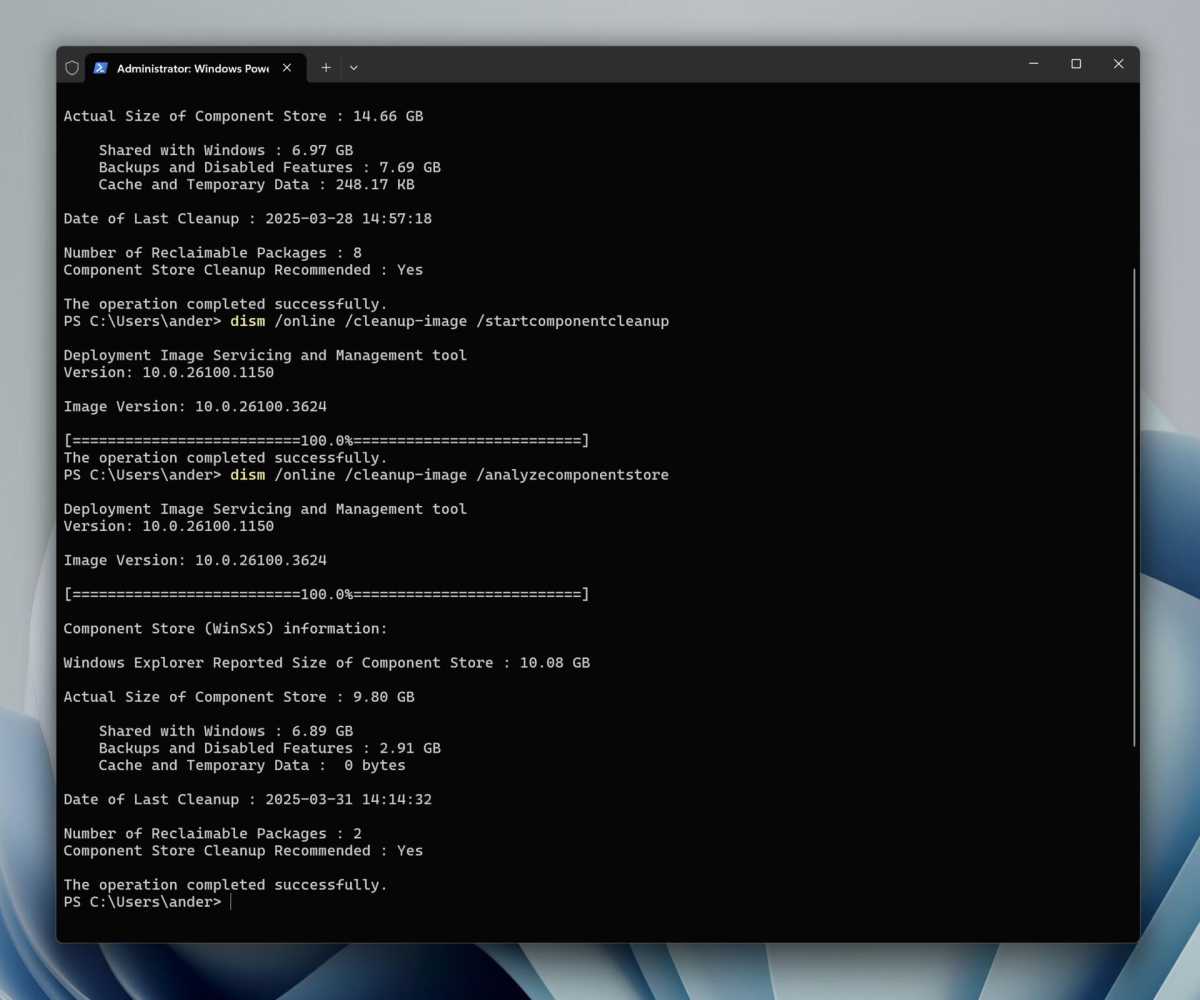
dism.exe /online /cleanup-image /AnalyzeComponentStore
After a while, the results will appear and you can see if the program recommends running the cleaning function, which removes duplicates and copies of certain system components that may accumulate after updates. To run the cleanup function, type:
dism /online /cleanup-image /startcomponentcleanup
Once that’s done, you can run the first command again to see how much space it managed to free up. For me, it was almost five gigabytes, despite the fact that I installed a fresh copy of Windows 11 version 22H2 less than two years ago.
Foundry
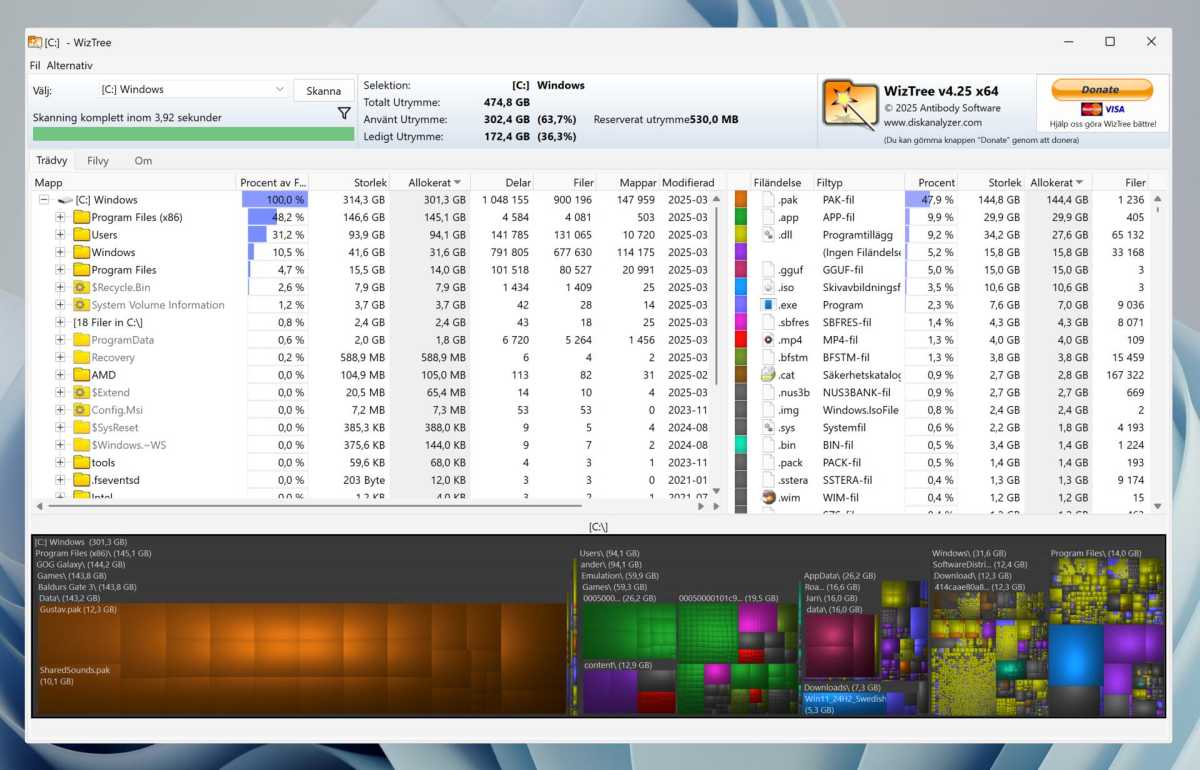
An exception to the above rule regarding third-party software is a program that scans the disk and displays all files and folders in size order, making it easier to find large files that you may not need at all. My recommendation is Wiztree.
Foundry
When you start the program and let it scan the disk, the contents are displayed both as lists sorted by size and as a color-coded graph. You can then go through the results from top to bottom and delete what you don’t need. But avoid folders like Windows and Program Files, as well as anything you don’t know what they are (if you’re not sure, search the web).


