Huge flightless birds live the world over. Now we know how they got there —and it has to do with a ‘rare’ ancestor


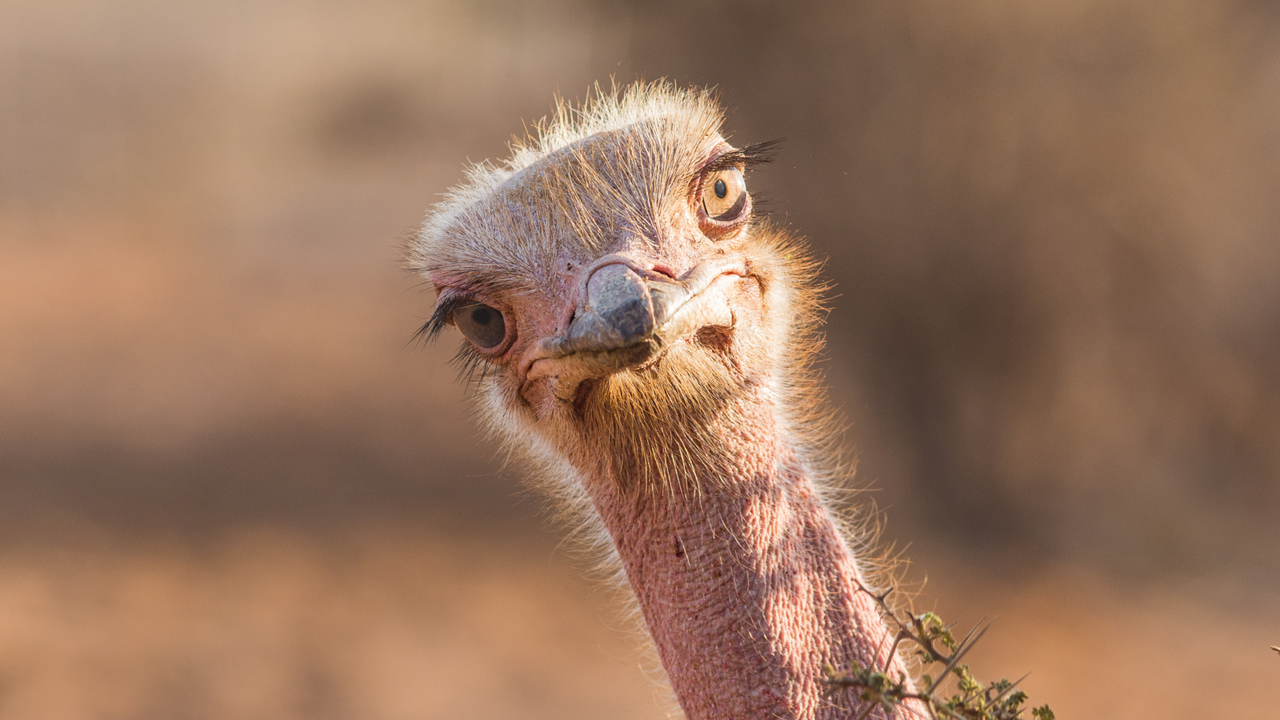
The ostriches, the emus, the rhuas and other large birds without theft are on six terrestrial masses separated by the oceans, but the way in which they have reached so distant places without the ability to fly have remained a lasting mystery.
An idea was that the ancestors of this group of birds, known as Paléognathes, just walked towards the places where most of the planet was exploited together as the Supercontinent Pangea (320 million to 195 million years) and that, when this giant terrestrial mass separated, birds were already in these places.
To determine what happened, Klara WidrigA vertebrate zoologist at the Smithsonian National Museum of Natural History in Washington, DC, and his colleagues analyzed a specimen of the old paleognath Promise lithornis. Although it lived around 59 to 56 million years, it is the oldest fossil paleognath found in a virgin state.
“We cannot say with certainty if Lithornis was the direct ancestor of our living paleognates – it is quite possible that the real ancestor is still to be discovered – but he represents our best assumption about what the ancestor would have looked like, “Widrig at Live Science told.
Previous survey on the preserved feathers of a slightly more distant lithornithide called Large calciaves indicated that He could have stolenBut it was not clear how far. No one had made a quantitative analysis of the form of lithornihides bones to try to answer this question.
In relation: Do the ostriches really bury their heads in the sand?
Thus, in the new study, published on Wednesday September 17 in the journal Biology lettersWidrig and his colleagues compared the shape of the sternum, or maternal, L. Promiscuity to those of living birds and used a set of three -dimensional geometric data to determine how the animal could have flyed.
“The sternum is very important for the flight, because this is where the big pectoral flight muscles anchor,” said Widrig.
The shape of the sternum indicated that it could have managed a range of aerobic and beaten flight styles, which would have allowed long flights.
“We found that the form of the amontage was really similar to that of living birds which are capable of flying very long distances through the oceans, such as large egrets and herons,” said Widrig.
“This is very interesting because the big egret is a cosmopolitan species in that it goes from the continent to the continent,” said Peter HosnerBird curator at the Natural History Museum of Denmark, who was not involved in the work.
“These species are actually quite rare among birds,” he told Live Science. “We are biased in the northern hemisphere, where many birds are migratory and cover long distances. But worldwide, most birds are residents found in a continent, an island or a small area, and do not really move.”
The discovery suggests that ancient paleognathes may have stolen from distant terrestrial mass and established populations which then evolved independently in the generally impeccable birds that we know today.
“It seems to be a spectacular case of convergent evolutionSaid Hosner.
Today, there are around 60 species of living paleognathes. They include approximately 45 species of Tinamou (which can fly in short gusts just like pheasants), up to five kiwi species, a kind of EMU, three cassoard species, two species of ostrich and one or two species of RHEA, said Widrig.
“For a bird to become without flightTwo conditions must be met, “she said.” He must be able to get all his food on the ground, so he cannot count on foods in trees, for example. And there can be no predators that he needed to escape to escape. “”
More recently, this would only have happened in island environments without predator, said Widrig, as with the dodo (CUCUCULLATU RAPHUS). But after the extinguishing event of the Cretaceous-Paleogenic, 66 million years ago, destroyed non-avian dinosaurs, it was very different.
“The world was rid of predators in general, and the predators of mammals had not yet evolved – so any bird who fed on the ground had a free pass essentially to become without theft,” said Widrig. “Theft is difficult work, and it is much easier to be without flight if you don’t have to move away from anything.
When larger predators have emerged, she said, the bird without flight would have had time to adapt either by becoming large and intimidating, like Cassoary, or by becoming fast runners, like the ostrich.
But all these similar changes have evolved independently. “It is not as if they had made a conference call with each other and said:” Okay, you go to Africa and you will evolve towards an ostrich. I’m going to go to South America. I will evolve towards a Rhea “,” said Widrig.