I’ll never buy a laptop that doesn’t have biometric hardware


I review a lot of laptops here at PCWorld and I’m always surprised when I unbox one without biometric hardware.
Fingerprint readers and infrared (IR) cameras for facial recognition are both great, and some laptops even have both! But there are also those who completely ignore biometric hardware, which is a huge loss these days. I would never give it up if I had the choice.
It’s so important that I won’t buy a laptop if it doesn’t have it, and I’m doing everything I can to add it to my desktops. For what? Because Windows 11 has a security feature called Windows Hello that lets me log in with my face or fingerprint scan. It’s more secure And more practical. In 2026, you should not accept any laptop that does not support Windows Hello.
You should avoid entering PINs in public
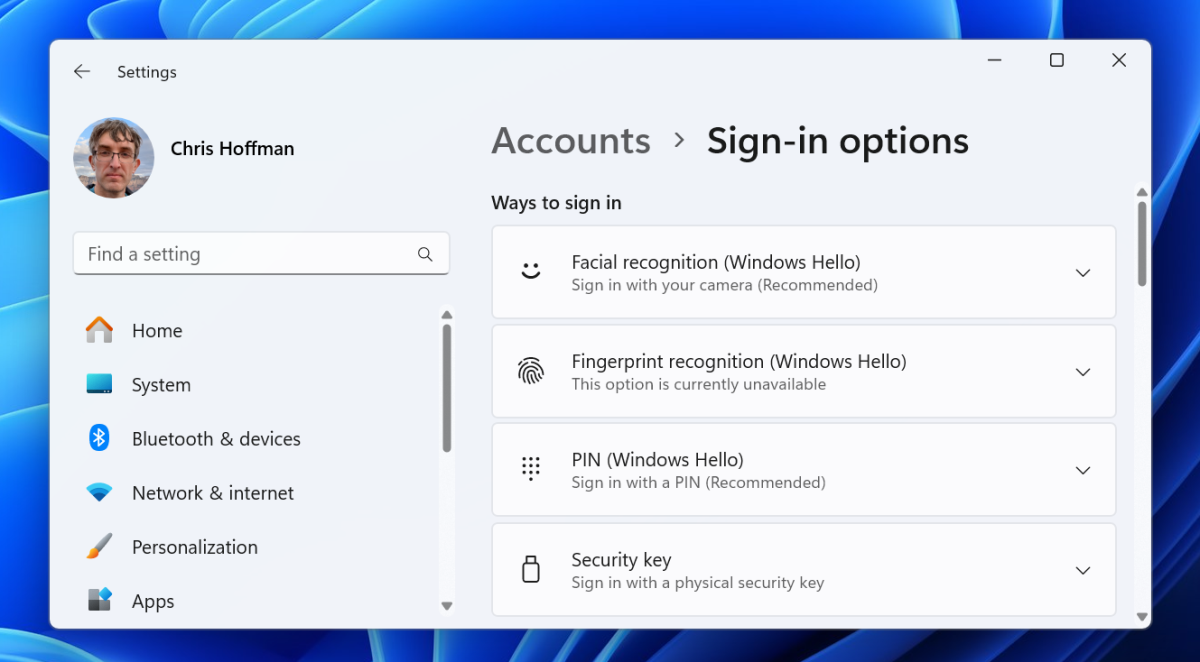
Most laptops, unfortunately not all laptops – now have built-in biometric hardware. You have two options here: a fingerprint reader (usually somewhere on the keyboard) or an infrared camera built into the normal webcam. Some laptops have both.
Chris Hoffman / Foundry
With biometrics, you don’t need to enter your PIN or password every time you sit down at your laptop. It is good news because typing your PIN or password in public is a security risk. If someone is “shoulder surfing” and watching what you type, they might notice – and PINs are particularly easy to steal.
I cannot stress the safety aspect enough. Your PIN is the key to device encryption on your PC. With this PIN, a thief or attacker could bypass your PC’s encryption and access all your data. It’s best to skip PIN entry altogether and use biometrics instead.
Biometric hardware is not just for logging in
Windows Hello is best known for its secure logins, but Windows and the apps you use can do much more than that.
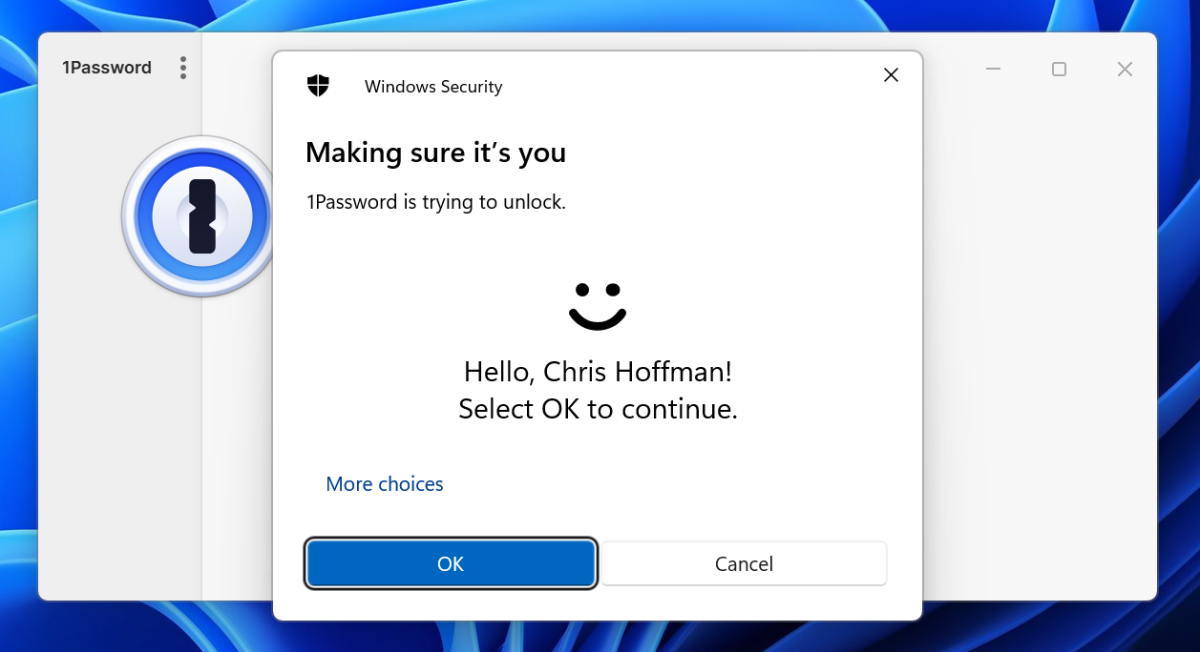
For example, if you use a password manager, you can unlock your password vault with Windows Hello. I use 1Password myself and have a seamless experience unlocking my own password vault on modern PCs with Windows Hello. On PCs without Windows Hello, I am forced to enter my master password every time.
Chris Hoffman / Foundry
Windows can also store access keys to quickly log in to websites, but you must authenticate before using them. Without biometrics, you have to enter your PIN every time you want to use passwords; with biometrics, you authenticate yourself with a fingerprint or your face. Learn more about ways to use passkeys instead of passwords.
Why laptop makers are ignoring biometrics
Whenever I review a laptop that lacks Windows Hello hardware, I always mention it as a strike against that laptop. Manufacturers may omit hardware to save money and achieve lower prices, which makes sense on budget gaming laptops where non-essential elements can be removed to improve performance.
But I sometimes find it missing on surprisingly expensive laptops as well, and there’s really no excuse for that, especially when most budget-friendly laptops still offer Windows Hello hardware. Obviously it’s possible, so it becomes harder to justify it when it’s not.
Before purchasing a laptop, there are many things you need to consider. It’s one thing to make sure you don’t drop below the minimum specs, but it’s also essential to check out key features like fingerprint readers and infrared cameras for Windows Hello. When we review laptops here at PCWorld, we always cover “biometrics” in each laptop’s specs list.
I prefer facial recognition, but fingerprint readers are just as good
I prefer facial recognition, which requires an IR camera. If you’ve used Face ID on Apple, you know how convenient it can be. All you have to do is open your laptop and it automatically wakes up, detects your face and logs in for you. No waiting. With a Windows Hello webcam on my PC, I can do the same thing.
In terms of convenience, facial recognition beats fingerprint scanners. With the latter, you have to physically swipe to log in or run that Windows Hello authentication check. It’s an extra step that slows things down. But from a security perspective, it’s just as good and works just as well.
Note: A recent Windows update disabled facial recognition in dark environments. If you frequently use your laptop or PC in a dark room, you may want to use a fingerprint reader for this reason alone.
How do I add biometrics to my desktop computers
Windows Hello is so convenient that I added it to my desktop computer as well. Since I prefer facial recognition, I opted for a Dell UltraSharp webcam (model WB7022). This is a high-end 4K webcam, ideal for filming podcasts and video meetings, and it has a built-in IR camera.
There are more economical Windows Hello webcams if you don’t need to show up to your Zoom meetings in 4K. Check out our roundup of the best Windows Hello webcams for other great options.
You can also get USB fingerprint readers that work with Windows Hello. I explored them many years ago before Windows Hello compatible webcams were widespread. I’ve had solid experience with Kensington USB fingerprint readers like the Kensington VeriMark Gen 2.
However, as I mentioned above, unless you have a good reason to use a fingerprint reader, I recommend going the Windows Hello webcam route. It’s just simpler and more convenient overall. And, since you’re already spending money, you might as well make yourself look better on video calls at the same time.
Before buying a laptop, always check the biometric hardware
I hope I’ve convinced you why it’s so essential to have a laptop with Windows Hello biometrics. You can’t easily add it after the fact, unless you want an external biometric device permanently connected to your laptop’s USB port. (Not ideal!)
Although many stores have excellent laptop return policies, you should always check a laptop’s specifications carefully before purchasing it. This is the kind of feature that’s easy to miss on a spec sheet, but is really important when you’re using the machine day in and day out.
Ultimately, I won’t buy another laptop without biometric hardware. I don’t think you should do it either.
Further reading: Is Windows 11’s built-in antivirus enough for laptops?


