Insects May Feel Pain, New Study Suggests


When an antenna of the house cricket (Domestic purchase) is touched with a heated probe, something curious happens: the insect turns its attention to the burned area and cleans it repeatedly, much longer than it would after harmless contact or no contact at all. According to a team of entomologists from the University of Sydney, this behavior could be evidence of something scientists have long debated: insects experience pain-like states.
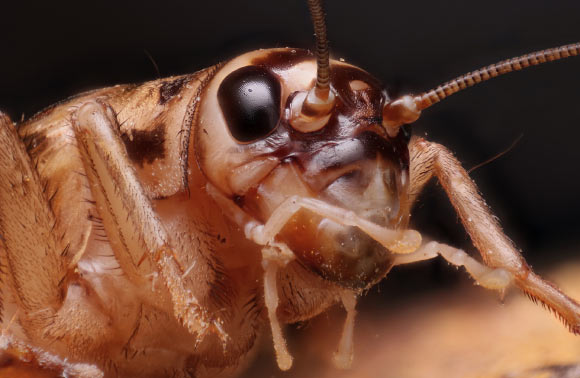
Manzi and others. domestic crickets tested (Domestic purchase), among the highest-breeding insects on Earth, for what is considered a key behavioral characteristic of pain: flexible, site-directed self-protection. Image credit: Matthew Lindsey / CC BY 2.0.
“Previously thought to be too small or too simple to support an experiment, insects are now known to be capable of remarkably complex tasks, including associative learning, contextual decision-making and cross-modal sensory integration,” said Dr Thomas White, an evolutionary ecologist and entomologist at the University of Sydney, and colleagues.
“Recent studies have also identified brain regions such as the mushroom bodies and central complex that appear to support evaluative processing functionally analogous to that observed in vertebrates.”
“Yet the question of pain in insects cannot be resolved by neuronal architecture alone.”
“Given the diversity of nervous systems across phyla and the creative power of adaptive evolution highlighted by multiple realizabilities, behavior remains our most direct and inclusive route to inferring experience.”
“In other words, rather than asking whether an animal has the same hardware, the more relevant question is whether it exhibits a comparable behavioral profile under similar conditions. »
In their research, the authors tested 80 adult house crickets in a carefully controlled experiment designed to exclude simple reflexes.
Each cricket was exposed to three conditions: a soldering iron tip heated to 65 degrees Celsius (149 degrees Fahrenheit) applied briefly to an antenna, the same probe applied without heat and no contact.
The cameras recorded each movement for 10 minutes afterwards, and three observers – unaware of the treatment each insect had received – coded the grooming behavior frame by frame.
Crickets that received the noxious thermal stimulus were significantly more likely to clean the affected antenna, devoted a greater portion of their total grooming time to it, and maintained it approximately four times longer than crickets in the no-contact control group.
On average, cleaning of the burned antenna took about 13 seconds after the noxious treatment, compared to about 3 seconds in the control conditions.
“The crickets’ increased grooming intensity followed a clear temporal trajectory: noxiously stimulated individuals exhibited a high, sustained phase that gradually declined, a pattern reminiscent of findings in bees and rodents,” the researchers said.
What makes these results significant is not just how the crickets reacted, but also how they reacted.
You would expect a reflex – the kind of automatic, unconscious withdrawal that even simple nervous systems can produce – to stop when the stimulus stops.
Instead, the crickets continued to frequent the site long after the heated probe was removed, suggesting that they were tracking something internally: a persistent, localized signal of damage.
“Pain remains one of the most elusive and important frontiers of animal cognition, and insects provide a particularly challenging test case,” the authors said.
“Behavioral evidence – particularly flexible, site-specific responses – provides our most direct route to inferring pain-like states in these animals.”
“Our results demonstrate such a response in a scalable and commercially meaningful context. Domestic purchase: crickets treated a noxiously stimulated antenna more frequently, longer, and with a distinct temporal profile compared to touch or no-touch controls.
“The response was both site-specific and persistent, suggesting that the crickets monitor the location of wounds and adjust their behavior in a manner not reducible to simple reflexes.”
The study was published this month in the Proceedings of the Royal Society B.
_____
Oscar Manzi and others. 2026. Flexible self-protection as evidence of painful conditions in house crickets. Proc Biol Sci 293 (2070): 20260609; doi: 10.1098/rspb.2026.0609


