
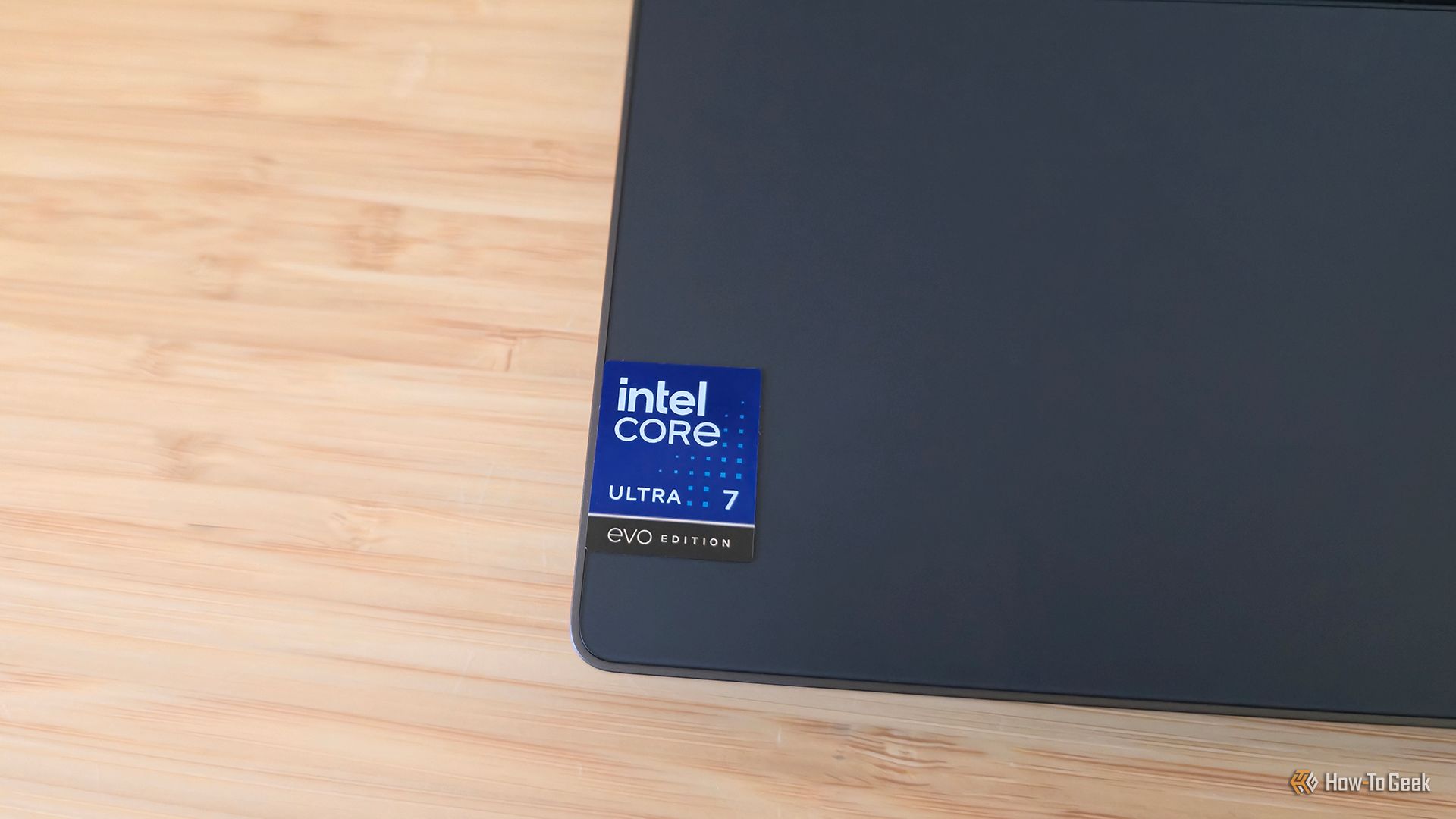
We’re fast approaching the end of the year, and as it’s usually the case, we’re starting to see the stuff that will power our hardware next year. Intel’s Core Ultra Series 3 is finally here, and there’s a few things you should know.
Intel has just announced its latest Intel Core Ultra 3 series processors, which you might know better for its codename, “Panther Lake.” The new processors are built on a scalable, multi-chiplet architecture, which provides OEMs with significant flexibility to design a wide array of devices across different form factors and price points, according to Intel. The company is apparently aiming for the power efficiency seen in the “Lunar Lake” generation while matching the high performance of “Arrow Lake.” The new architecture features up to 16 redesigned performance cores (P-cores) and efficiency cores (E-cores), which Intel claims will result in a CPU performance boost of more than 50% compared to the previous generation.
The integrated Intel Arc GPU now features up to 12 Xe cores, which is apparently 50% faster in graphics performance compared to previous generations. As usual, these kinds of performance claims need to be independently verified and not taken at face value, but if it’s true, it’s pretty good. For Copilot+ PCs or any computers that need local AI processing, the NPU here is capable of 180 trillion operations per second (TOPS).
Panther Lake is the flagship product for Intel 18A, Intel’s latest semiconductor node. It’s a “2nm-class” process that delivers up to 15% better performance per watt and a 30% improvement in chip density compared to the preceding Intel 3 node. We’d need to compare it against TSMC’s own 2nm node whenever that’s ready, and it should be coming any day now, but Intel has been misleading in the past when it comes to marketing its silicon—its 10nm process a few years ago was called “Intel 7” at a time when everyone was rolling out 7nm silicon.
I’m not finding anything on whether 18A is true 2nm or not, but I wouldn’t be surprised if it’s just a souped-up 3nm process. Not that it matters a lot in the grand scheme of things if that’s the case, as long as it performs well, but it’s something to keep in mind as Intel seeks to beat out TSMC and other silicon makers. Intel appeared to be having problems with this launch a couple of months ago, and hopefully, those have now been fixed as this just went into mass production.
You’ll be able to find Series 3 chips on laptops very soon.
Source: Intel


