Israel says it killed another Iranian leader, but that doesn’t mean it’s winning the war


Although many experts have warned that Iran could and likely would close the strait if attacked, this crisis appears to have come as a surprise to those pursuing the war.
President Donald Trump had tried to convince his allies to send ships to help reopen the strait, which most of them refused to do. In an angry post on Truth Social and later speaking to reporters at the White House, Trump said the United States didn’t need NATO “but it should have been there.”
Rouzbeh Parsi, a lecturer at Lund University in Sweden, agreed that the assassinations “are unlikely to affect the operational side of the war.”
But targeted assassinations will likely hamper the effectiveness of Iran’s internal operations, according to Michael A. Horowitz, a geopolitical and security analyst.
“They can scramble command, slow decision-making, force successors into hiding and demoralize both leaders and foot soldiers,” he said.
He described Larijani as “an important piece of this puzzle, as someone who acted as a coordinator between different actors within the Islamic Republic.” His death “could increase internal tensions in the short term, even if it ends up strengthening the IRGC in the long term.”
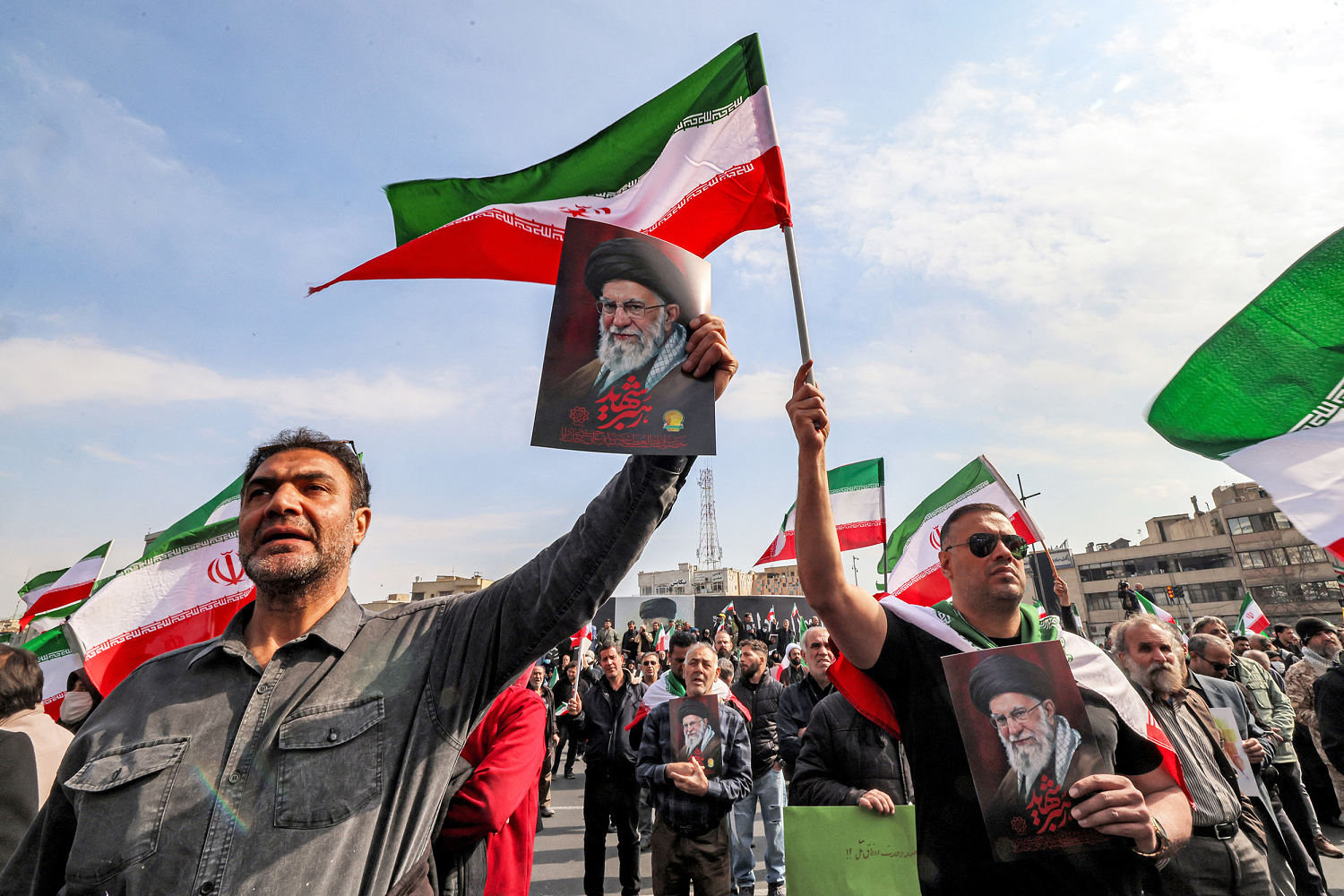
This point is essential and has been emphasized throughout this conflict since the assassination of Khamenei. Many Western observers fear that eliminating Iran’s current leaders will only create a vacuum that will be filled by the powerful Islamic Revolutionary Guard Corps, the country’s fearsome paramilitary, political and economic behemoth.
“If you look at how the assassination of Ali Khamenei strengthened the hardest and most security elements of the Islamic Republic of Iran, then Larijani’s death could act as an accelerator on that path,” said Ellie Geranmayeh, policy researcher at the European Council on Foreign Relations.
One of the many hats worn by the pragmatic Larijani was his role as a leading negotiator tasked with finding common ground with Washington.
“Israel appears to be turning its attention to targeting those who could push for a political solution to overcome Iran’s troubles at home and abroad,” Geranmayeh said.
The Israeli government did not immediately respond to a request for comment on the allegation.
Israel’s war was launched from a place of international fragility following its deadly assault on the Gaza Strip.
A new NBC News poll showed that more registered American voters view Israel negatively than positively, a change from a few years ago. And Iran’s retaliatory attacks on neighboring Gulf Arab states may not win Tehran new regional friends, but could also further deepen dismay over Israel’s actions.
It also remains to be seen what internal conflicts and machinations are triggered by the US-Israeli campaign.
Israel deployed its assassination strategy with dramatic but mixed results in Lebanon and Gaza, killing Hassan Nasrallah and Yahya Sinwar, the leaders of Iran’s Hezbollah and Hamas proxy.
“The loss of Nasrallah was a major blow to the group’s ability to maneuver long-term in a much more complicated context in Lebanon,” Horowitz said.
But, he added, “the group continues to fight.”