Israel targets Hezbollah, Iran, but technical failures slow progress in ongoing conflict

IDF operations against Iran and Hezbollah continue, but missile threats and technical failures continue to complicate the situation. Progress is slow and the threat remains high.
The conflicts between Israel and Iran and Hezbollah in Lebanon continued on Tuesday, without bringing obvious substantial progress on either side.
The IDF and the United States continued to bomb Iran in several parts of the country, hoping to gradually reduce the ballistic missile threat and weaken the Islamic regime sufficiently to allow regime change. However, none of the specific targets hit appeared to be of great importance.
For example, the military said Tuesday that it had destroyed “most of the core assets” of the regime’s internal security forces and the Basij militia in Iran’s western Ilam province.
According to the Israeli military, Iranian internal security forces and the Basij carried out numerous terrorist plans and carried out brutal repression against Iranian protesters during the December-January period.
When you press The Jerusalem Post On why Ilam province is important compared to larger and more well-known provinces, the Israeli army did not answer.

No major success
Although the Israeli military announced Thursday that more than 400 regime sites had been bombed, on Monday it said only 1,900 fighters had been killed, representing about 400,000 Iranian troops, about 125,000 members of the Islamic Revolutionary Guard Corps and one to two million Basij militiamen, 200,000 of whom are diehard members.
Likewise, Iran continued to fire ballistic missiles at Israel throughout the day, but achieved no major results, although shrapnel fell in several areas.
On Tuesday evening, Magen David Adom confirmed it was searching for damage, following reports of shells falling in the Beit Shemesh area.
Police said no injuries were reported, although minor structural damage was reported in the Menashe area.
Additionally, Coast Guard and bomb squad officers responded to several sites where shrapnel from missile interceptions fell, causing minor property damage.
Technical failure?
Also on Tuesday, the IDF said an atypical technical failure led two Hezbollah missiles to strike central Israel on Monday, with the interceptors missing their targets and without even a warning siren.
One of the missiles hit Ramle and the second hit an open area in Mateh Yehuda regional council; both missile strikes lightly injured many civilians.
Despite this failure, most of the missiles fired Monday were intercepted by Israeli multi-layered air defenses.
Furthermore, the IDF stated that the technical failure was not due to a new type of Iranian technology, but rather that the missiles fired were weapons that the IDF was familiar with.
Following an investigation into the incident, the Israeli military said that “adjustments have been implemented to strengthen interception capabilities against similar threats in the northern area.”
A second man, injured Monday by an Iranian bomb attack in central Israel, died Tuesday from his injuries, medical officials said.
Cluster munitions
Separately, the IDF Home Front Command said Tuesday that 50 percent of the ballistic missiles Iran has fired at Israel during the current war were cluster munitions.
This is a change from the June 2025 war with Iran, where missiles were sometimes made from cluster munitions but most were not.
Typically, Iranian ballistic missiles contain between 500 and 1,000 kilograms of explosives and strike a single target, causing significant damage to the target and its immediate surroundings.
However, cluster munitions can contain dozens of eight-kilogram bombs, spread over a square radius of 10 kilometers.
On the one hand, each shot from a cluster munition causes less damage than a single shot from a ballistic missile.
On the other hand, each blow can still be fatal. Each shot can penetrate several floors of a single building and, if such a missile breaks before being shot down, can cause a greater number of dangerous impacts.
When considering the issue, the Israeli military faced criticism that in recent days it had repeatedly sent millions of Israelis to air raid shelters and safe locations while Iran had only fired a single missile, which would likely not have endangered so many people in different locations at once.
The Israeli military explained that its “polygon” – its algorithm for assessing which cities to warn based on the estimated trajectory of a ballistic missile – prioritizes saving lives, even if it interferes with people in their daily routine.
That said, the Israeli military has said that whenever it can, it excludes parts of the country from receiving warnings where the chances of them being targeted are very low.
Each launch also includes an assessment of the specific warhead and the size of the explosives it carries.
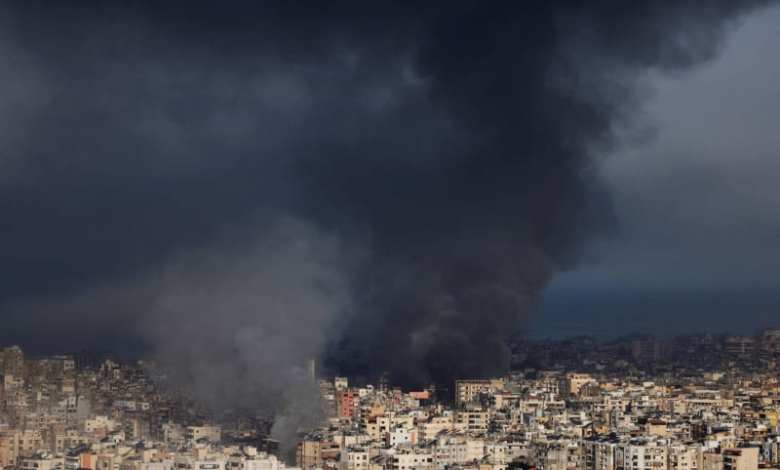
On the Lebanese front, the IDF renewed its strikes against Hezbollah and the group’s infrastructure in Beirut, including 80 additional strikes, the army confirmed Tuesday.
The Israeli military also confirmed that it had identified a cell of Hezbollah terrorists preparing to fire rockets at Israel, but that it had struck them first.
According to the Israeli military, it has destroyed at least 70 Hezbollah missile launchers during the current conflict with Hezbollah.
Additionally, the IDF’s 36th and 91st Divisions encountered and killed some Hezbollah fighters as they advanced deeper into southern Lebanon as part of Israel’s forward defense of the northern border.
Jerusalem Post staff contributed to this report.


