‘It blew my mind’: Long-lost ice-age ecosystem, including fossils of lion-size armadillo and giant ground sloth, discovered in Texas ‘water cave’


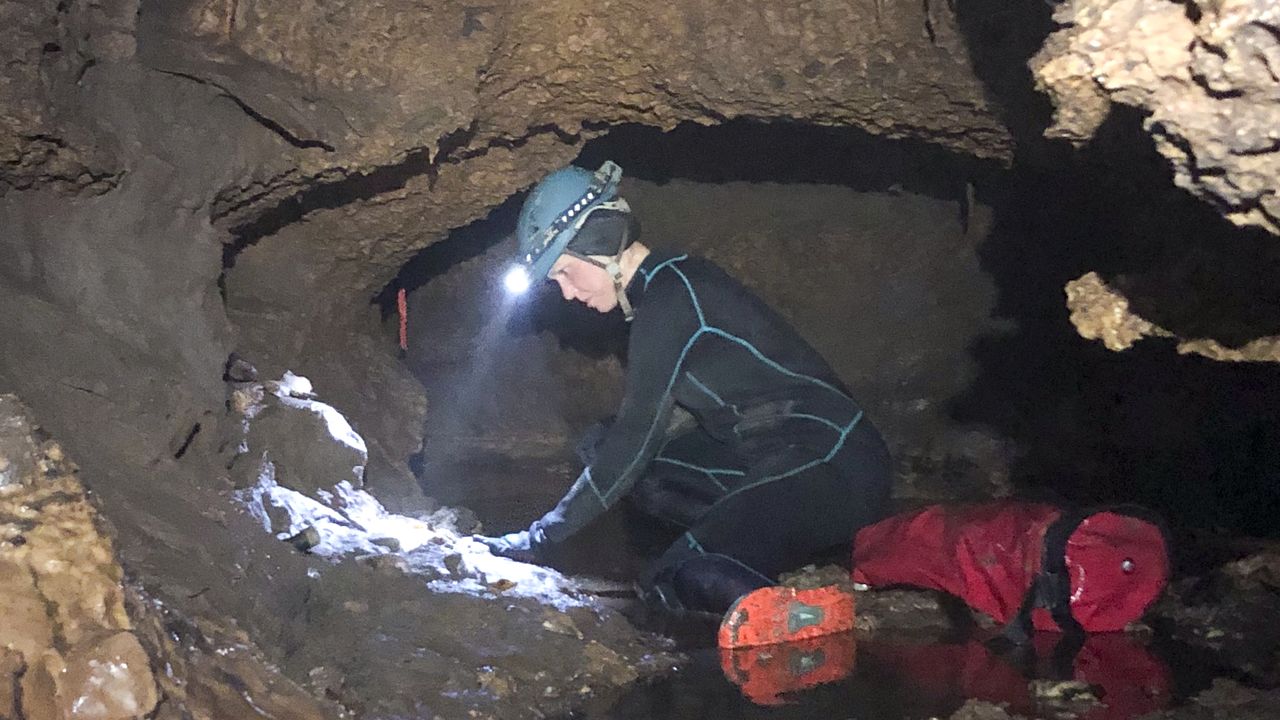
While exploring a cave in central Texas, scientists discovered a long-lost ecosystem, including the remains of a giant tortoise and a lion-sized armadillo, among a trove of fossils in an underground stream.
In a study published on March 19 in the journal Quaternary ResearchResearchers say the cave could preserve the remains of animals that lived during a relatively warm period of the last ice age. If the findings are validated, the site would offer a rare glimpse into an animal community missing from the central Texas fossil record.
Moretti and John Young, a local caver, were exploring Bender Cave near San Antonio in 2023 when they came across the fossils. The cave is difficult to access and has an underground stream running through it, so it has been largely ignored by paleontologists. However, they suspected fossils were present, because amateur cavers had already brought their finds, Moretti said.
It was Moretti and Young who discovered the Ice Age fossils simply lying in the mud.
“We have bags strapped to our waists and we collect fossils as we go,” Moretti said. During six trips between 2023 and 2024, Moretti and Young discovered fossils of 21 areas in the cave. Among the discoveries was a claw from a giant sloth (Megalonyx jeffersonii), mammoth teeth and camelid bones (Camelops), long legs former parents modern-day llamas.
But what really intrigued them was the discovery of the fossils of two Ice Age beasts: a pampathere (Holmesina septentrionalis), a giant armadillo relative who lived at the time Middle to late Pleistocene (781,000 to 126,000 years ago) ; and an extinct genus of giant tortoise (Hesperotestudo).
The discovery of these two fossilized animals intrigued Moretti and Young because these Ice Age giants were not known to have lived in this region. For more than a century, researchers have studied Ice Age fossil sites in central Texas and painted a picture of the region at that time as a dry prairie dominated by grazing animals. According to Moretti, this climate would not have been conducive to the tortoise or the pampathere.
Moretti and Young suggested that the remains of the animals were carried into the cave system from the surface by sinkholes during floods, then deposited on the stream bed. If so, the animals may have lived during a warmer interglacial period, around 100,000 years ago, when temperatures rose and animals favoring milder conditions moved into the region, the researchers proposed.
Moretti said they were unable to precisely date the bones because the collagen proteins often used as a biomarker in the fossils were completely eroded by the mineral-rich water. This water also contaminated many fossils, as the bones absorbed carbon and other minerals after being deposited. This means that a test can measure this contamination rather than the actual age of the fossils.
To overcome this challenge, the team is now trying to date the calcite crusts that formed on the bones after they entered the cave. Although these results do not provide exact dates for the fossils, they may set a minimum age for their deposition. With these dates, researchers hope to determine whether the cave fossils represent a warmer interglacial chapter in Texas history.
“We still don’t know everything about the natural world,” Moretti said. “There’s still a lot to discover there.”
Moretti, J.A. and Young, J. (2026). New occurrences of Late Pleistocene megafauna from Bender Cave on the Edwards Plateau in Texas may include evidence of the Last Interglacial. Quaternary Research, 1–27. https://doi.org/10.1017/qua.2025.10071
Think you know everything about the Ice Age? Test your intelligence with our a gigantic quiz!


