Optimize your SSD’s speed with this obscure Windows setting


One of the things Windows does behind the scenes is run TRIM on an SSD in your PC. TRIM keeps the SSD in perfect condition and helps it run at optimal speed. This is done automatically but you can change the Windows schedule to do it more frequently. Here’s what you need to know.
Why optimize your SSD according to a schedule?
SSDs are not the same as hard drives: not only is data not stored on spinning disks, but SSDs are also much faster. Therefore, defragmentation used to optimize a hard drive does not matter for an SSD. But when files are deleted from an SSD, a TRIM function is needed to mark these blocks for future storage. This is how the Windows Defragmentation and Optimization utility comes in handy. Windows runs scheduled drive optimizations on a weekly schedule by default, but you can change it to daily if you want.
When Windows optimizes an SSD, it resizes the blocks, telling the disk which areas are rewritable again. This feature is important for SSD because SSD with uncut blocks can become slow.
How to Optimize Your SSD on a Schedule
- Type Defragment in the Windows search bar and select Defragment and Optimize Drives.
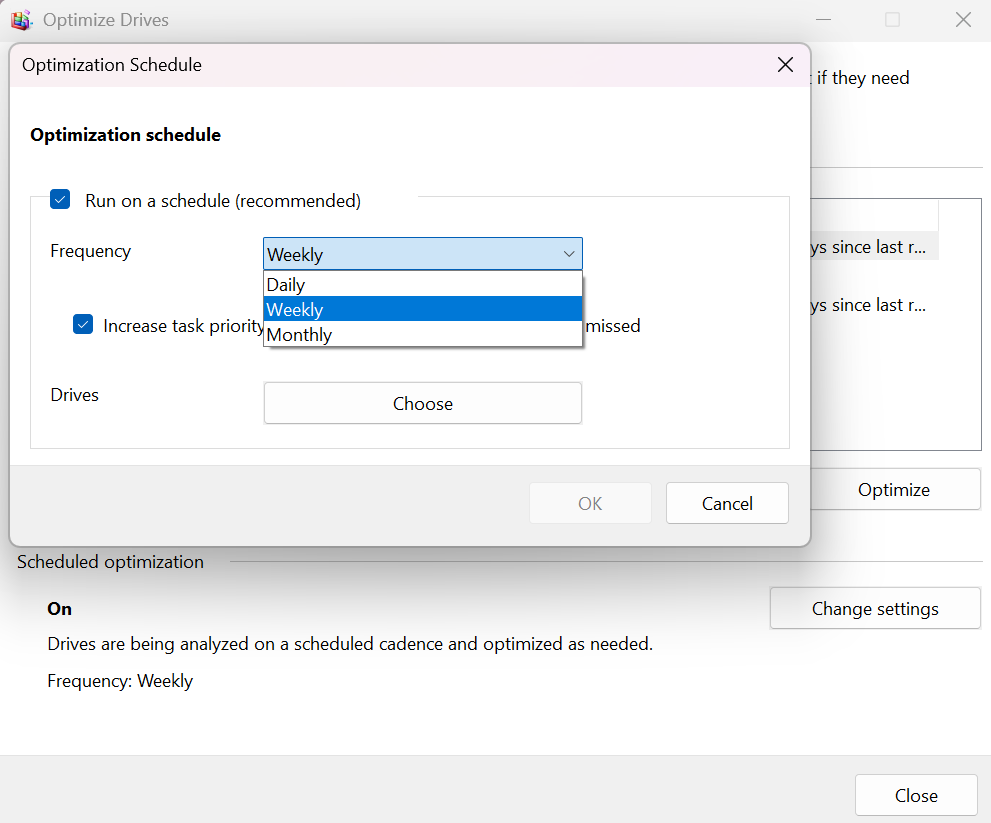
- Here you will get a list of your SSD drives and their status, including if they need to be optimized. You can choose to optimize them immediately by selecting To optimise or click on the Change settings button to see the optimization schedule.
- Now select how often you want Windows to optimize drives: daily, weekly, or monthly.
Dominic Bayley / Foundry
And that’s it! Windows will do the rest. You may want to come back here from time to time to ensure optimization is taking place and run manual optimizations when you see fit.
Related content


