“It’s a Warning, Set to a Dance Beat”: Jon Batiste on His New Song 20 Years After Katrina


Activism
/
August 28, 2025
The New Orleans jazz great tells Covering Climate Now, “When you make a song, you want to inspire people, but you also want to let them know what they can do.”

Jon Batiste.
(David Fenton)
Twenty years after Hurricane Katrina ravaged his hometown of New Orleans, Jon Batiste has released a new song imploring people to take action against climate change “by raising your voice, and insisting, and voting the right people into office.”
“As an artist, you have to make a statement,” the global star said in an interview on Tuesday with the international media collaboration Covering Climate Now. “You got to bring people together. People power is the way that you can change things in the world.”
“It’s a warning, set to a dance beat,” Batiste said about the song, “Petrichor,” which appears on his new album Big Money. The Oscar and multiple-Grammy Award winning composer and his band performed “Petrichor” live during Tuesday’s interview; that performance can be heard here.
The word “petrichor” refers to “the scent of the earth after the rain,” Batiste said, “when there’s been warm, dry soil for a long time, and then things come back into balance. And right now, we’re out of balance… the natural life support systems of the planet are under threat.”
Current Issue

With a refrain that repeatedly declares “they burning the planet down,” “Petrichor” does not sugarcoat the dangers of climate change, yet Batiste remains optimistic. “When you make a song, you want to inspire people, but you also want to let them know what they can do,” he said. “And the things that we can do [are] really very simple. It’s clean energy technology, right now, that we can switch to. We can make the world be powered by things that don’t destroy the planet.”
“There’s a blanket of pollution around the Earth,” Batiste added, referring to the planet-warming gases released by burning fossil fuels like oil, gas, and coal and by cutting down forests. “The summers feel hot, everything is hot, the weather patterns are shifting. Nobody wants that. And we know what the solution is. There’s an overwhelming majority of people that believe in clean energy… and switching to these new technologies.”
The Guardian and other Covering Climate Now partners earlier this year launched the 89 Percent Project, reporting that 80 to 89 percent of the world’s people want their governments to take stronger climate action, according to numerous scientific studies. Batiste confirmed that he is part of that 89 percent climate majority—as is his mother, Katherine Batiste, who did environmental work for the state of Louisiana for most of Jon’s childhood and sat next to him throughout the Covering Climate Now interview.
“We believe in science,” Katherine Batiste said.
“There you go,” Jon said, smiling. “You heard it.”
Many people know that Jon Batiste comes from a storied musical family in New Orleans—his uncle Lionel Batiste was a mainstay of The Treme Brass Band, and his cousin Russell Batiste, Jr was a celebrated jazz drummer—but Jon also comes from a family of activists. His mother’s father, David Gauthier, a leader of the Louisiana Postal Workers Union, supported the sanitation workers strike in 1968 that drew Martin Luther King, Jr. to Memphis, where King was assassinated. Among other causes, Jon has been active in the Black Lives Matter protests, a stance his mother saw as a continuation of her father’s legacy. Her dad “believed in standing up for what’s right,” said Katherine Batiste, “and that kind of rolled over on me some, and I passed it on to Jon.”
“I was raised by incredible people,” said Jon, who spent seven years as bandleader on The Late Show with Stephen Colbert up to 2022. “I saw my grandfather, I saw my father, I saw all these people who were in my immediate environment doing the work and not getting down about it. The key is to keep it going, not to look at yourself and pity the situation, but to find a way to do something with what you have and where you are.”
The “Petrichor” song illustrates the larger themes of his Big Money album, he added, because the pursuit of money at all costs is putting the climate at risk. And not only the climate. “We’re in the wealthiest time in human history,” he said. “There’s no shortage of resources. Yet there are [people] who don’t have clean water, clean food, basic healthcare. And it’s disproportionately affecting those in low-income communities, people of color. [When] the majority of the wealth is in the hands of only a small percentage of people, it will inevitably corrupt the policies that can change these things. That’s who the song is really geared toward. There’s a pollution blanket around the planet, but it’s the result of a pollution blanket around our souls.”
“It’s fitting that we’re here in this place of worship,” Batiste said about the setting of the interview—New York’s Middle Church, whose double-meaning motto is “Just Love”—because “as Pope Francis said, the Earth is our common home, a sacred planet, and [we need to live] up to our responsibility as stewards of the planet.”
Popular
“swipe left below to view more authors”Swipe →
When Hurricane Katrina struck New Orleans on August 29, 2005, the storm and the breach of protective levees put 80 percent of the city underwater, killed at least 1,800 people and drove countless others to leave town, never to return. While outsiders experienced the storm on television, as a media event, the Batiste family lived it. Jon, with his mother, father, sister, and grandmother, evacuated to Texas before the storm hit. But the family home where Katherine Batiste grew up, in the Carrolton neighborhood of New Orleans “was destroyed,” she said. “All my sisters, brothers, my family, their homes were destroyed… They lost everything… It was devastating.”
“New Orleans, to me, is the soul of America,” Jon Batiste said, adding that the city is “a warning” that climate-driven disasters “can happen anywhere, and there’s many places where this has happened.”
The role of the artist in the face of such danger and injustice is to “point people to the solutions with rhythm and poetry,” Batiste said. “It’s like [the jazz drummer] Art Blakey said, ‘music can wash away the dust of everyday life,’ and make somebody’s apathy turn into care into action. As an artist, you can connect right to the person–still also entertaining them, but uplifting them and their voice, so that then they know, ‘Oh, I have something to say, and it’s meaningful and it’s powerful. I’m going to sing it at the concert, and I’m going to leave here and it’s going to be in my heart, and I’m go into the voting booth and push it, I’m going to go into my communities and push it, and I’m going to live my life in ways that are aligned with it.’ And that is infectious. It moves to the next person, and the next person, the next person, and soon it’s our reality.”
Although the version of “Petrichor” on the Big Money album is a sort of talking blues foot tapper that lasts a 2 minutes and 38 seconds, the version Batiste and his band played a week earlier in New York’s Central Park was a raucous 11 minutes that had the standing-room crowd dancing with joy. Batiste, who just began a 50-date North American tour, said he plans to release a live album that will feature a similarly up-tempo version of “Petrichor” drawn from upcoming performances at the Grand Old Opry in Nashville and the Red Rocks Amphitheater in Colorado.
“It’s important when you’re changing the world to have a good time while you’re doing it,” he said. “I really want people to keep dancing and stay optimistic—but know that we gotta, we gotta, move.”
In this moment of crisis, we need a unified, progressive opposition to Donald Trump.
We’re starting to see one take shape in the streets and at ballot boxes across the country: from New York City mayoral candidate Zohran Mamdani’s campaign focused on affordability, to communities protecting their neighbors from ICE, to the senators opposing arms shipments to Israel.
The Democratic Party has an urgent choice to make: Will it embrace a politics that is principled and popular, or will it continue to insist on losing elections with the out-of-touch elites and consultants that got us here?
At The Nation, we know which side we’re on. Every day, we make the case for a more democratic and equal world by championing progressive leaders, lifting up movements fighting for justice, and exposing the oligarchs and corporations profiting at the expense of us all. Our independent journalism informs and empowers progressives across the country and helps bring this politics to new readers ready to join the fight.
We need your help to continue this work. Will you donate to support The Nation’s independent journalism? Every contribution goes to our award-winning reporting, analysis, and commentary.
Thank you for helping us take on Trump and build the just society we know is possible.
Sincerely,
Bhaskar Sunkara
President, The Nation
More from
Mark Hertsgaard 
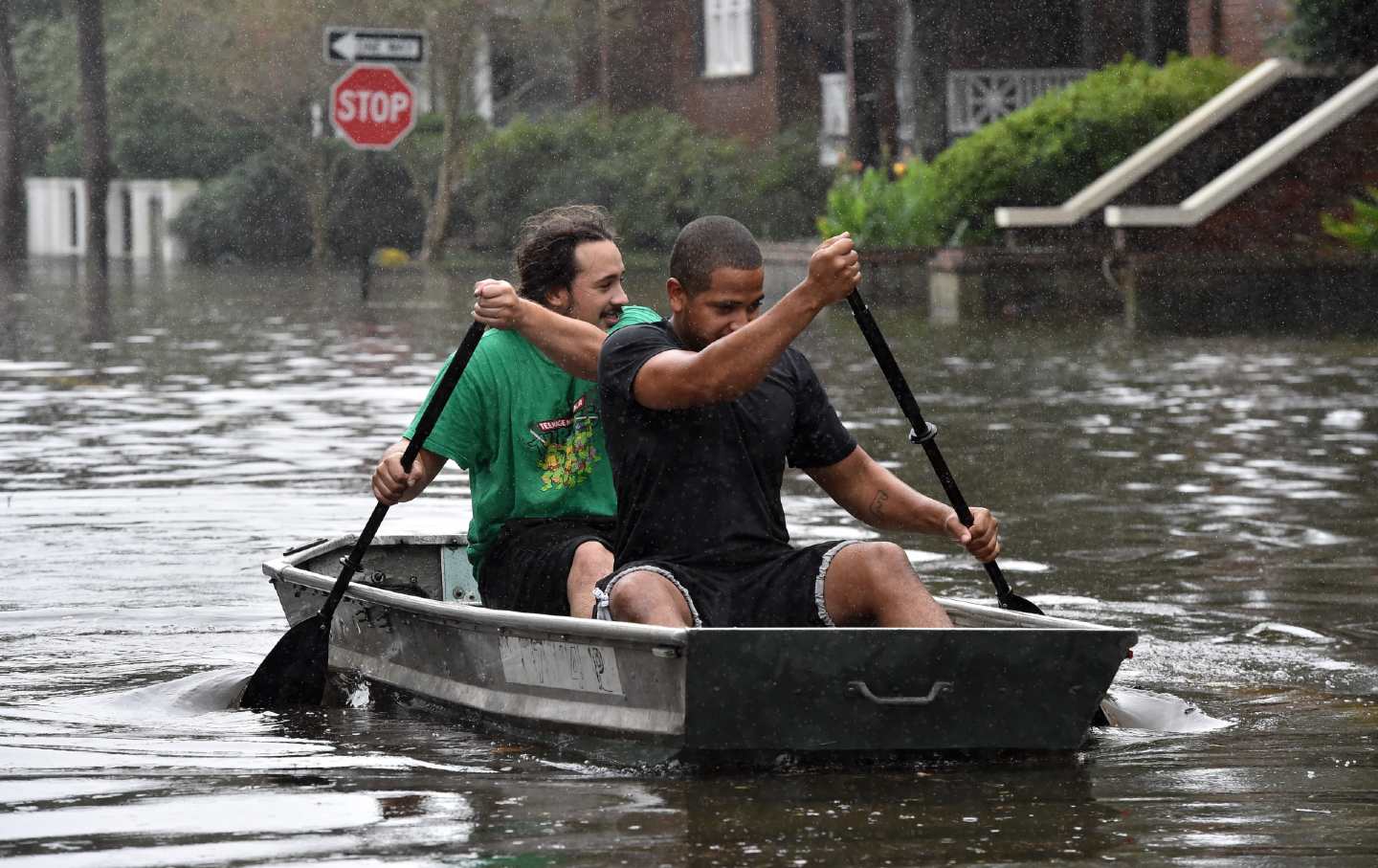
Tony Bartelme’s new book shows how great storytelling can wake people up.
Mark Hertsgaard
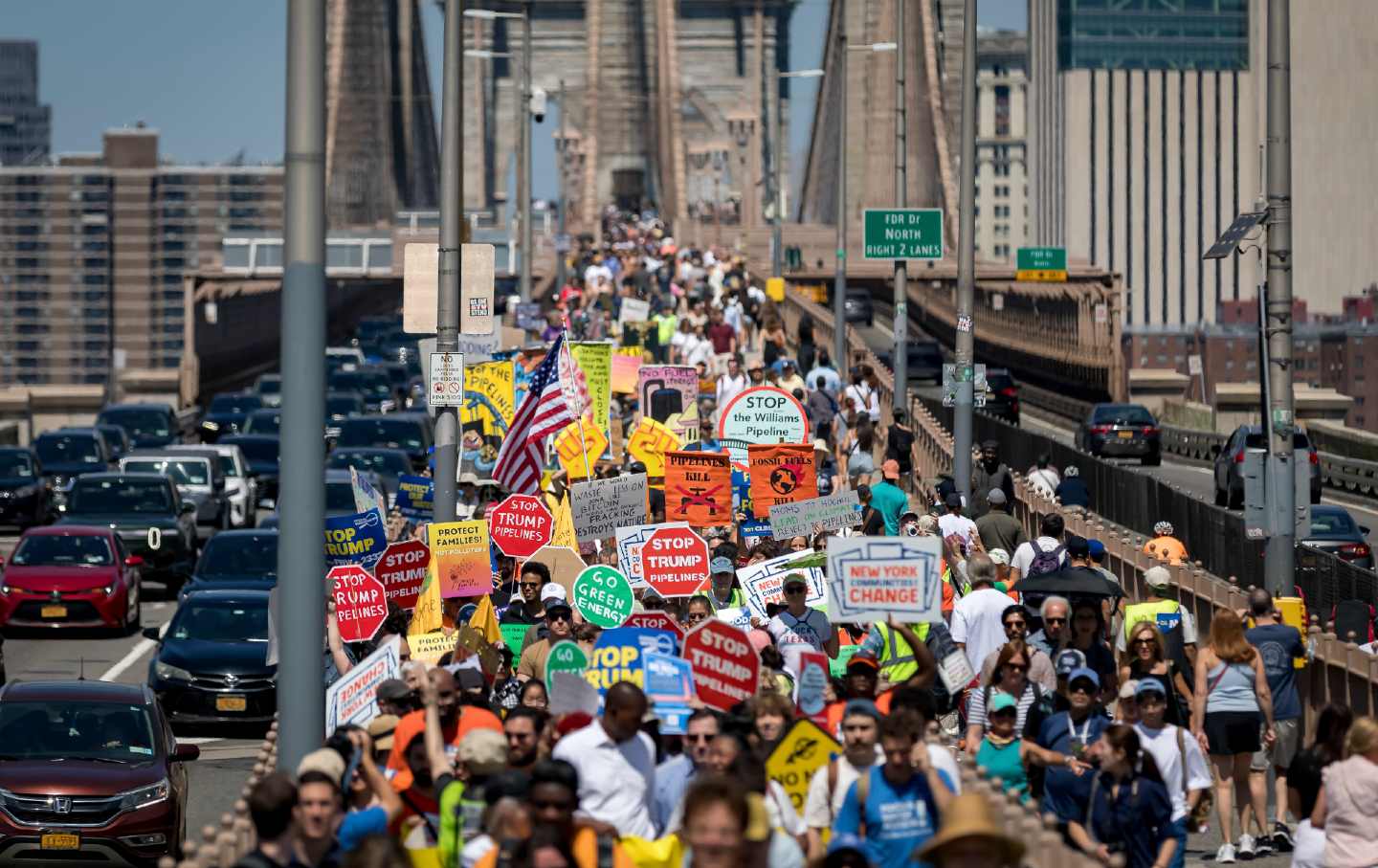
An overwhelming global majority supports stronger climate action. Who are the people behind the numbers?
Mark Hertsgaard

Bill McKibben’s new book argues that sun power can displace fossil fuels.
Mark Hertsgaard
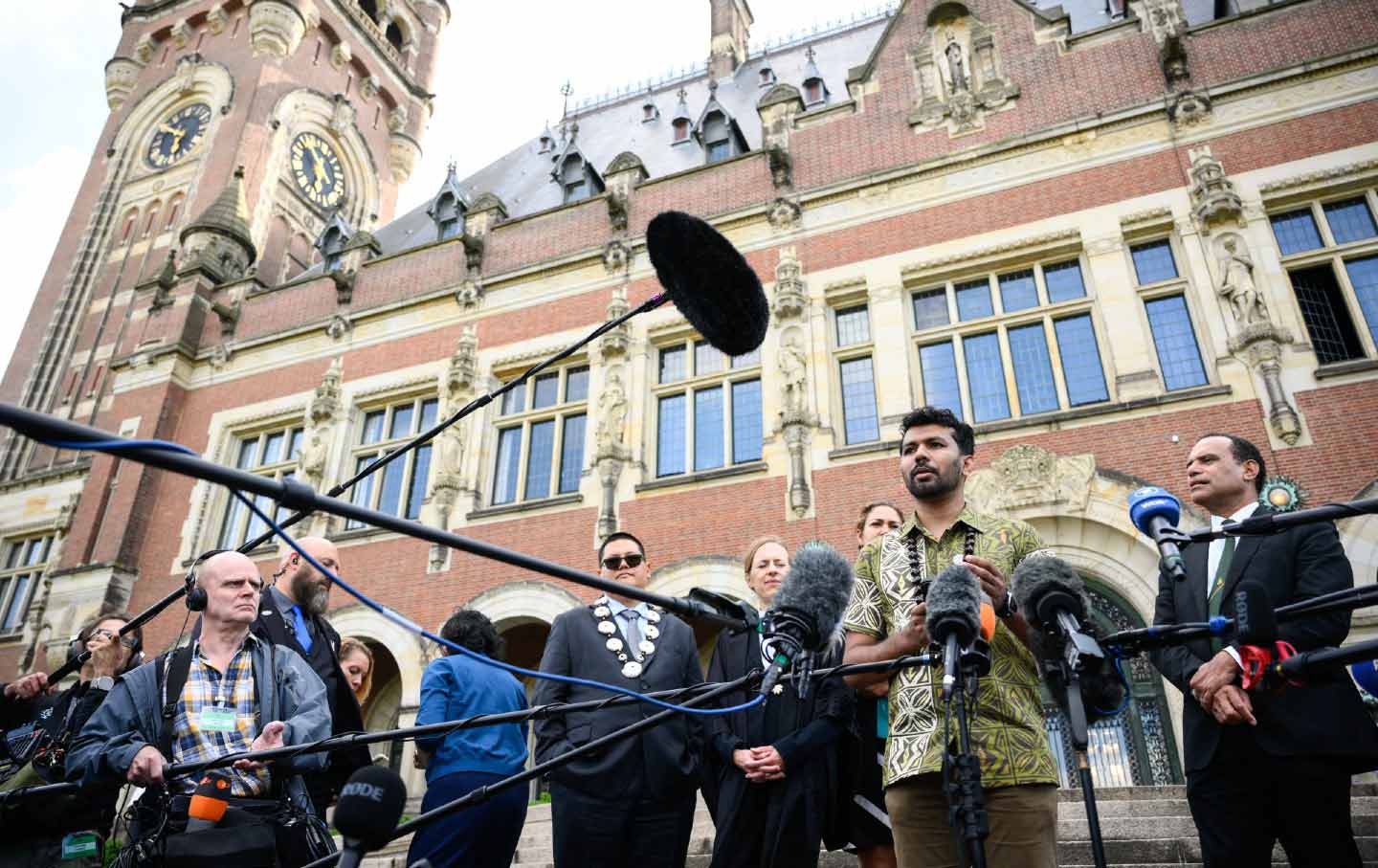
After a “landmark” ruling from the International Court of Justice, journalists can expect more lawsuits against fossil fuel companies.
Mark Hertsgaard

An extraordinary eyewitness report reveals that food isn’t the only thing Palestinians are starved of. Fuel is almost as scarce.
Mark Hertsgaard
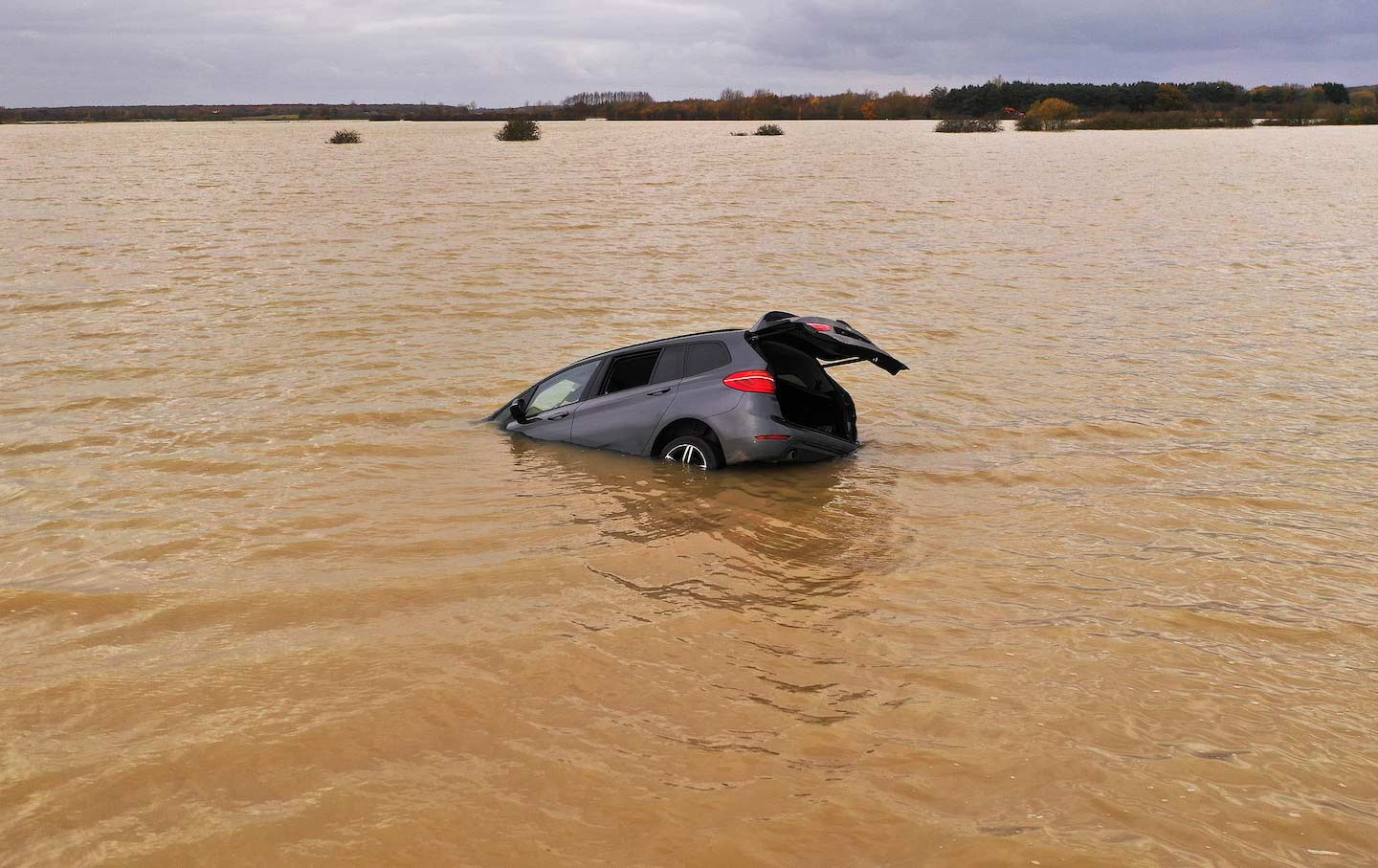
Americans still don’t comprehend how imminent, dangerous, and far-reaching the threat is—and journalists are partly to blame.
Mark Hertsgaard