Archaeologists discover perfectly circular ancient Egyptian temple that may have been used for sacred water rituals


Archaeologists have discovered a rare circular structure dedicated to a local Egyptian deity called Pelusius, according to the Egyptian Ministry of Tourism and Antiquities. The 2,200-year-old religious building includes complex hydraulic infrastructure and was once connected to the Nile, suggesting the shrine was used for sacred rituals on water.
The temple was discovered by archaeologists working at the site of Tell el-Farama, in the ancient city of Peluseon the eastern edge of the Nile Delta in North Sinai Governorate, representatives of the Egyptian Ministry of Tourism and Antiquities said in an April 9 statement. translated statement. Given its strategic location near the mouth of the Nile, the bustling port city of Pelusium was used as a fortress during the Pharaonic era and then as a customs post during the rise of the Empire. Roman Empire. In 2022, archaeologists discovered a temple to Zeus made from pink granite on site.
The sanctuary complex was centered around a circular pool approximately 115 feet (35 meters) in diameter with a square pedestal in the middle. It probably once housed a colossal statue of the god Pelusius, whose name comes from the ancient Greek word meaning “mud” or “silt”. Water channels and reservoirs surrounded the basin. In the basin, connected to an arm of the Nile, archaeologists found Nile water and silt, suggesting a symbolic association with Pelusius.
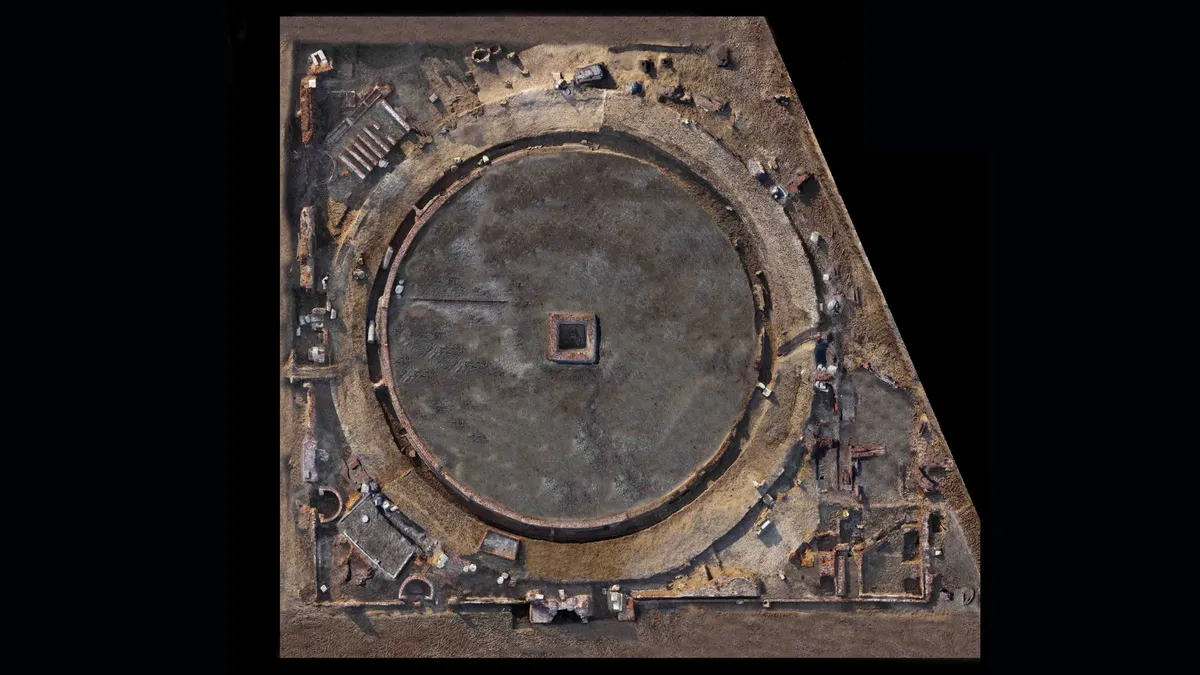
Based on the site’s stratigraphic layers, experts believe that the Temple of Pelusius was built in the second century BC and was in continuous use until the sixth century AD.
The temple’s unique architectural design, which blended ancient Egyptian traditions with Greek and Roman styles, embodied the cultural exchange between Egypt and the world. Hicham El-Leithysaid the acting secretary general of the Egyptian Supreme Council of Antiquities in the statement. El-Leithy called the discovery “very significant” because it shows that Pelusium was once an important city in an increasingly cosmopolitan ancient world.
Ancient Egypt Quiz: Test Your Intelligence About Pyramids, Hieroglyphics, and King Tut


