
This article is part of TPM Cafe, TPM’s home for opinion and news analysis. It was originally published at Balls and Strikes.
Chief Justice John Roberts received applause from an audience at Rice University on Tuesday in appreciation of his defense of the judiciary from inappropriate attacks. Roberts appeared in conversation with Lee Rosenthal, a senior federal district judge, who asked the chief how he handles criticism of the Supreme Court. Roberts responded by acknowledging that “judges around the country work very hard to get it right,” and that constructive criticism is “healthy” and “important.” But he stressed that “personally directed hostility is dangerous,” and has “got to stop.”
Rosenthal replied that such dangers are “very much part of our lives these days.” During fiscal year 2024, the federal agency that provides security for court officials identified 509 threats to 379 unique judges. In 2025, there were 564 threats to 396 judges. And in 2026, there have already been 241 threats to 202 judges.
Against this backdrop, Rosenthal said that she wanted to “personally thank” Roberts “on behalf of trial judges everywhere.” Although “we know that you may not always agree with us,” she said, “we always know that you have our backs.”

This characterization—both of Roberts’ support for his fellow judges and also their perception of that support—is so generous that it arouses suspicion of sarcasm. In September 2025, a dozen sitting federal judges spoke to NBC News about how the Court’s use of the shadow docket was putting them in harm’s way.
At that time, the Trump administration had made 23 “emergency” requests to the Supreme Court to block adverse lower court rulings. Of those requests, the Court granted 17, or roughly 74 percent. The judges worried that the stream of summary orders from the Court—orders that necessarily imply that something is wrong with a lower court’s work, but do not necessarily specify what the problem is—gave ammunition to critics who attack them as biased when they condemn the Trump administration’s lawlessness.
“They don’t have our backs,” said one judge; another added that “it sure would be nice” if someone did. Still another judge said that the Court was aiding the Trump administration in “undermining the lower courts,” and that the rest of the judiciary had been “thrown under the bus.”
In October 2025, the New York Times interviewed 65 sitting federal judges, including 28 Republican nominees, about how the Court’s use of the shadow docket was affecting them and their work. Forty-two of the judges agreed that the Court’s use of the emergency docket had “caused harm” to the public’s perception of the judiciary. And 48 of the judges said they did not have “sufficient guidance” from the Court about “how to apply emergency docket orders.” One judge called the rash of emergency orders “a slap in the face to the district courts,” and another said the courts were in the midst of a “judicial crisis.”
The substance of the Supreme Court’s shadow docket orders further reveals that the conservative supermajority does not respect trial court judges, and encourages similar disrespect from the Trump administration. In April 2025, for instance, the Court vacated a district court order that barred the administration from sending Venezuelan migrants to El Salvador without notice or opportunity to challenge their removal. The unsigned majority in Trump v. J.G.G. failed to mention that the Trump administration had already violated the lower court’s order by covertly loading dozens of migrants onto planes and rushing them out of the country.
By lifting the order, the Court basically told the administration that it was right to ignore the migrants’ legal rights and the district court’s efforts to protect those rights. Justice Sonia Sotomayor’s dissent criticized the majority’s rewarding of such conduct as “indefensible.”
When the justices override lower court orders, they do not typically give a reason. Yet in some recent shadow docket orders, the justices have given trial judges a talking-to, reprimanding them for not reading their minds. In July 2025, the Supreme Court issued an unsigned two-paragraph order that lifted another district court order and allowed Trump to fire Democratic members of the Consumer Product Safety Commission, in violation of explicit statutory prohibitions and longstanding Court precedent. Trump v. Boyle did not formally strike down those laws or overrule those precedents, yet it told lower court judges they should not necessarily follow existing law, since the Court had allowed Trump to fire people without lawful authority on previous occasions. “Although our interim orders are not conclusive as to the merits, they inform how a court should exercise its equitable discretion in like cases,” said the unsigned majority.
Then, in August 2025, Justice Neil Gorsuch publicly chastised lower courts for adhering to precedent rather than making inferences from the shadow docket. National Institutes of Health v. American Public Health Association reinstated the Trump administration’s cancellation of hundreds of millions of dollars of grants intended to facilitate scientific research. And Gorsuch argued in a concurrence that the Court’s “probabilistic holdings” should have informed the lower court’s decisionmaking: Joined by Justice Brett Kavanaugh, he claimed that it was “the third time in a matter of weeks” that the Court had had to check a district court judge for failing to “respect the hierarchy” of the federal court system. “Lower court judges may sometimes disagree with this court’s decisions, but they are never free to defy them,” he said.
In the face of aggressive lawbreaking by the Trump administration, the Supreme Court has repeatedly rushed in to relieve Trump of any obligation to follow lower court orders. And, perversely, it has repeatedly portrayed district court judges as the real wrongdoers: As former federal judge John E. Jones III put it in a September 2025 interview, “The Supreme Court is forcing lower court judges to decipher meaning from Supreme Court decisions as if they’re the Rosetta stone.”
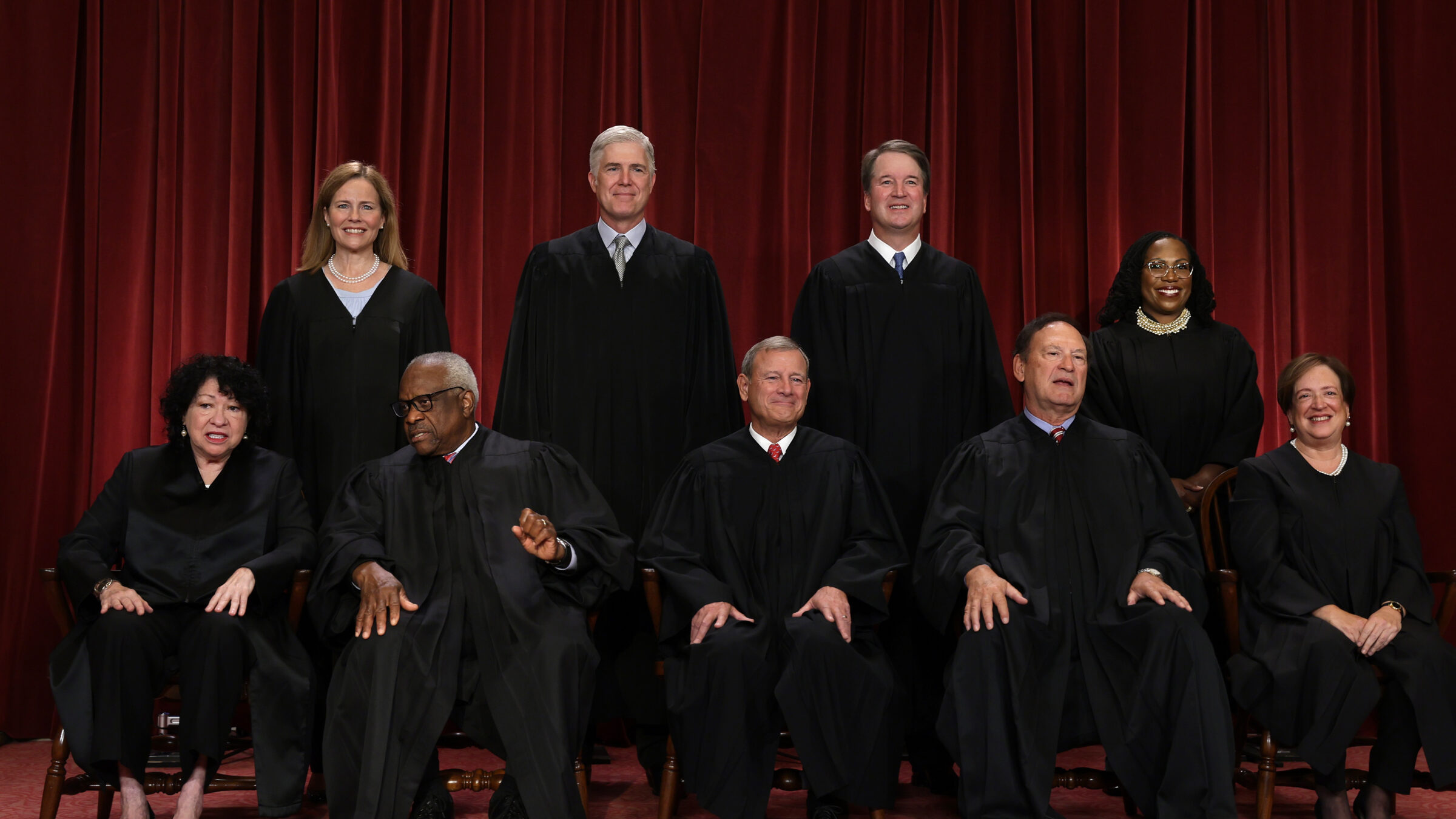
The Court has also repeatedly failed to defend judges against a bombardment of outside attacks. In November 2025, in response to the judges’ interviews with NBC News and the Times, the Republican chairs of the House and Senate Judiciary Committees wrote a letter to Chief Justice John Roberts, urging him to consider whether the judges had violated their ethical obligations by “going to the press to undermine and denigrate the Supreme Court.” In January 2026, the Senate Judiciary Committee held a hearing about impeachment as a way to rein in so-called “rogue judges.” In March 2026, 60 Minutes spoke with 26 sitting and retired federal judges, appointed by both Democrats and Republicans, who were inundated with threats after ruling against the Trump administration.
On Thursday, five sitting federal district judges publicly addressed attacks on the judiciary at a panel hosted by Speak Up for Justice. Judge Ana Reyes, for example, described receiving “dozens and dozens” of emails and “countless” voicemails berating her as a “foreign-born lesbian,” a “worthless whore,” and a “cunt” who needed to “eat a bullet” after she ruled against the administration in a high-profile immigration case.
Trump’s Justice Department has not investigated the threats. It has, however, filed a misconduct complaint against her.

In Roberts’s year-end report on the judiciary in 2024, he condemned violence, intimidation, and threats to defy court orders as “illegitimate” activities that “threaten the independence of judges.” And in March 2025, he responded to questions from reporters about one of Trump’s calls to impeach a judge by saying that “impeachment is not an appropriate response to disagreement concerning a judicial decision.”
But his statements are undercut by his actions. District courts have largely functioned as a legal check on the Trump administration, finding in favor of people who challenge the government 59 percent of the time. In response, the Roberts Court has limited what kind of orders district courts can issue. It has allowed the orders district courts can still issue to be violated. It has rejected their work and expertise out of hand, and given them little to no guidance about what they are purportedly doing wrong. If this is what it looks like for Roberts to have their backs, I would hate to see what it means for him to let them down.


