Children born near army base learn truth about UK soldier dads

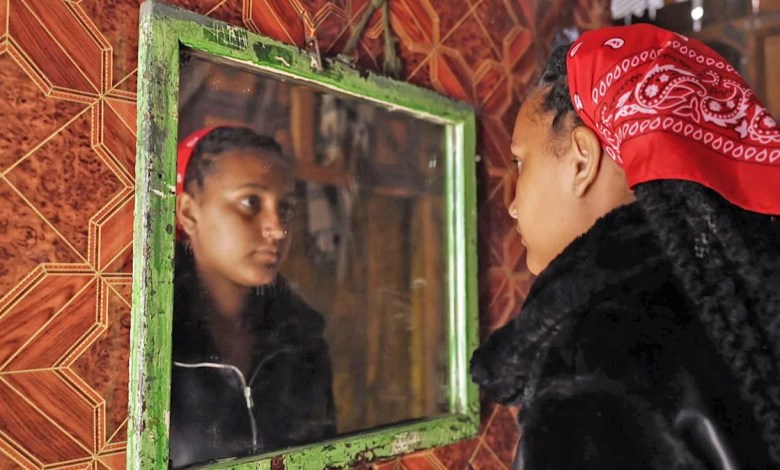
“Edward”, a nine-year-old Kenyan boy, always knew his father worked for the British army. The boy’s skin color, lighter than that of his peers, led to years of harassment. His father died before Edward [not his real name] was born, leaving his mother to live in extreme poverty, ostracized by some members of her family.
Now the man, who worked as a contractor at a British Army base in Kenya, along with 19 others who served as soldiers there, have been identified through a groundbreaking DNA and legal procedure as the fathers of children born near the base and traced. Paternity has so far been legally confirmed in 12 of the cases by the UK’s highest family court judge.
The process provides answers to children who did not know where, or in some cases even who, their father was – or who had been led to believe they were dead. All searched for answers about their inheritance and faced financial difficulties. Most of the 12 confirmed cases can now apply for British citizenship. People under the age of 18 or in continuing education will be entitled to child support.
British lawyer James Netto and Kelvin Kubai, a lawyer who finds clients on the ground in Kenya, say there are almost 100 documented cases of children born near the British Army’s training unit in Kenya (Batuk) to British soldiers. Netto thinks there could be many more.

James Netto (standing) traveled to Kenya to investigate paternity cases [BBC]
Batuk, which was established in 1964 and sees more than 5,000 Britons pass through each year, has generated significant controversy during the decades it has been located in Nanyuki, a town 185km north of Nairobi.
A Kenyan parliamentary inquiry published last December, which lasted two years, accused British soldiers of operating in “a culture of impunity” at the base, which resulted in sexual abuse, two murder allegations, rights abuses, environmental destruction and the abandonment and neglect of local children.
The British Ministry of Defense responded that it “deeply regrets the issues and challenges that have arisen in relation to the British military presence in Kenya… We continue to take steps wherever possible to resolve them.”
-
Outside the UK, listen to the World of Secrets podcast hereor watch on YouTube
James Netto was first alerted to the issue of children searching for their fathers in Nanyuki in 2024. He teamed up with eminent genetics professor Denise Syndercombe Court and they arrived in Kenya “armed with a suitcase full of DNA kits”.
They then cross-referenced the DNA samples they collected with genetic profiles available in commercial genealogy databases to find missing British military fathers of clients aged from three to 70 years old.
“Nothing like this has ever been done before, where DNA testing is done on this scale” in British courts, Netto says. And he and his team have a huge pool of genetic information with which to compare their samples. Last year, nearly 30 million profiles were available on Ancestry.com, the largest commercial DNA website that Syndercombe Court joined and used as its primary source.
Netto says they had no idea how many leads they would get and were amazed by the good results. “We had completely distant family members, we had relatively close family members, right down to the target of named and identified fathers.”
This breakthrough could change the lives of Edward and his mother Nasibo, as he will now be entitled to financial support from his father.

Nasibo faced financial difficulties after many of her family members ostracized her for being a single mother. [BBC]
“I thought they were gentlemen,” Nasibo says of the British army. She believed that Edward’s father truly loved and cared for her. We saw a letter that the soldier’s mother wrote to Nasibo, before she became pregnant, to thank her for making her son so happy. And when Nasibo told her she was expecting, she said he looked delighted. He urged her to name the child after her brother if he was a boy, she said, and returned from a trip back to the UK with an engagement ring.
But when Nasibo was four months pregnant, she says he told her he had to return to the UK in an emergency and cut off all contact.
Nasibo was forced by some of her relatives to leave the family home, she says, and her son was bullied at school because of his lighter skin.
“They call him ‘the British colonizer’,” she told us. The United Kingdom ruled Kenya from 1895 to 1963.
Netto was able to locate Edward’s father after the court ordered the Ministry of Defence, the Department for Work and Pensions and HM Revenue and Customs to share the man’s name and address. The man asked Netto not to share his details with Nasibo or their son, but the lawyer is currently initiating legal proceedings to force him to pay child support.
Yvonne, another 18-year-old Kenyan, knew even less about her father than Edward. She had been told he was serving in the British army, but she had no name for him and had grown up believing he was dead. Her mother died when she was a baby, and Batuk soldiers reportedly told her grandparents that her father had died.
The legal project revealed – through correspondence with the man’s mother’s cousin, whose DNA had been uploaded to Ancestry.com – that in fact his father is alive and living in the UK.
After violating five court orders, he finally showed up on the day his case was heard. He requested a DNA test to confirm that he was Yvonne’s father, the result of which, a week later, showed that this was indeed the case.
He doesn’t want any contact with Yvonne at the moment. But her mother’s cousin says she can’t wait to meet Yvonne.
All the fathers identified did not hesitate to get involved.
Phill, a former British soldier stationed in Nanyuki in 2004, says he enjoys getting to know his daughter Cathy, 20. He had previously proposed to Cathy’s mother, Maggie, and spent a lot of time with his daughter during the first months of their baby’s life. But when he moved to another deployment, he claims his phone was stolen and he lost his contact information.
Maggie thought it was easier to tell Cathy that her father was dead. But as she grew up, Cathy found out he was alive and tried to message him on Facebook, but he says he blocked her accounts without recognizing them.

Cathy spent years desperately trying to contact her father via Facebook [BBC]
By then, he said, he had left the military and found himself homeless and struggling with mental health issues for a time. “The transition to civilian life was not easy,” he says.
Cathy was also in trouble at this time, culminating in an attempt to commit suicide.
“Growing up, I felt like I really needed a father figure because there were certain things that my mom couldn’t understand because of race and all that. It made me feel really alone.
“There’s a part of you that you don’t know. Like it’s a complete mystery to you.”
With his paternity recently confirmed by the British courts, Phill says he is happy to have been found, describing it as a “very happy surprise”.
He says he is in contact with Cathy and is already providing her and Maggie with financial support.
“I told Cathy…no matter what I do, I’ll never be able to make up for the time I lost with her. But all I can do is try my best.”
Cathy now hopes to visit the UK.
Netto says that to his knowledge, Phill is so far the only father of his clients to send money to their children.

Phill says he struggled with mental health after leaving the military [BBC]
We asked local Kenyan lawyer Kelvin Kubai, who set up a charity called Connecting Roots Kenya to financially help the children of British soldiers, if he thought there should be a blanket ban on such relationships, given the number of babies born out of wedlock. He strongly disagreed.
“This [would] be very racist in nature as you ask the predominantly white soldiers to avoid black women [just] because they can cause them trouble. The only… feasible solution… [is] just to ensure that these men are held accountable when they father children while training in Kenya.
Netto and Kubai’s work continues, they say, and more cases are expected to come before the High Court in the coming months.
The Ministry of Defense told us: “Where there are no criminal charges of illegal activity against UK military personnel and no specific concerns have been raised by local police, the UK Ministry of Defense will not investigate. Some of the paternity allegations may relate to consensual relationships, which are not contrary to UK Ministry of Defense policy. »
Brigadier Simon Ridgway, commander of the Collective Training Group which delivers British Army training, added that those affected by paternity issues should engage with the Kenya National Children’s Service. “They then engage with the UK and we then give them whatever support they need to answer questions and deal with these allegations as they come in.”
Kenya’s December parliamentary inquiry called on the Nairobi government to put in place new mechanisms “to hold Batuk soldiers accountable for child support for children born from consensual relationships, including DNA testing and psychosocial support for children fathered by Batuk soldiers.”


